


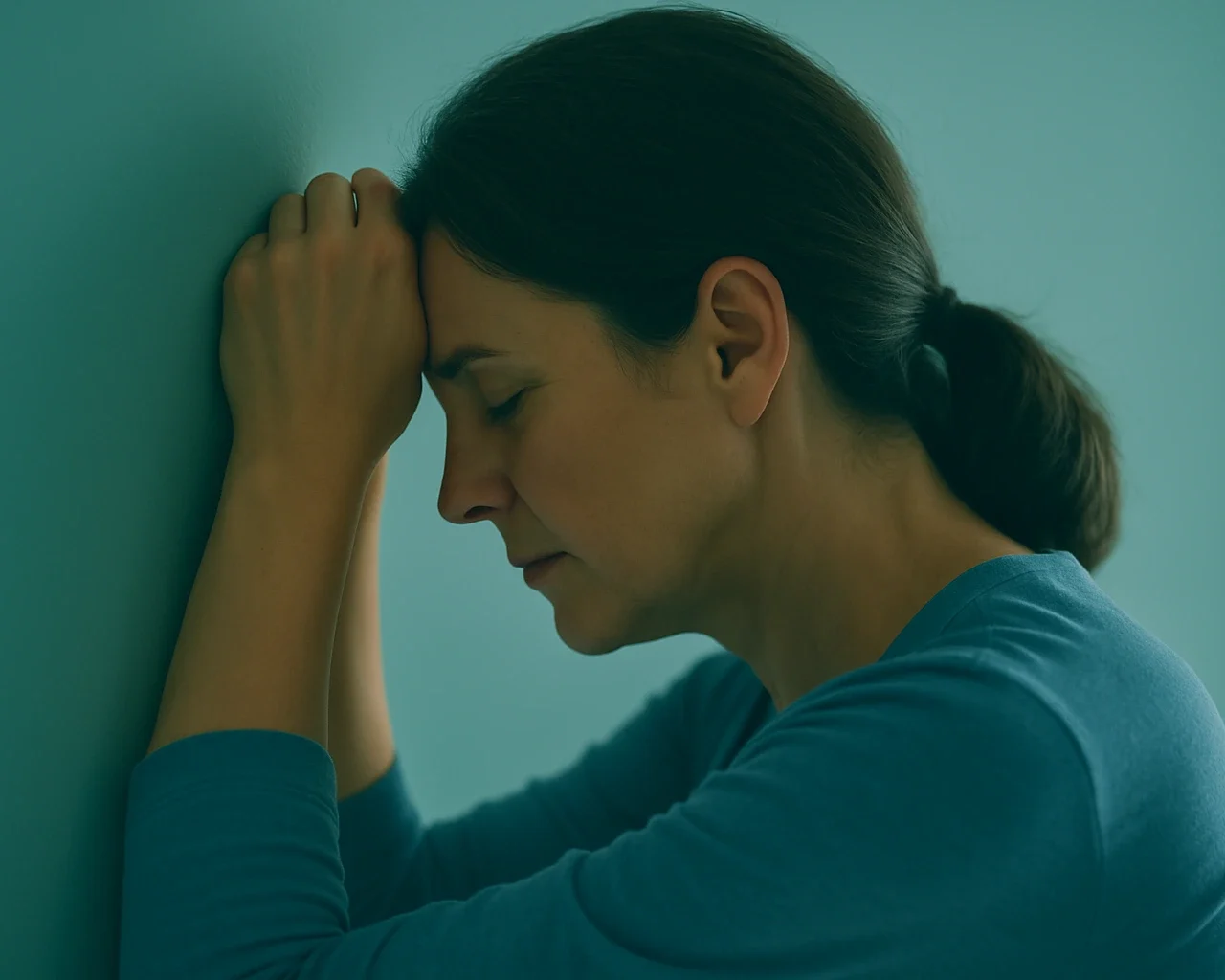
There is a type of tiredness that doesn't improve with a night's sleep. Not with a quiet weekend. Not even with holidays. It's a weariness that sets in slowly, almost unnoticed, until one day a person realises they are no longer just tired – they are exhausted.
Burnout rarely starts with a breakdown. It begins with dedication. With responsibility. With a desire to do well. It often arises in committed, self-demanding individuals, used to taking on more than they are asked. People who function. Who deliver. Who rarely say no.
For a long time, this pattern is valued. It is seen as competence. As resilience. As professionalism.
The problem isn't with commitment. It's with the absence of pause.
When effort becomes constant and recovery insufficient, the body begins to show signs. Sleep is altered. Concentration diminishes. Small.
In physiological terms, the stress system remains activated for too long. The body functions as if it were permanently responding to demands. And when there is no alternation between mobilisation and recovery, the balance is broken.
But burnout isn't just physical. It's emotional too.
A person starts to feel detached from what they do. What once held meaning can become indifferent. Irritation, cynicism, and a sense of ineffectiveness arise. Often, there's also guilt for not being able to maintain the same level of performance. It's a difficult cycle: the more exhausted a person feels, the more they try to compensate.
In clinical practice, it is common to find very rigid beliefs behind this pattern: “I have to cope.” “I can’t fail.” “If I stop, everything will fall apart.” These internal rules do not arise by chance. They were built throughout a personal and professional history. And for years they may have worked.
The problem is when they stop being sustainable.
There are also cases where burnout is linked to misalignment. The person continues to invest energy in a context that no longer corresponds to their values or needs. Psychological effort increases because there is constant tension between what they do and what they would like to be doing.
It is important to distinguish burnout from simple fatigue. Feeling tired is to be expected. Feeling emotionally detached, chronically exhausted and doubting one’s own effectiveness is something quite different.
Recovery isn’t just about taking a holiday. It involves re-evaluating patterns, boundaries, expectations and, at times, circumstances. It means relearning how to recognise the early signs of burnout — before your body has to scream to be heard.
Therapy can play an important role in this process. Not just to alleviate symptoms, but to understand how one got to this point and what needs to change in order to restore sustainable functioning.
Burnout is not a sign of weakness. It is often a sign of prolonged exertion without any opportunity to recharge.
The body doesn't fail. The body warns.
Learning to listen to it can be the first step to regaining energy — and, above all, balance.
Madalena Raposo | Psychologist
Psychologist licence: 30344 | Order of Psychologists
Integrativa | Health and well-being as a lifestyle
This website and its content are for information purposes only and are not a substitute for medical or health professional advice. Each person's treatment should be individualised and guided by health professionals. Do not make any changes to your treatment without contacting the doctor or health professional accompanying you.
Related articles