

There are times when life continues to go on, but our attention is entirely focused by a worry. We are physically present, but mentally elsewhere. The problem becomes the centre of the experience. The rest passes almost unnoticed.
Perhaps you've already felt this: you're at a dinner party, on a walk, in a moment that should be light-hearted, but your mind insists on returning to the same topic. A conversation that went badly. A decision to be made. A scenario that hasn't even happened yet. The body is there. The mind is trapped.
Attention is a limited resource. When it's rigidly focused on a perceived threat, everything else loses priority. The brain goes into surveillance mode, as if searching for signs to confirm there's something to address. And even when there's no new information, we continue to think, analyse, and anticipate.
The curious thing is that many of these “threats” are not real events in the present moment. They are interpretations, hypotheses, imagined scenarios. Still, the brain reacts as if it were facing concrete danger. Physiological activation increases, focus narrows, and experience becomes reduced to a single point.
When this happens repeatedly, one's perception of reality changes. Time seems to pass more quickly or more slowly. Small positive moments stop being registered. Memory begins to organise itself around the problem. It's not that life has stopped. It's attention that has become trapped.
In consultations, it's common to hear: “I need to think about this until I solve it.” There's a notion that rumination is synonymous with responsibility or productivity. But, most of the time, repeatedly thinking about the same topic doesn't generate new solutions. It just leads to exhaustion.
Being aware of a problem is different from being dominated by it.
Attentional flexibility, the ability to shift focus when needed, is a trainable psychological skill. It doesn't mean ignoring difficulties or forcing positive thinking. It means recognising when thinking is no longer helpful and consciously choosing where to direct mental energy.
When we learn to make this movement, something changes. The experience becomes wider. The mind stops functioning solely in threat mode. The present reclaims its space.
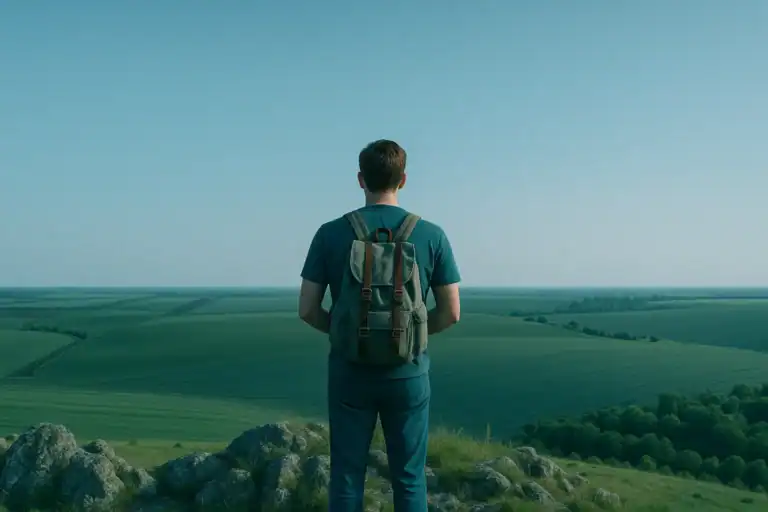
The problem may continue to exist. But it no longer occupies the entire landscape.
Madalena Raposo | Psychologist
Psychologist licence: 30344 | Order of Psychologists
Integrativa | Health and well-being as a lifestyle
This website and its content are for information purposes only and are not a substitute for medical or health professional advice. Each person's treatment should be individualised and guided by health professionals. Do not make any changes to your treatment without contacting the doctor or health professional accompanying you.
Related articles