


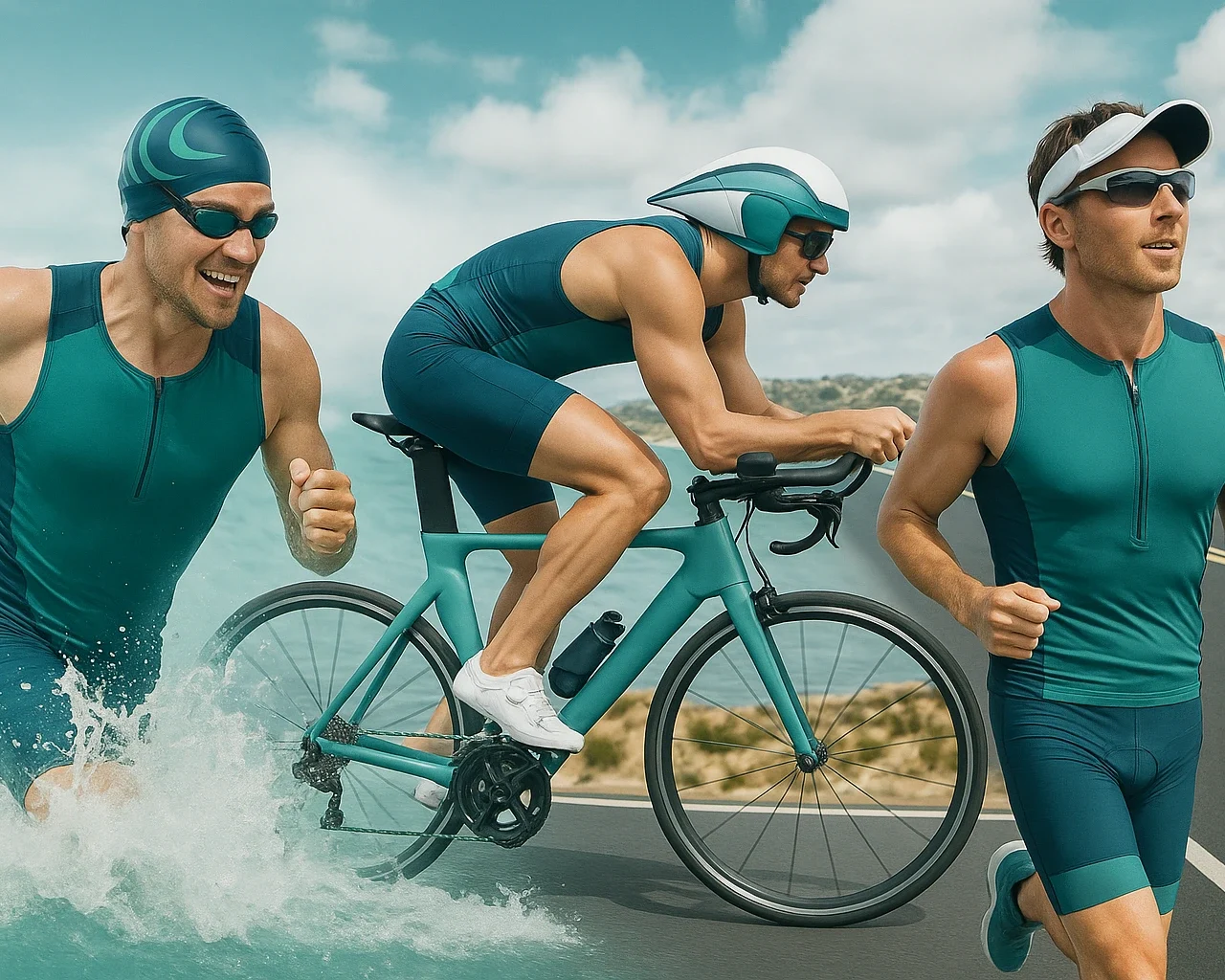
The Ironman Triathlon is one of the most demanding endurance sports events, combining a 3.8 km swim, a 180 km cycle, and a 42.2 km run. Preparation for this event involves high training volumes, repeated loads, and significant physical and mental demands. In this context, Physiotherapy and Osteopathy support can play a relevant role in helping the body adapt to the demands of training and competition.
The intervention of these professionals is not limited to injury management, but also integrates strategies for prevention, recovery and optimisation of function throughout preparation.
Injury prevention during preparation
The high training volume and prolonged repetition of characteristic sporting movements in swimming, cycling, and running can increase the risk of musculoskeletal overload. Preventive Physiotherapy allows for the identification of individual risk factors, such as muscular imbalances, alterations in motor control, mobility limitations, or inefficient movement patterns.
Through a detailed clinical assessment, the Physiotherapist can guide therapeutic exercise strategies tailored to the athlete's needs, focusing on load management, stability, and movement efficiency. Osteopathy, in turn, integrates a global view of the body, addressing tissue and joint mobility, supporting structural adaptation to training demands.
Recovery and load management
During preparation for an Ironman, recovery plays a central role in the sustainability of training. Physiotherapy can integrate manual techniques, therapeutic exercise, and recovery strategies oriented towards supporting effort tolerance and fatigue management.
Osteopathy can contribute to this process by promoting tissue mobility and the body's functional organisation, supporting recovery between intense training sessions. These approaches do not replace rest but can be integrated into a broader recovery and adaptation strategy.
Functional performance support
Beyond prevention and recovery, Physiotherapy and Osteopathy can support an athlete's functional performance. The analysis of movement and biomechanics from the three disciplines allows for the identification of opportunities to optimise technique, impacting the efficiency of the movement and the distribution of loads.
Oriented training can include specific strengthening, motor control, coordination and proprioception, tailored to the demands of swimming, cycling and running, always respecting the stage of the season and the individual response of the athlete.
Pain and discomfort management throughout the process
It is common, during Ironman preparation, for episodes of pain or discomfort associated with accumulated load to arise. Early assessment of these signs allows for timely intervention, preventing minor issues from developing into more limiting injuries.
The integrated approach of Physiotherapy and Osteopathy allows these signs to be framed within the athlete's global context, considering structural, functional, and adaptive factors.
An integrated approach to the athlete endurance
Preparation for an Ironman goes beyond physical training. The intersection of Physiotherapy and Osteopathy allows for an integrated approach, focused on injury prevention, functional recovery, and performance support, respecting the athlete's individuality and the specific demands of the sport.
While Osteopathy focuses on the structural organisation and mobility of tissues, Physiotherapy works on function through movement and therapeutic exercise. This complementarity contributes to a more complete reading of the body in continuous adaptation to the demands of endurance training.
When integrated in the right way, this approach can support amateur and high-performance athletes as they prepare for highly demanding events such as the Ironman Triathlon.