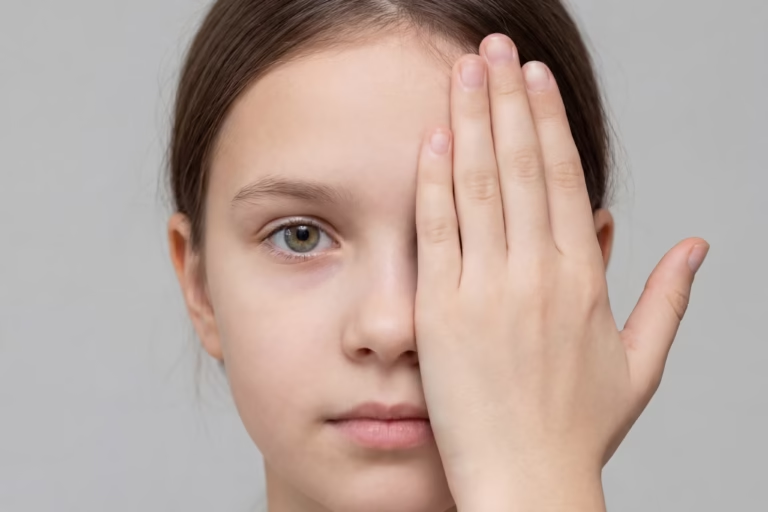


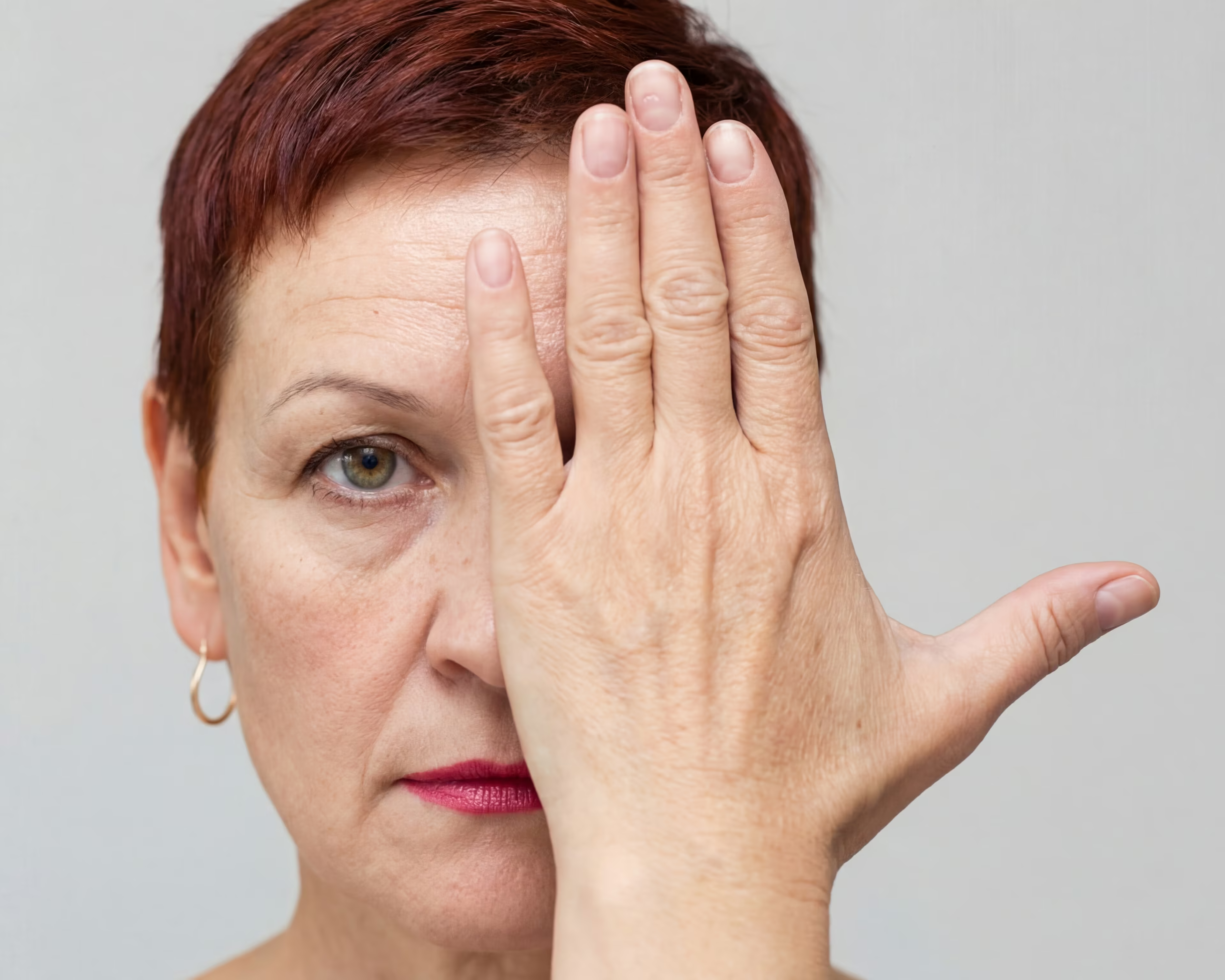
Bell's palsy is a neurological condition that affects the facial nerve and causes weakness or paralysis of the muscles on one side of the face. Although, in most cases, it is temporary, it can have a significant impact on quality of life, interfering with simple daily actions such as speaking, chewing, blinking, smiling and expressing emotions.
In this process, specialised physiotherapy for facial paralysis plays an essential role. More than recovering movement, the aim is to help the patient regain control, symmetry, facial expression, and confidence.
What is Bell's Palsy?
Bell's palsy, also known as idiopathic peripheral facial paralysis, is characterised by a sudden loss of movement in the muscles on one side of the face. This alteration is associated with inflammation or compression of the facial nerve, also called the VII cranial nerve.
The exact cause is not always identified, but some factors appear to be linked with an increased risk, such as viral infections, stress, pregnancy, diabetes and changes in the immune system.
The most common signs include:
- Facial asymmetry
- Deviation of the mouth to the unaffected side
- Difficulty closing the eye
- Difficulty frowning
- Palpebral fissure widening
- Loss of natural facial wrinkles
- Changes in speech, eating, and emotional expression
Beyond the physical symptoms, facial paralysis can affect self-esteem, communication and social relationships. Therefore, adequate support is important from the early stages.
The role of specialised physiotherapy in facial paralysis
Specialised physiotherapy for Bell's palsy is distinguished by a specific approach to the function of the facial nerve and facial muscles. Facial muscles are different from the rest of the body's muscles because they are directly linked to expression, communication, and very precise movements, such as smiling, closing the eyes, or frowning.
For this reason, recovery should not be based solely on “gaining strength.” The most important thing is to regain movement with quality, control, and symmetry.
Facial Neuromuscular Re-education
Neuromuscular re-education is one of the main areas of intervention in physiotherapy for facial paralysis. The aim is to help the patient relearn facial movements in a controlled and progressive manner.
The intervention may include work on:
- Gentle and controlled muscle activation
- Fine motor control
- Coordination between different muscle groups
- Facial muscle relaxation
- Movement awareness
- Offset prevention
This approach allows movement to return in a more organized fashion, avoiding excessive strain and inadequate compensations or patterns.
Prevention of complications
One of the great advantages of specialised physiotherapy is the prevention of complications associated with facial paralysis.
Without adequate support, changes can arise such as:
- Muscle spasms
- Facial stiffness
- Disuse atrophy
- Compensatory movements
- Synaesthesia
Synkinesias are involuntary movements that occur during a voluntary movement. For example, the patient tries to smile and their eye closes at the same time. These changes can become persistent and significantly interfere with facial expression.
Physiotherapy helps to reduce this risk through appropriate exercises, individualised guidance, and control over the intensity of movements.
The importance of early specialised physiotherapy
Physiotherapy specialised in Bell's palsy should begin as soon as possible after medical diagnosis. The initial phases are important for guiding the patient, protecting facial function, and avoiding habits that could hinder recovery.
At this stage, the physiotherapist can help to:
- Explain what should and should not be done
- Maintain the mobility and flexibility of the tissues
- Prevent excessive tension
- Avoid compensatory movements
- To promote a more balanced recovery
- To monitor clinical progress
Early starting doesn't mean doing a lot of exercise or straining your muscles. On the contrary, it means receiving proper guidance from the outset to avoid incorrect stimuli.
What to avoid during Bell's Palsy recovery
There are widely publicised practices that can hinder recovery from facial paralysis. Not all exercises are advisable and, in some cases, they can increase the risk of compensations and synkinesis.
During recovery, it is not advisable to exercise unsupervised, such as:
- Chewing gum
- Blowing up balloons
- Pulling faces repeatedly
- Forced smiles
- Training intense movements in front of a mirror without guidance
These stimuli can lead to excessive recruitment of the facial muscles and hinder the organised recovery of the facial nerve.
An evidence-based approach
The current approach of physiotherapy in facial paralysis values the control of movement, the quality of muscle activation and facial relaxation.
Some traditional techniques, such as ice, rapid stimuli, electrostimulation, and intense facial mimicry exercises, should be evaluated carefully. In many cases, these strategies focus too much on strength gain and do not consider essential aspects, such as the facial nerve's ability to generate adequate movement, muscle coordination, and the prevention of synkinesias.
Each case must be assessed individually. The choice of techniques depends on the stage of paralysis, the presence of movement, facial symmetry, sensation, pain, stiffness, and functional impact.
Specialist clinical assessment
Before commencing any treatment plan, it is essential to perform a detailed clinical assessment.
In the assessment of facial paralysis, the physiotherapist observes and evaluates:
- Mobility Amplitude of facial movements
- SymmetryBalance between the two sides of the face
- Muscle strengthFacial muscle contraction capacity
- Coordination Quality and integration of movements
- Compensation Abnormal or excessive movements
- Synaesthesia Presence of involuntary movements associated
- Function Speaking, chewing, swallowing, blinking and emotional expression
This assessment allows for the creation of an individualised physiotherapy plan, tailored to each person's recovery stage and goals.
An integrative perspective on facial recovery
The recovery from Bell's palsy involves much more than just facial muscle movement. There is a neurological, muscular, functional, and emotional dimension.
An integrative approach considers all these factors. The aim is to promote a more complete recovery, respecting the pace of the facial nerve and helping the patient regain confidence in their expression.
At Integrativa, Physiotherapy specialised in facial paralysis aims to work on the person's function, body awareness, coordination, and global well-being.
Specialist physiotherapy is an essential part of treating Bell's palsy. When started early and guided by a thorough clinical assessment, it can help improve facial recovery, reduce the risk of complications, and prevent sequelae such as contractures, compensations, and synkinesis.
A physiotherapist who specialises in facial paralysis doesn't just work on restoring movement. They also work on each person's expression, communication, self-esteem, and facial identity.
If you have had Bell's palsy or are showing signs of facial paralysis, seek specialist care. Proper guidance from the outset can make a difference to the quality of your recovery.
Alexandra Gomes | Physiotherapist specialising in the treatment and recovery of Facial Paralysis
member of the Facial Therapy Specialists International (FTSI)
Physiotherapist Card: 1459 | Order of Physiotherapists
Integrativa | Health and well-being as a lifestyle
This website and its content are for information purposes only and are not a substitute for medical or health professional advice. In all cases, treatments should be individualised and guided by health professionals. Do not make any changes to your treatment without contacting the doctor or health professional accompanying you.
Blog Articles