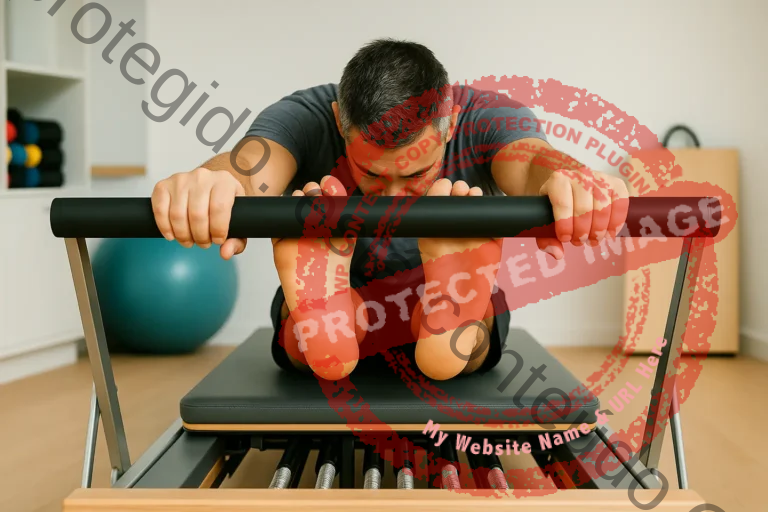


What is Clinical Pilates?
Clinical Pilates is an adaptation of the traditional Pilates method to the clinical context, used in Physiotherapy for rehabilitation, injury prevention, and the promotion of physical function. It should be guided by physiotherapists or professionals with specific training to ensure safe, progressive practice tailored to individual needs.
Unlike general Pilates classes, Clinical Pilates is an individualized approach. Exercises are selected and adapted according to each person's clinical condition, functional limitations, physical capacity level, and goals.
This approach is based on fundamental principles such as movement control, core activation, postural alignment, conscious breathing, and the execution of slow, precise, and controlled movements. The aim is to improve function, modulate pain, optimise movement, and promote safe and gradual progression.
5 myths about Clinical Pilates
1. Clinical Pilates is just stretching
Although it includes mobility and flexibility exercises, Clinical Pilates goes far beyond stretching. This approach works on motor control, core stability, muscle coordination, body awareness, and movement quality.
When properly guided, it can contribute to improving strength, posture, stability, and functionality in everyday activities.
2. Clinical Pilates is only for women
Despite often being associated with a female audience, Clinical Pilates can be recommended for people of different ages, genders, and fitness levels.
Men, athletes, the elderly and sedentary individuals can benefit from this approach, provided that the exercises are adapted to their needs, objectives and functional condition.
3. Clinical Pilates is not enough exercise
Clinical Pilates prioritises quality of movement, but this doesn't mean it's not demanding. Many exercises require deep muscular control, coordination, stability, endurance, and precision.
The intensity can be adjusted through body position, range of motion, breathing, number of repetitions, base of support, and the use of different equipment. Therefore, it can be progressive and challenging, even when the movements seem simple.
4. Clinical Pilates replaces Physiotherapy
Clinical Pilates does not replace Physiotherapy. It can, however, be integrated into a physiotherapy intervention plan, whenever it is suited to the clinical objectives, the functional condition and the individual needs of the person.
Depending on the initial assessment, it can be combined with other strategies such as manual therapy, therapeutic exercise, pain education, functional training, postural re-education, and progressive load management. This integration allows for a more comprehensive approach, tailored to the clinical context and the progression of each individual.
5. Clinical Pilates is only indicated when there is pain
Clinical Pilates can be useful in different clinical situations, but it is not limited to people with pain. This approach can also be integrated into injury prevention, mobility improvement, core strengthening, postural re-education, balance, and movement optimisation.
Its main advantage lies in its adaptability. The exercises are tailored to the clinical diagnosis, individual goals, level of functionality, and the progress of each person. Therefore, Clinical Pilates can be a relevant option both in rehabilitation contexts and in promoting more efficient, safe, and sustainable physical function.
5 truths about Clinical Pilates
Understanding Clinical Pilates Beyond the Myths
Clinical Pilates is an approach based on movement, postural control, and individual exercise adaptation. When guided by qualified professionals, it can be integrated into Physiotherapy with the aim of improving function, promoting stability, developing body awareness, and supporting a safer and more appropriate exercise practice.
More than a fixed set of exercises, Clinical Pilates should be understood as a progressive, individualised, and clinically oriented approach. Its application depends on the initial assessment, the person's goals, their functional condition, and their progression over time.
By clarifying myths and truths about Clinical Pilates, it becomes easier to understand its role in rehabilitation, injury prevention, and the promotion of more efficient, conscious, and sustainable physical function.
Rita Xarepe | Physiotherapist and Clinical Pilates Instructor by APPI
Physiotherapist Card: 4209 | Order of Physiotherapists
Integrativa | Health and well-being as a lifestyle
This website and its content are for information purposes only and are not a substitute for medical or health professional advice. In all cases, treatments should be individualised and guided by health professionals. Do not make any changes to your treatment without contacting the doctor or health professional accompanying you.
Related articles