

Pilates is today one of the activities most sought after by those who want to take care of their bodies, improve their posture or recover from an injury.
However, not all Pilates is the same. When there is pain, an injury, or a clinical condition, the training of the person guiding the sessions makes a difference.
This is where Clinical Pilates comes in, guided by physiotherapists with specific training.
What is Clinical Pilates
Clinical Pilates is an adaptation of the traditional Pilates method to the context of health and rehabilitation.
The exercises maintain the principles of Pilates, such as movement control, breathing, and trunk stability, but are adjusted to each person's needs in terms of posture, alignment, and range of motion.
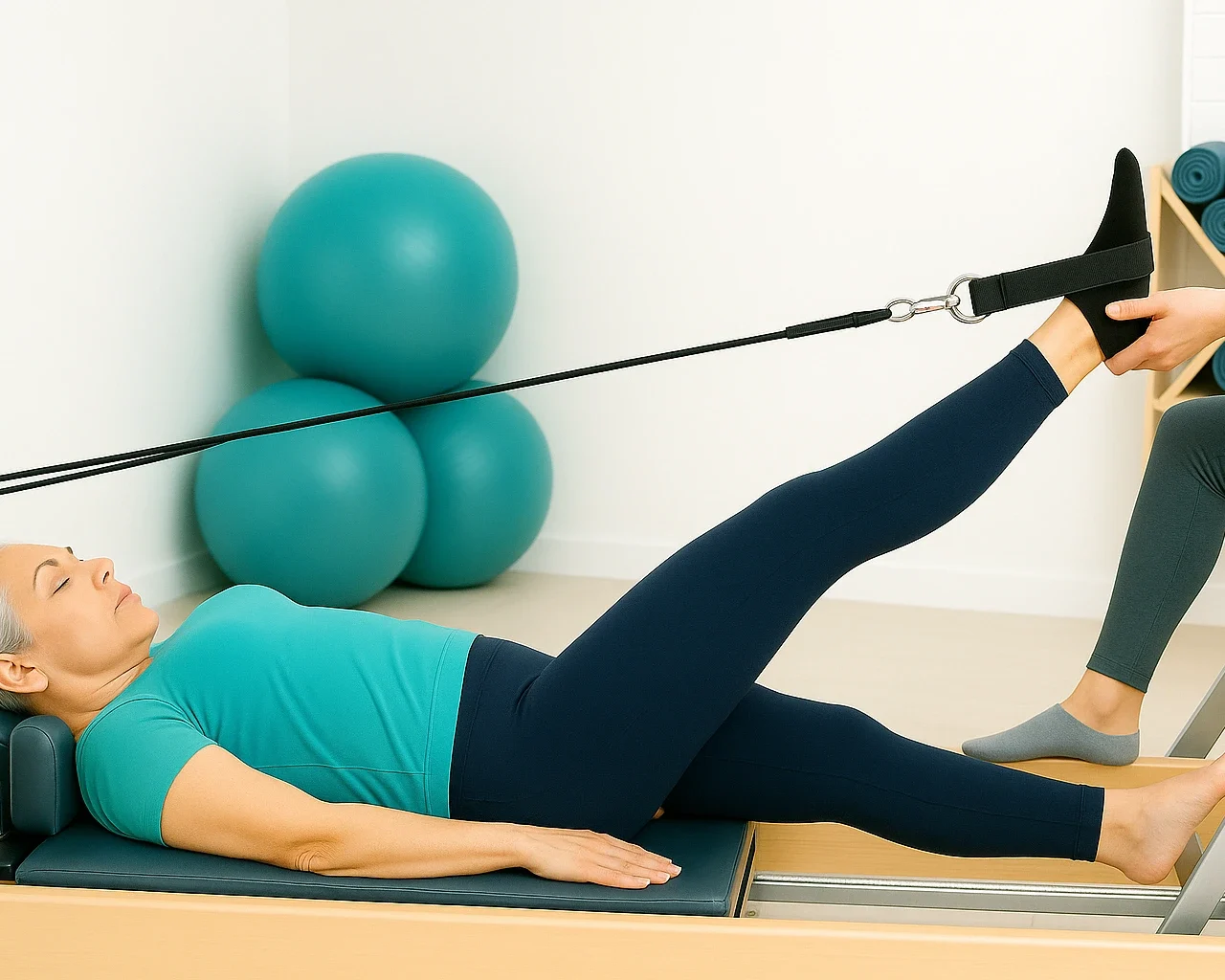
It can be performed on the ground or with equipment such as the Reformer, and it is progressive: it starts with simple movements and progresses to more demanding exercises as the body responds.
The APPI method
At Integrativa, Clinical Pilates follows the method of the APPI, the Australian Physiotherapy & Pilates Institute.
APPI was founded by the Australian physiotherapists Glenn and Elisa Withers, based on the need to create a form of Pilates suitable for the rehabilitation of people with different clinical conditions. Today, it is an international reference in the training of healthcare professionals, present in more than 20 countries.
The method is based on three principles:
- pain inhibition, so that movement can be resumed with comfort;
- the assessment of the impact of each exercise on the injury or dysfunction;
- the progressive transition from the injured person to full physical fitness.
In practice, this means that the same approach can accompany a person from the pain phase until they fully return to their activities, whether they be work, sports or everyday life.
The advantage of having a physiotherapist guide you
A physiotherapist trained in Clinical Pilates combines two types of knowledge: the knowledge of exercise and the knowledge of injury. This is reflected in several aspects.
Evaluation before starting
Before the first sessions, the physiotherapist assesses each person's posture, mobility, strength, and medical history. This assessment allows them to determine the most suitable exercises and those that should be avoided or adapted at a given stage.
Exercises adapted to each person's condition
Lower back pain, shoulder injury, or postpartum recovery require different care. The physiotherapist knows the involved structures and adjusts each exercise according to the injury, the recovery phase, and how the body responds.
Pay attention to pain and the signs of the body
During the sessions, the physiotherapist is attentive to the way the person moves and to what they report feeling. If an exercise causes pain or is performed with compensations, it can be corrected or replaced immediately.
A progression with criteria
Evolution does not depend solely on the amount of practice time. It depends on the ability to control movement and tolerate the load. The physiotherapist decides when it is appropriate to increase the level of demand based on these criteria.
Connection to physiotherapy treatment
When the person is undergoing physical therapy, Clinical Pilates can continue the work initiated during the treatment. The same team oversees both phases, which facilitates communication and the consistency of the plan.
Who it is suitable for
Clinical Pilates can be indicated in different situations, always after an evaluation:
- lower back or cervical pain;
- recovery from muscle, joint or tendon injuries;
- final phase of rehabilitation after surgery, with medical indication;
- Pregnancy and postpartum, including recovery from abdominal diastasis;
- athletes seeking to improve stability and reduce the risk of injury;
- people without injury who want to start practicing Pilates with technical guidance.
Gym Pilates and Clinical Pilates
Gym Pilates, taught by certified instructors, is a good option for those who have no complaints and are looking for regular physical activity.
Clinical Pilates is distinguished by being guided by healthcare professionals and based on an individual assessment. Therefore, it tends to be the most suitable option when there is pain, an injury, a clinical condition, or when you are returning to activity after a break.
Understanding Clinical Pilates from an integrative perspective
Pain and injuries rarely depend on a single factor. The way a person moves, their strength, rest, and the environment all play a role. stress and daily habits influence recovery.
At Integrativa, Clinical Pilates is guided by physiotherapists trained in the APPI method and is integrated with Physiotherapy, Osteopathy and Nutrition, in an individualized follow-up.
Scheduling an evaluation can be the first step towards practicing Clinical Pilates in a way that is tailored to the needs of each individual. Contact us.
This website and its content have an exclusively informational purpose and do not replace medical or healthcare advice.
David Brandão | Osteopath, Physiotherapist and Clinical Pilates Instructor
Physiotherapist Card: 3652 | Order of Physiotherapists // Osteopath Card: C-0031697 | ACSS
Integrativa | Health and well-being as a lifestyle
This website and its content are for information purposes only and are not a substitute for medical or health professional advice. Each person's treatment should be individualised and guided by health professionals. Do not make any changes to your treatment without contacting the doctor or health professional accompanying you.
Related articles