

With the progressive aging of the global population, falls and associated injuries are becoming increasingly important in public health. It is estimated that about a third of people aged 65 or older living in the community suffer at least one fall per year, with the risk being particularly significant in the older age groups.
Falls can compromise the mobility, autonomy, and quality of life of older adults. Their prevention requires an individualized approach that takes into account each person’s physical capabilities, health status, medication, environmental conditions, and lifestyle habits.
In this context, physiotherapy plays an important role in preventing falls in older adults by assessing physical function and implementing exercise programs tailored to individual needs.
What are the main risk factors for falls in the elderly?
The risk of falls often results from the combination of several physical, sensory, clinical, and environmental factors. Ageing can be associated with changes in balance, muscle strength, mobility, and the ability to respond to unexpected situations, increasing vulnerability to falls.
The main risk factors include:
- Changes in vision and hearing, which can make it difficult to perceive obstacles and orient oneself in space.
- Decreased balance and motor coordination, which compromises stability during walking and changes in position.
- Reduced mobility and functional ability, particularly when getting up, walking, or climbing and descending stairs.
- Progressive loss of muscle strength, especially in the lower limbs, which can make it difficult to maintain posture and recover balance.
- Osteoporosis, which increases bone fragility and the risk of fractures when a fall occurs, although it is not in itself a direct cause of falls.
- Dizziness and vertigo, which may be associated with vestibular, cardiovascular or other clinical conditions.
- Obstacles and unfavorable environmental conditions, such as loose carpets, slippery floors, insufficient lighting, and the absence of appropriate supports.
- Inappropriate footwear, which can compromise stability and safety during the march.
- Use of certain medications, especially those that cause drowsiness, dizziness, or a decrease in blood pressure. Taking several medications at the same time can also increase the risk, depending on the substances used and the person's clinical condition.
Other factors, such as neurological diseases, cognitive changes, urinary incontinence, orthostatic hypotension, and fear of falling, can also contribute to the increased risk.
Identifying these factors allows for preventive measures to be tailored to the needs of each individual, rather than resorting to a generalized approach.
What are the consequences of the declines in the elderly population?
Falls can have physical, psychological and social consequences, with repercussions on autonomy and quality of life.
Among the most frequent physical consequences are:
- Bone fractures, particularly in the hip, wrist and other regions of the upper and lower limbs.
- Cranial injuries, which can present different degrees of severity.
- Pain and functional limitation, with an impact on mobility and the performance of daily activities.
- Loss of muscle strength and physical ability, especially when the fall leads to prolonged periods of immobility.
- Increased dependence on daily life activities and, in more severe situations, the need for hospitalization or institutionalization.
- Increased risk of complications and mortality, particularly in people with frailty or pre-existing diseases.
The consequences are not limited to the physical dimension. The fear of falling again can lead to a reduction in physical activity and a voluntary restriction of movements. This decrease in activity can, in turn, favor the loss of muscle strength, the worsening of functional limitations, and social isolation.
Thus, fall prevention should seek not only to reduce the likelihood of new episodes, but also to preserve the mobility, participation in daily activities, and the confidence of the elderly person.
What is the role of physiotherapy in the prevention of falls in the elderly?
Physiotherapy contributes to the prevention of falls by assessing physical and functional abilities and implementing strategies aimed at improving balance, muscle strength, coordination, and mobility.
The intervention should be individualized, taking into account the history of falls, existing illnesses, the level of physical activity, functional capacity, and the goals of the elderly person.
Among the main objectives of physiotherapy are:
- Reduce the risk of falls by improving the physical abilities relevant to stability and walking.
- Preserving autonomy and independence in daily life activities.
- Improve balance, muscle strength, coordination and functional mobility.
- Develop greater safety in movement and changes of position.
- Promote confidence in the performance of daily activities, respecting individual abilities and limitations.
- Contribute to active aging, with greater participation in habitual activities.
Scientific evidence supports the importance of exercise programs that include balance training, functional exercises, and muscle strengthening. Their effectiveness depends on factors such as suitability to physical condition, the progression of the exercises, the frequency and continuity of the intervention. International recommendations also highlight the importance of integrating these measures into a prevention strategy tailored to individual risk.
What physiotherapy interventions can help prevent falls?
After the initial assessment, the physiotherapist defines an intervention plan tailored to the needs and capabilities of the elderly person. This plan can include different components.
Exercises of balance and motor coordination
Balance exercises aim to improve the ability to maintain stability in static positions and during movement.
They can include transferring body weight between the lower limbs, postural stability exercises, changes in direction, and tasks that challenge balance in a progressive and safe way.
The selection of exercises should take into account the person's functional ability and their risk of falling, resorting to support or supervision whenever necessary.
Strength training
Loss of muscle strength, especially in the lower limbs, can make tasks like getting up from a chair, climbing stairs, or regaining stability after an imbalance more difficult.
Muscle strengthening can include exercises for the muscles of the legs, hips, and trunk, with resistance and intensity adjusted to each person's physical condition.
The goal is to improve the ability to produce strength and perform functional movements necessary for mobility and independence.
Training in gait and functional mobility
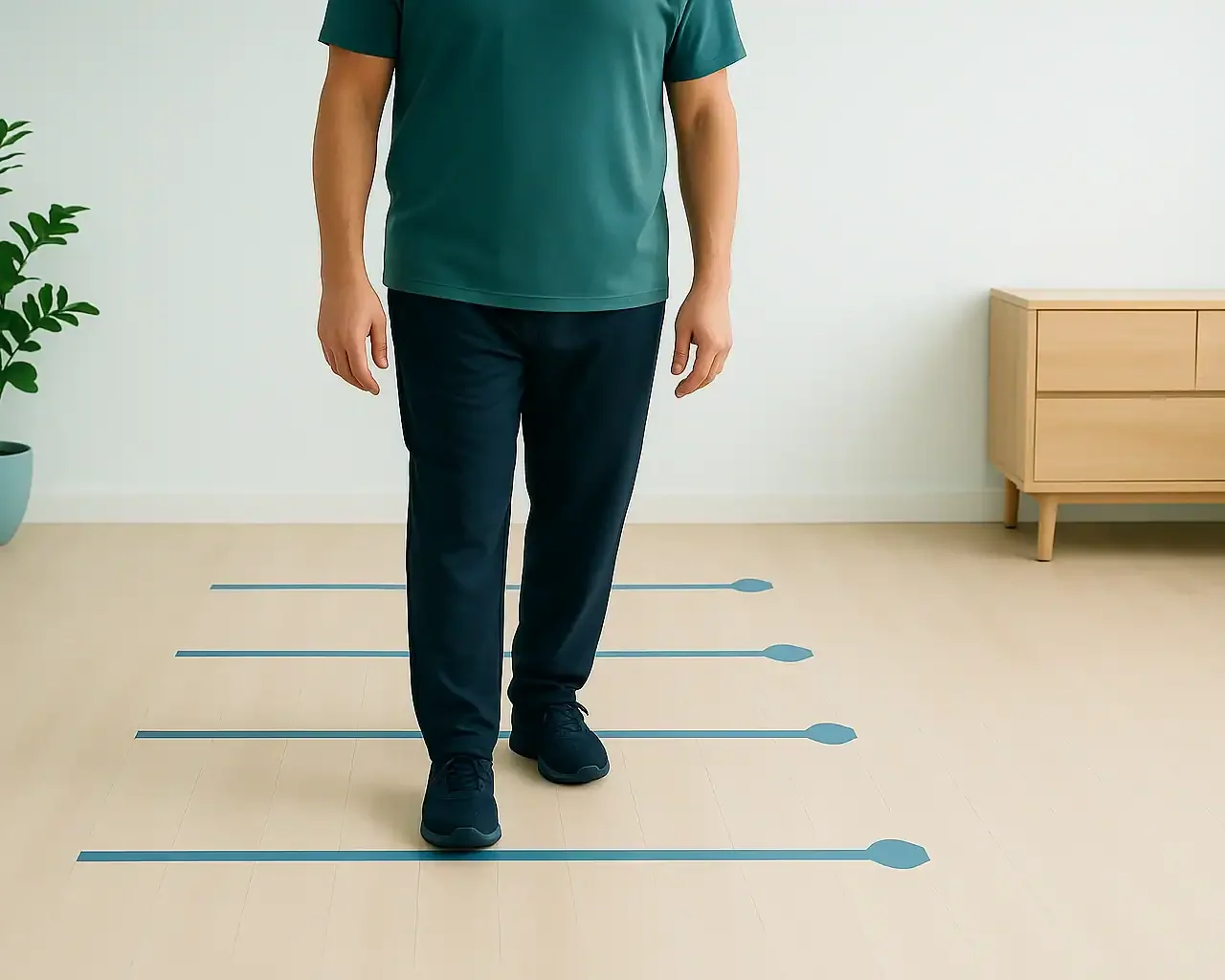
The marching training allows you to work on stability during movement, adapting to different surfaces, changing direction and crossing obstacles.
When indicated, the physiotherapist can also assess the need for walking aids such as crutches or walkers, and guide their correct use.
These strategies should be adapted to the environment in which the person habitually moves, including the home and outdoor spaces.
Exercises for joint mobility
The decrease in joint mobility can make it difficult to perform the movements necessary for walking, transfers, and everyday activities.
The mobility and flexibility exercises can be included in the physiotherapy program when there are relevant limitations, contributing to facilitating functional movements.
However, these exercises should complement, and not replace, the training in balance and muscle strength, which is particularly important in preventing falls.
Training in daily life activities
Daily activities can represent significant challenges for people with balance or mobility impairments.
Functional training can include tasks such as:
- Getting up and sitting in a chair.
- Getting in and out of bed safely.
- Climbing up and down stairs.
- Walking and changing direction.
- Reach for objects and perform weight transfers.
The practice of these tasks allows for the development of abilities directly related to autonomy, while respecting the functional limits of each person.
Education of the elderly, their families and caregivers
The prevention of falls also depends on identifying and reducing the risks present in the habitual environment.
The physical therapist can advise the elderly person, their family and caregivers on measures such as:
- Remove or fix carpets that may slip.
- Keep the circulation areas unobstructed.
- Ensure adequate lighting, especially during the night.
- Use stable footwear that fits properly and has a non-slip sole.
- Install support bars and other devices when warranted.
- Use the recommended walking aids correctly.
- Adopting safe strategies for transfers and moving around within the home.
These measures must be adjusted to the characteristics of the housing, the functional capabilities and the specific needs of the elderly person.
Preventing falls requires a multi-dimensional approach
Although physiotherapy plays an important role, fall prevention does not depend solely on physical exercise. In many situations, collaboration between different healthcare professionals is necessary to identify and manage risk factors.
The evaluation may include an analysis of the history of falls, gait, balance, muscle strength, vision, hearing, cardiovascular health, medication, and the conditions of the home environment.
The medication review should be performed by the doctor or another qualified professional, since some medications can contribute to dizziness, drowsiness, or changes in blood pressure. The medication should not be discontinued or altered without clinical guidance.
When there is a risk of fracture, it may also be pertinent to assess bone health and the factors associated with osteoporosis. Identifying and managing these factors contributes to a more comprehensive preventive approach.
The intervention should also consider the fear of falling. In some people, this fear leads to reduced physical activity and the progressive loss of functional ability. An individualized program can help develop strategies to gradually and safely resume activities.
When should an elderly person seek the help of a physiotherapist?
Evaluation by a physiotherapist may be relevant when there are signs of decreased functional ability or factors that increase the risk of falls.
Among the situations that justify this assessment are:
A recent fall, especially when accompanied by changes in gait or balance.
- Repeated falls or episodes of near falls.
- Difficulty walking, getting up from a chair or climbing and descending stairs.
- Decrease in muscle strength or mobility.
- Unsteadiness during walking or difficulty in changing direction.
- Fear of falling leads to avoiding habitual activities.
- The need to evaluate the use of a walking stick, a wheelchair or other walking aid.
- Decreased autonomy in daily life activities.
Early evaluation can help identify functional limitations and guide appropriate preventive measures.
However, it is important to distinguish the situations that can benefit from a scheduled evaluation from those that require urgent medical assistance. After a fall accompanied by loss of consciousness, suspected fracture, sudden inability to get up, new neurological signs, or a traumatic brain injury with concerning symptoms, immediate medical assistance should be sought.
Understanding fall prevention from an integrated perspective
The prevention of falls in the elderly constitutes an important component of promoting health, autonomy, and quality of life during aging.
Physiotherapy allows assessing functional ability and developing individualized programs focused on balance, muscle strength, gait, and the safe performance of daily activities. When integrated with the identification of clinical and environmental risk factors, this intervention can contribute to reducing the occurrence of falls and their consequences.
An effective approach should consider the elderly person as a whole, respecting their capabilities, needs, preferences, and life context. The coordination between the person, the family, caregivers, and healthcare professionals allows for more appropriate guidance of preventive measures and promotes the maintenance of independence throughout aging.
Rita Xarepe | Physiotherapist and Clinical Pilates Instructor by APPI
Physiotherapist Card: 4209 | Order of Physiotherapists
Integrativa | Health and well-being as a lifestyle
This website and its content are for information purposes only and are not a substitute for medical or health professional advice. In all cases, treatments should be individualised and guided by health professionals. Do not make any changes to your treatment without contacting the doctor or health professional accompanying you.
Related articles