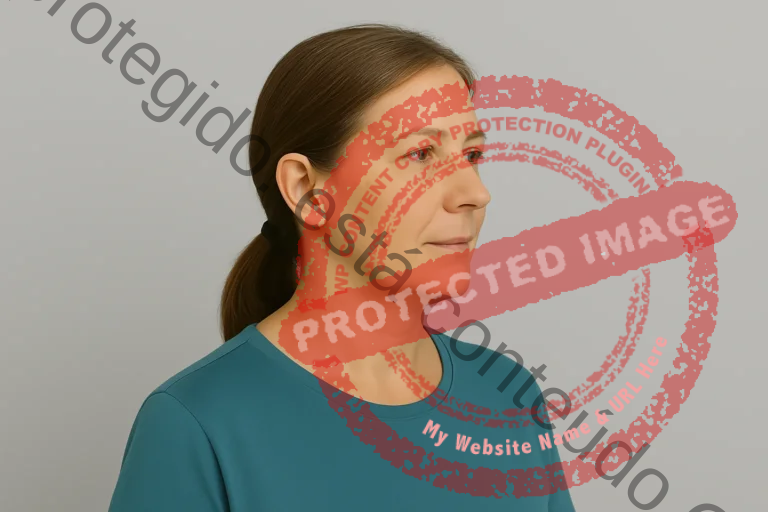


Facial paralysis occurs due to an injury to the facial nerve (VII cranial nerve), resulting in partial or total loss of facial movements. During the process of nerve regeneration, when it takes place in a disorganised way, synkinesias may appear, characterised by involuntary movements associated with voluntary actions. These changes can interfere with facial expression, speech and other essential day-to-day functions.
Early recognition of synkinesias and monitoring by a specialised physiotherapist are key to reducing their functional impact. In this article, we explore what synkinesias are, why they occur, what the warning signs are and how they can be prevented.
What are synkinesias?
Syncinesia is a common sequela of facial paralysis. The term derives from the Greek “syn” (together) and “kinesis” (movement), referring to movements that occur simultaneously.
Simply put, this is an involuntary movement that accompanies a voluntary movement. In other words, when you intentionally contract a facial muscle, you simultaneously activate another muscle that shouldn't be involved in this action.
The classification of synkinesias is based on the muscle groups involved. The first term corresponds to the muscle group activated voluntarily and the second to the group that moves involuntarily. For example:
- Oculo-oral synkinesia - when a voluntary contraction of the eye muscles, such as closing the eye, causes an involuntary movement of the mouth
- Oral-ocular synkinesia - when a voluntary movement of the mouth, such as smiling or pursing the lips, triggers an involuntary eye movement
Why do synkinesias occur?
Involuntary movements or mass movements result from disorganised regeneration of the facial nerve after compression or injury. Several mechanisms may be involved:
- Aberrant regeneration (miss-wiring) - axons regenerate in a disorganised way, establishing connections with muscles other than those they originally innervated
- Ephatic transmission (cross-talk electrical between nerve branches) - due to the loss of the myelin sheath, electrical impulses can propagate between adjacent branches of the facial nerve, activating muscles improperly
- Nuclear hyperexcitability - the cells of the facial nerve nucleus become more sensitive after axonal degeneration, reacting to stimuli from neighbouring nerves
- Maladaptive cortical plasticity - alterations in the motor cortex can lead to abnormal muscle activation patterns
It is likely that, in most cases, synkinesias result from a combination of these mechanisms.
Recent studies indicate that, clinically, they tend to manifest from the fifth or sixth month after the onset of paralysis, and can appear as early as the third month and intensify up to around two years.
How can synkinesis be detected early?
Early identification makes it possible to adjust the approach and reduce its progression. Some warning signs include:
- Involuntary movements during voluntary actions, such as closing the eyes when smiling or moving the mouth when blinking
- Increased muscle tension at rest, with a feeling of stiffness or constant contraction
- Progressive asymmetry over time, with accentuation of the nasolabial fold or apparent reduction in the size of the eye
- Difficulty isolating movements, with exaggerated activation of adjacent muscles
- Facial fatigue when speaking, chewing or making expressions
- Decreased ability to relax the face
- Intensification of involuntary contractions after repetitive or excessive exercise
These signs warrant assessment by a physiotherapist specialising in facial paralysis.
How can synkinesis be prevented?
Prevention is based on a structured and individualised approach. Some fundamental guidelines include:
- Perform gentle, controlled movements, guided by a specialised physiotherapist
- Favour movement quality over strength, as the facial muscles require coordination and selectivity.
- Avoid facial mimicry exercises performed without guidance
- Do not use aggressive massages or electrical stimulation, which can reinforce inappropriate motor patterns.
- Integrate relaxation techniques, light stretching and gentle mobilisation to reduce muscle tension
Each person has a different recovery process, so neuromuscular re-education must be tailored to individual needs.
The appearance of synkinesis is not just an aesthetic alteration. It can compromise essential functions such as emotional expression, communication, chewing, speech and blinking, with a significant impact on quality of life and psychological well-being.
Understanding synkinesis from an integrative perspective
Recovery after facial paralysis requires a specialised approach focused on neuromuscular reorganisation and quality of movement. Specialised physiotherapy aims to support the re-education of motor patterns, reduce involuntary movements and promote greater facial symmetry and functionality.
At Integrativa physiotherapy specialising in facial paralysis is based on a rigorous clinical assessment of mobility, symmetry, muscle strength, coordination, compensatory patterns and functional impact. Based on this analysis, an individualised neuromuscular re-education approach is designed, adjusted to the stage of evolution and the specific characteristics of each person.
Specialised intervention helps support the balance of facial movements, contributing to a more natural expression and better functional integration in everyday life.
Alexandra Gomes | Physiotherapist specialising in the treatment and recovery of Facial Paralysis
member of the Facial Therapy Specialists International (FTSI)
Physiotherapist Card: 1459 | Order of Physiotherapists
Integrativa | Health and well-being as a lifestyle
This website and its content are for information purposes only and are not a substitute for medical or health professional advice. In all cases, treatments should be individualised and guided by health professionals. Do not make any changes to your treatment without contacting the doctor or health professional accompanying you.
Blog Articles