

Parkinson's disease is a progressive neurological disease that can affect movement, balance, gait, muscle strength, and independence. Although medication plays a fundamental role in controlling symptoms, therapeutic exercise is an essential component of the non-pharmacological approach to the disease.
Current scientific evidence indicates that regular and appropriate exercise can contribute to improving motor function, gait, balance, physical capacity and quality of life. The international recommendations of the Parkinson’s Foundation and the American College of Sports Medicine emphasize the importance of integrating different components of exercise, namely aerobic activity, strength training, flexibility and balance training, agility and dual task training.
What is Parkinson's disease?
Parkinson's disease is a neurodegenerative disease that progressively affects different circuits of the nervous system. One of the most well-known changes is the loss of dopamine-producing neurons in certain regions of the brain, which interferes with the circuits involved in controlling movement.
Among the most frequent motor symptoms are:
- Rest tremor;
- Muscle stiffness;
- Bradicinesia, or slowness of movements;
- Postural changes;
- Difficulty initiating certain movements;
- Changes in gait;
- Decrease in stride length;
- Changes in balance;
- Difficulty in changing direction;
- Episodes of freezing, or blocking the march.
Parkinson's disease can also be associated with non-motoric manifestations such as fatigue, sleep disturbances, constipation, mood changes, and cognitive changes. The combination of these symptoms can have a significant impact on independence and participation in daily activities.
As the movement becomes more difficult, some people naturally reduce their physical activity. Fear of falling, fatigue, or difficulty performing certain tasks can lead to spending more time sitting or being inactive.
This reduction in activity can contribute to a cycle of physical deconditioning: the decrease in movement favors the loss of strength, endurance, and confidence, which can make the performance of daily activities progressively more demanding. It is in this context that therapeutic exercise assumes particular importance.
Why is exercise important in Parkinson's disease?
Exercise does not eliminate Parkinson's disease nor replace medication or other interventions recommended by the healthcare team. However, there is scientific evidence supporting the inclusion of regular exercise in the approach to this condition.
Studies and systematic reviews indicate that different forms of exercise can contribute to improving motor function, physical capacity, and quality of life, although the benefits vary depending on the intervention, individual characteristics, and the stage of the disease.
The goal is not simply to increase the amount of exercise performed. It is important to select the type of activity, intensity, frequency, and progression that are most appropriate for each person, taking into account symptoms, physical capacity, the stage of the disease, medication, and individual goals.
A structured exercise program can help preserve important abilities, maintain participation in daily activities, and support autonomy as the disease progresses.
What are the main benefits of therapeutic exercise in Parkinson's disease?
Improving mobility and functional ability
One of the central goals of physiotherapy in Parkinson's disease is to preserve the ability to perform daily activities.
The exercise can be directed towards concrete tasks, such as getting up and sitting down, walking, climbing and descending stairs, changing direction, getting into and out of bed, performing transfers, reaching and carrying objects, or performing household tasks.
The intervention seeks to facilitate the transfer of the skills developed during the exercise to real-life everyday situations. For this reason, in addition to working on isolated movements, it is important to integrate functional tasks that correspond to the needs and goals of each person.
Improving the march
Changes in gait are common in Parkinson's disease and can evolve over time. They may include shorter steps, reduced speed, difficulty starting to walk, changes in the rhythm of the gait, difficulty changing direction, and episodes of falling. freezing.
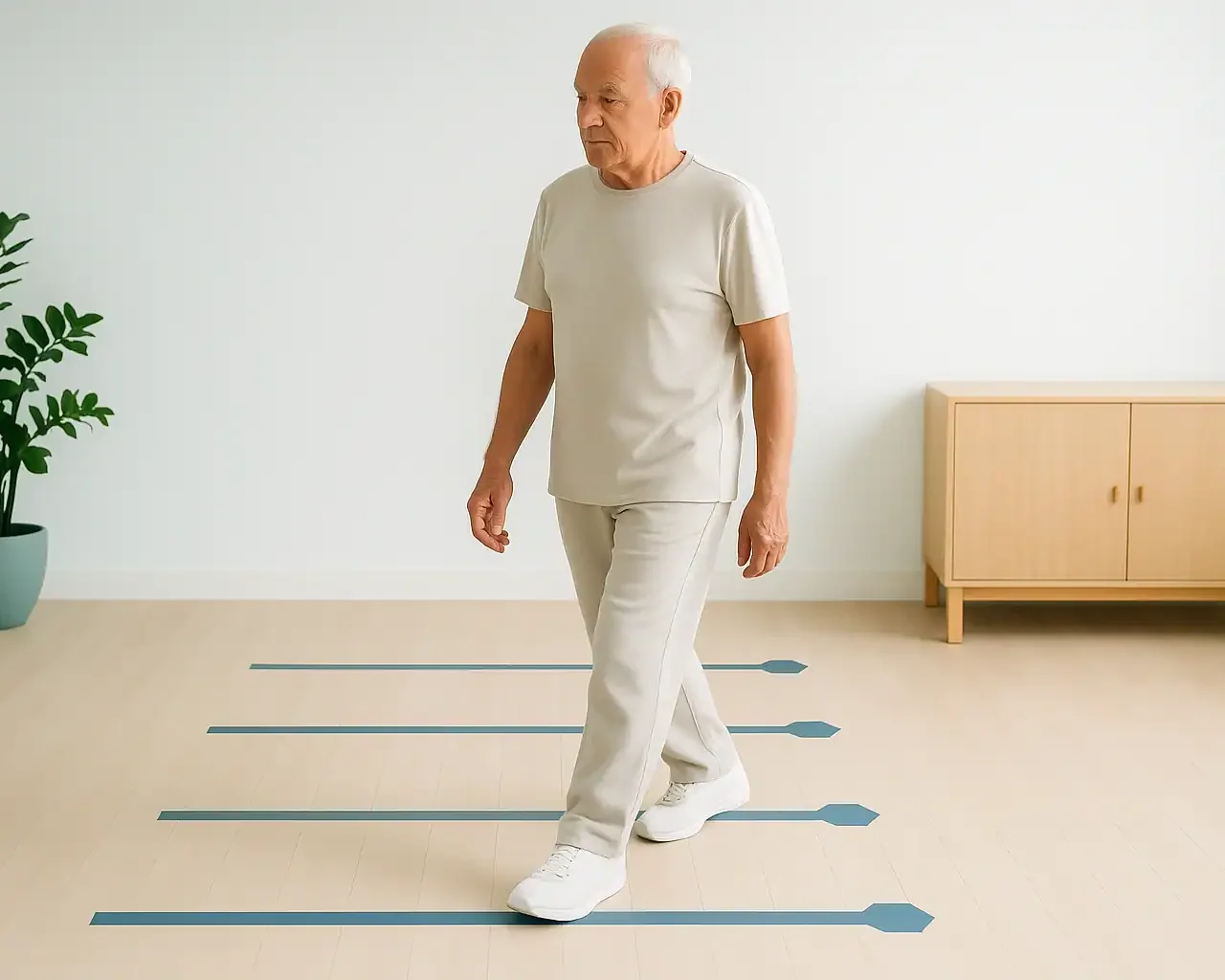
Physiotherapy may include specific training in walking, with exercises aimed at stride length and amplitude, speed, cadence, start and stop, changes in direction, and the overcoming of obstacles.
Strategies for walking on different surfaces and handling episodes of impaired gait can also be worked on. In certain situations, the use of external stimuli, such as visual cues or auditory signals, can help facilitate the execution of movements.
The choice of strategies depends on the clinical characteristics, functional difficulties, and needs of each person.
Improve balance and reduce the risk of falls
Changes in balance can increase the risk of falls and compromise independence. In addition to the possible physical consequences, a fall can trigger a fear of falling again, leading to avoidance of certain activities and an additional reduction in physical participation.
Balance training therefore constitutes an important component of exercise in Parkinson's disease. Depending on the functional ability and safety level of each person, it can include:
- Postural stability;
- Weight transfers;
- Control of the center of mass;
- Changes in direction;
- Displacements in different directions;
- Training of balance reactions;
- Unipodal support, when appropriate and safe;
- Transposition of obstacles;
- Movements of great amplitude;
- Functional tasks;
- Agility training;
- Exercises that involve a dual task.
Current recommendations emphasize the importance of practicing balance, agility, and the simultaneous execution of motor and cognitive tasks on a regular basis, integrating these skills into daily activities whenever possible and under appropriate safety conditions.
Increase and preserve muscle strength
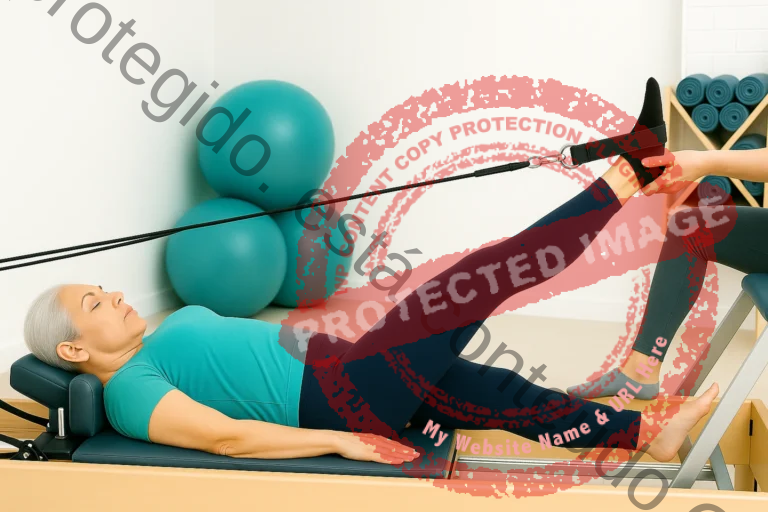
The reduction in physical activity can contribute to the loss of muscle strength and physical capacity. Strength training allows you to work the main muscle groups and can facilitate functional tasks such as getting up from a chair, walking, climbing stairs, maintaining good posture, carrying objects, and performing household chores.
International recommendations usually include strength training two to three times a week, on non-consecutive days, with gradual progression of resistance and adaptation to individual ability.
The selection and execution of exercises should take into account the presence of stiffness, postural changes, pain, osteoporosis, difficulties with balance, or other associated clinical conditions. These characteristics may require adjustments to ensure proper and safe practice.
Improving cardiovascular capacity
Aerobic exercise is another important component of an exercise program for people with Parkinson's disease.
Depending on the physical condition and individual characteristics, activities such as fast-paced walking, stationary cycling, cycling, treadmill exercise, dance, swimming, or interval aerobic exercise can be used.
In addition to the benefits associated with cardiovascular health, increasing physical endurance can make everyday activities less demanding. A better ability to exert effort can facilitate the completion of tasks over longer periods and contribute to maintaining an active lifestyle.
The intensity and duration of exercise should be adjusted to the functional capacity, health conditions, and individual tolerance.
Preserving mobility and flexibility
Muscle stiffness and certain postural changes can contribute to reduced range of motion. For this reason, exercise can include work on joint mobility, range of motion, and flexibility, with special attention given to the functional needs of each person.
Among the movements that can be integrated into the program are trunk extension and rotation, broad movements of the upper limbs, mobility of the hips and ankles, and functional range-of-motion exercises.
The goal is not only to increase flexibility, but also to preserve the ability to perform necessary movements in everyday life, such as getting dressed, reaching for objects, rotating the trunk, or walking.
Exercise recommendations often include sessions of flexibility twice to three times a week, with the more frequent practice being useful when appropriate to individual needs.
Contribute to improving the quality of life
The benefits of exercise are not limited to motor symptoms. Physical activity can contribute to improving functional ability, well-being, and some non-motor symptoms associated with Parkinson's disease.
The research points to possible benefits in dimensions such as mood, constipation, and cognitive function, in addition to effects on mobility, strength, and balance. The magnitude of these benefits can vary and depends on various factors, including the type of exercise and the clinical characteristics of each person.
The context in which the activity is carried out can also be relevant. For some people, participation in group activities provides opportunities for social interaction, promotes the maintenance of an exercise routine, and can contribute to motivation.
Preserving autonomy
One of the goals of rehabilitation in Parkinson's disease is to support the maintenance of independence in daily activities for as long as possible.
Strength, balance, mobility, endurance, coordination and the ability to perform functional tasks are interconnected and must be considered in an integrated manner.
In everyday life, these abilities are used simultaneously. Therefore, an exercise program can be tailored to specific and meaningful goals for each person, such as getting around the house more safely, preparing meals, performing household tasks, or participating in social activities.
This connection between exercise and the real demands of everyday life allows intervention to be directed towards functionality and autonomy.
Increasing trust in the movement
When certain movements become more difficult, it is natural to experience fear of falling or of not being able to perform a task safely. This fear can limit physical activity and reduce participation in everyday situations.
Therapeutic exercise allows for the practice of movements in a controlled environment, with progression adjusted to individual ability and supervision by the physiotherapist whenever necessary.
As the person develops the ability to perform certain tasks, they can also increase their confidence in carrying them out in everyday life. This confidence does not mean ignoring existing limitations, but recognizing the challenges and developing strategies to deal with them more safely.
What is the dual task and why is it important in Parkinson's disease?
Much of everyday life requires performing more than one task at the same time. Walking while talking, carrying a bag while looking for the keys, or crossing the street while paying attention to traffic are examples of situations that involve dual tasks.
This concept refers to the simultaneous execution of two tasks, which may involve motor components, cognitive components, or both.
In Parkinson's disease, performing different tasks simultaneously can become more difficult and increase the demands placed on walking and balance. For example, talking while walking can interfere with the speed of walking or with the ability to maintain a stable trajectory.
Training can therefore evolve progressively into situations that combine movement with a second task, respecting the functional capacity and safety of the person. The complexity should be adjusted individually, especially when there are changes in balance or episodes of gait blockade.
The balance, agility and dual task training integrates the main components of the international exercise recommendations for Parkinson's disease.
Is it safe to exercise with Parkinson's disease?
In most people, exercise can be performed safely when it is selected and adapted to individual clinical and functional characteristics. However, Parkinson's disease can be associated with changes in balance, episodes of freezing, Hypotension, cognitive changes, fatigue or other conditions that should be considered in the planning of physical activity.
Functional assessment allows identifying limitations, estimating the risk of falls and determining the necessary adaptations. The choice of exercises should also take into account medication, the stage of the disease, the ability to understand instructions and the response to effort.
In certain situations, professional supervision may be necessary, particularly when there is a high risk of falls, significant difficulty in walking, or other relevant limitations. In these cases, it is not advisable to start potentially dangerous exercises without prior evaluation by a healthcare professional with experience in the field.
Safety does not depend solely on the choice of exercises. It is also important to consider the environment, the available support, the progression of intensity, and the ability to execute the movements with proper control.
Understanding therapeutic exercise in Parkinson's disease from an integrative perspective
Parkinson's disease is progressive, but the diagnosis does not mean that a person has to abandon movement or stop participating in activities that contribute to their quality of life. Current scientific evidence reinforces the importance of integrating regular and adapted exercise into the approach to the disease.
There is no single exercise program suitable for all people with Parkinson's. The intervention should be adjusted to the individual's abilities, symptoms, needs, and goals, and it can be modified as the condition progresses.
A structured program can combine aerobic exercise, strength training, mobility and flexibility, balance training, gait training, agility, dual tasking and functional exercises. The selection of these components should take into account clinical evaluation and their relevance to daily activities.
Rather than performing isolated exercises, it is important to develop skills that can be used in real-life situations. Maintaining autonomy means, in this context, maintaining the ability to carry out meaningful activities, participate in social life, and manage everyday demands in accordance with each person’s individual capabilities.
In Integrative Medicine, physical therapy is guided by an individualized assessment and the definition of rehabilitation plans tailored to the needs, capabilities, and goals of each person.
In Parkinson's disease, therapeutic exercise is integrated into an approach centered on function, movement, and autonomy, seeking to develop skills that can be applied in daily activities.
When there are changes in gait, balance, strength, or mobility, an evaluation by a physiotherapist with experience in neurological rehabilitation can help identify functional needs and define an exercise program appropriate to the clinical condition.
Staying active does not simply mean doing more exercise. It means developing adapted, safe, and consistent forms of movement that support functionality and autonomy throughout the different stages of Parkinson's disease.
Rita Xarepe | Physiotherapist and Clinical Pilates Instructor by APPI
Physiotherapist Card: 4209 | Order of Physiotherapists
Integrativa | Health and well-being as a lifestyle
This website and its content are for information purposes only and are not a substitute for medical or health professional advice. In all cases, treatments should be individualised and guided by health professionals. Do not make any changes to your treatment without contacting the doctor or health professional accompanying you.
Related articles