

What is Clinical Pilates
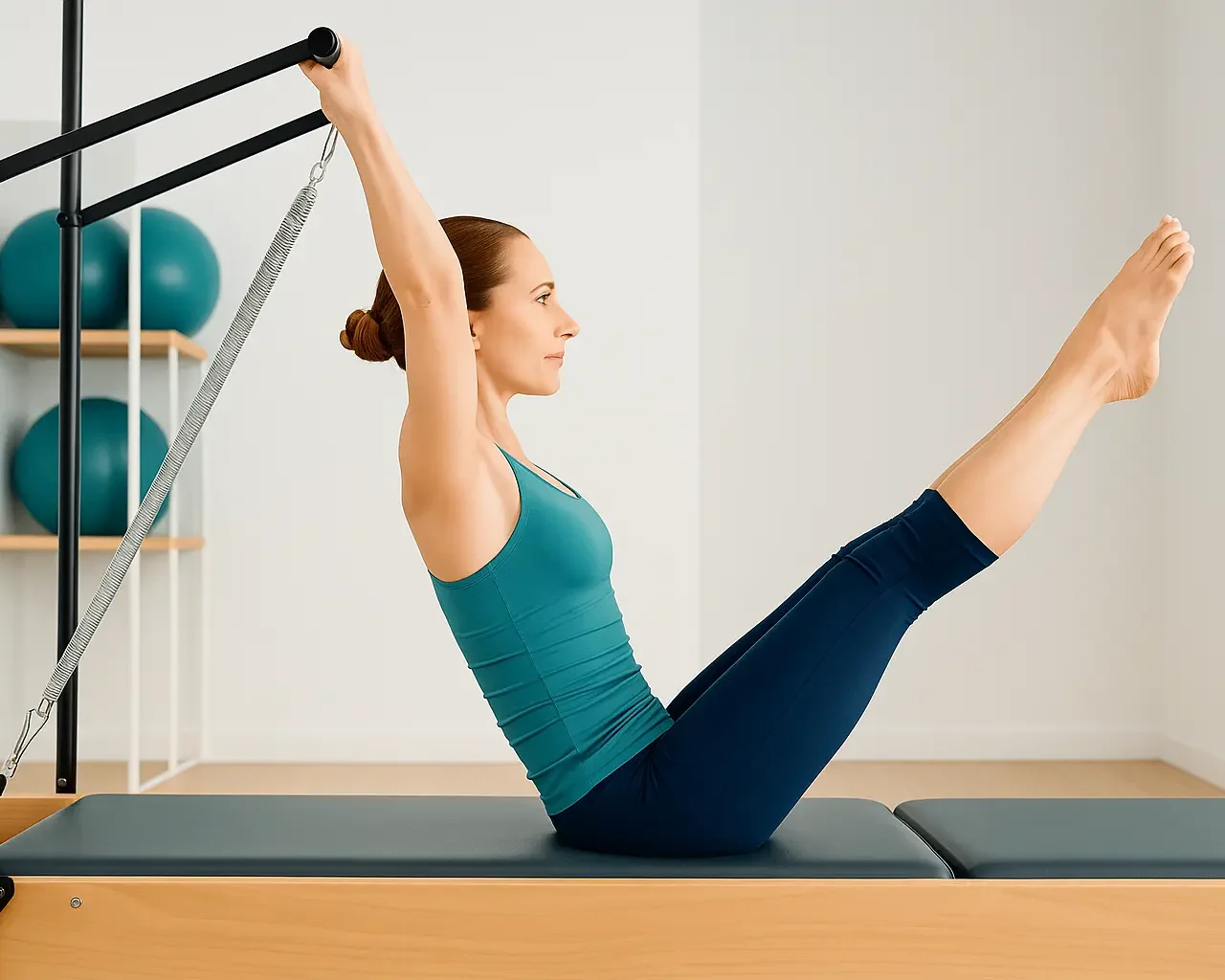
Clinical Pilates is a movement-based therapeutic approach, applied within the context of Physiotherapy, which integrates fundamental principles such as centering, breath, precision, control, flowing movement, and concentration. These principles guide practice in a structured manner, promoting greater body awareness and a more balanced relationship between mind and body.
The method originates from the work developed by Joseph Pilates, which described its system as a way to promote global health through conscious movement. In their words, the method “It develops a uniform body, corrects wrong postures, restores physical vitality, invigorates the mind and elevates the spirit.
Clinical Pilates and Physiotherapy: clinical framework
Clinical Pilates is the result of adapting the original method developed by Joseph Pilates, and is guided by physiotherapists with specific training, such as those educated by the Australian Physiotherapy and Pilates Institute (APPI). This adaptation allows for the integration of the method's principles into rehabilitation and functionality promotion contexts, respecting safety, progression, and individualisation criteria.
The approach is used both in individuals with no prior physical activity experience and in movement re-education situations, integrating into therapeutic plans tailored to each person's clinical needs.
Functional benefits of Clinical Pilates
In a clinical context, Pilates can contribute to:
- Improvement of postural behaviour
- Support for joint and muscle pain management
- Increase in muscle strength and endurance
- Respiratory control optimisation
- Improvement of motor coordination and body awareness
- Support for flexibility and functional mobility
Joseph Pilates argued that conscious movement played a central role in health, stating that “physical fitness is the first requisite for happiness”, an idea that continues to frame the clinical application of the Method.
The six principles of Clinical Pilates
- Lumbar-pelvic centre and stability: The exercises are performed with attention to the position of the lumbar spine and pelvis, seeking a neutral and comfortable alignment. The activation of the deep abdominal muscles, particularly the transverse abdominis, is promoted with the aim of supporting lombo-pelvic stability during movement.
- Conscious breathing Breathing is integrated in a coordinated way with movement. Usually, exhalation accompanies phases of greater control demand, favouring predominantly thoracic and functional breathing.
- Precision of movement The exercises are performed with a focus on the quality of the gesture, respecting the amplitude, coordination and muscle activation appropriate to each task.
- Concentration and body awareness The practice requires full attention to the body and movement, promoting greater body awareness and a more efficient and safe execution of the exercises.
- Fluid movement The exercises are performed continuously and harmoniously, avoiding jerky movements and favouring coordination and motor control.
- Engine control The control of movement is essential, especially when working against gravity or with resistance. Joseph Pilates underscored this idea by stating: “It is better for our muscles to obey our will than to allow our will to be dominated by the reflex actions of our muscles.”
Clinical Pilates as a therapeutic tool
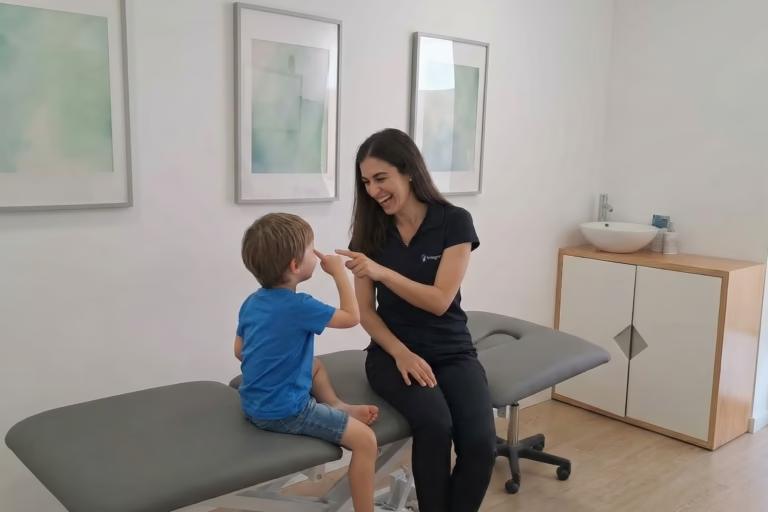
At Integrativa, Clinical Pilates is guided by physiotherapists with specific training, respecting the individuality of each person. Sessions can be carried out on an individual basis, allowing for close supervision and meticulous adaptation of exercises.
Clinical Pilates can be integrated into both rehabilitation processes and programmes for maintaining musculoskeletal functionality and health. It is a progressive, adaptable, and person-centred approach, used to complement Physiotherapy care.
Joseph Pilates summarised the progression of the method clearly, stating: “After 10 sessions you will feel the difference, after 20 sessions you will see the difference and after 30 sessions you will have a new body.” In a clinical context, this idea is interpreted as the importance of consistency, progression, and individual adaptation over time.
David Brandão | Osteopath, Physiotherapist and Clinical Pilates Instructor
Physiotherapist Card: 3652 | Order of Physiotherapists // Osteopath Card: C-0031697 | ACSS
Integrativa | Health and well-being as a lifestyle
This website and its content are for information purposes only and are not a substitute for medical or health professional advice. In all cases, treatments should be individualised and guided by health professionals. Do not make any changes to your treatment without contacting the doctor or health professional accompanying you.
Related articles