

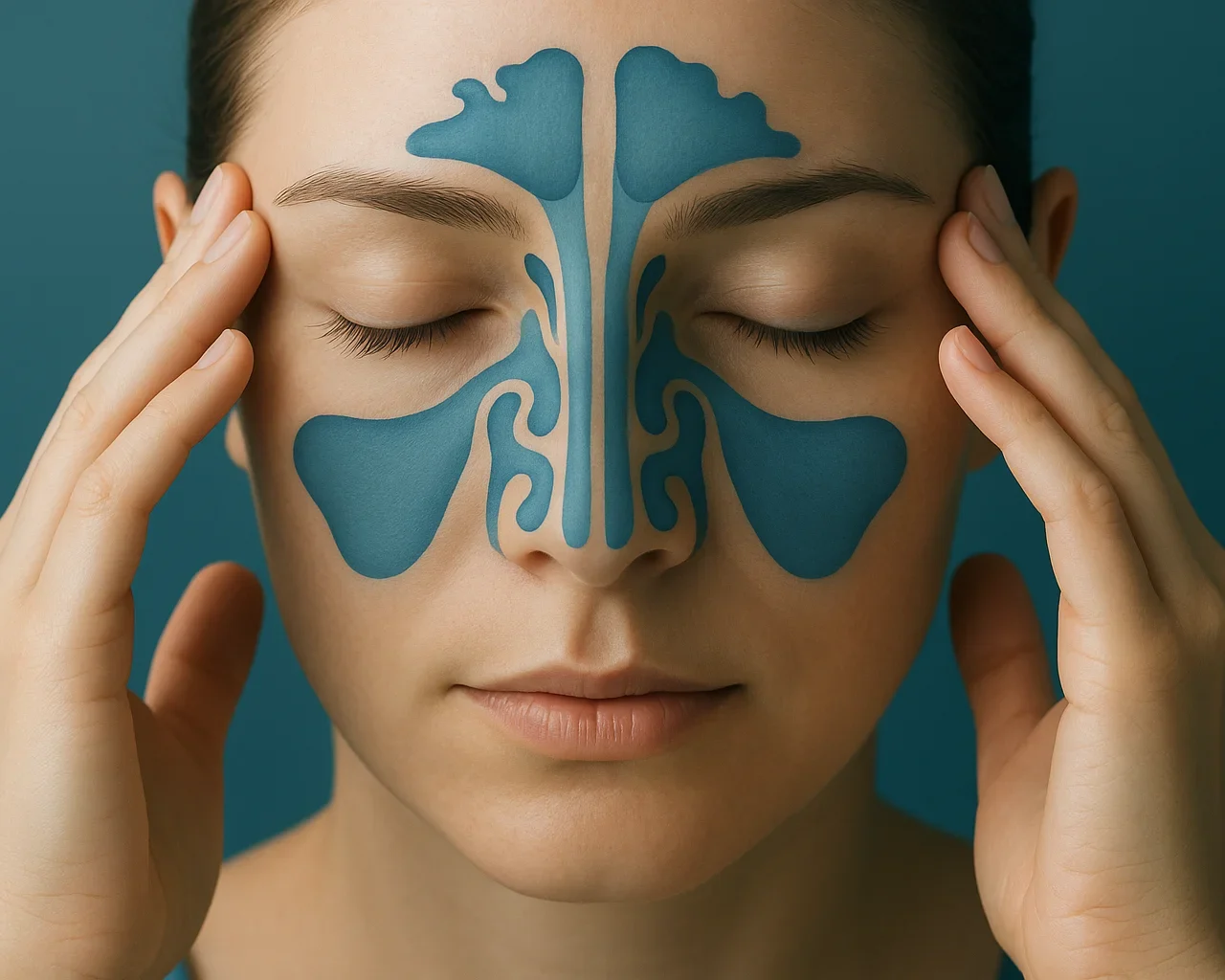
Chronic sinusitis is an inflammatory process of the paranasal sinuses, frequently associated with infections, as well as functional or environmental factors. The paranasal sinuses are air-filled cavities located within the skull, whose function depends on adequate ventilation and an effective balance between mucus production and drainage.
When these mechanisms change, secretions can accumulate, increasing intrasinus pressure and causing mucosal inflammation, leading to symptoms such as nasal congestion, facial pain, headache, a feeling of pressure in the sinuses, altered sense of smell, fatigue, and general malaise. In chronic sinusitis, these symptoms tend to persist or recur.
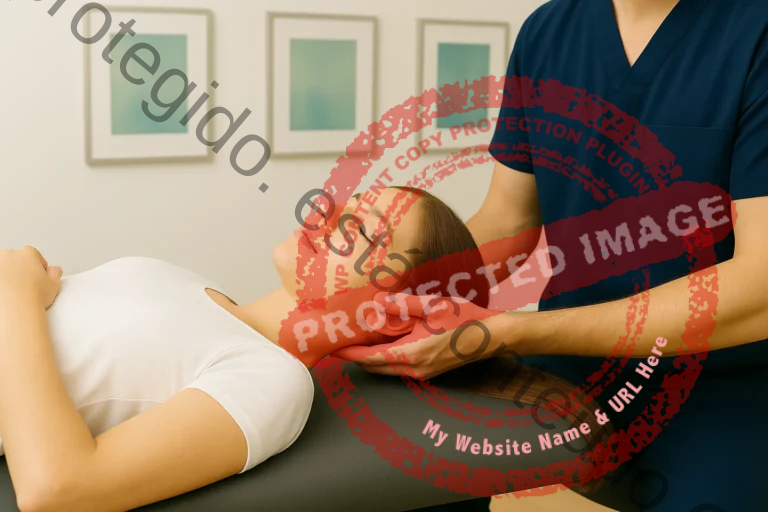
Cranial Osteopathy can be integrated as a complementary approach in the management of chronic sinusitis, through an individualised assessment that considers biomechanical and neurovegetative factors that may influence symptoms.
Chronic sinusitis: biomechanical and neurovegetative factors
Chronic sinusitis involves a complex interaction between neurovegetative and biomechanical factors. The cranial region is functionally connected to the autonomic nervous system, via structures such as the trigeminal nerve and the vagus nerve, which play roles in regulating vascularisation, inflammation, and the sensitivity of the craniofacial region. Changes in autonomic balance can, in certain cases, be associated with the persistence of symptoms, affecting the perception of pain, congestion, and pressure in the paranasal sinuses.
Additionally, effective ventilation and drainage of the paranasal sinuses depend on biomechanical factors such as the patency of the ostia (small openings or channels that connect the paranasal sinuses to the nasal cavity, allowing for mucus drainage and air circulation), the integrity of the respiratory mucosa, and adequate venous and lymphatic drainage. Restrictions in cranial dynamics, particularly in the viscerocranium and the base of the skull, can, in some situations, affect the ventilation and drainage of secretions, contributing to congestion and the perpetuation of the inflammatory process.
Cranial Osteopathy and cranial dynamics
Cranial Osteopathy focuses on the manual assessment and intervention of cranial structures, with particular attention to the mobility of the cranial bones, the cranial sutures, and the meningeal membranes, as well as their relationships with the central and autonomic nervous systems. This approach integrates biomechanical, vascular, lymphatic, and neurological components, with the aim of promoting the functional adaptation of the body.
Cranial dynamics refers to the small variations in movement between the bones of the skull at the level of the sutures and the adaptation of the meningeal membranes and the structures of the viscerocranium. These micro-mobilities are associated with the accommodation of pressure variations and the venous and lymphatic circulation of the craniofacial region. When this dynamic is restricted, especially at the base of the skull and in the structures adjacent to the paranasal sinuses, interferences in ventilation and secretion drainage can occur, which can favour congestion and the maintenance of inflammatory processes.
Cranial Osteopathy Objectives in the treatment of chronic sinusitis
In the treatment of chronic sinusitis, Cranial Osteopathy aims to optimise the functional conditions of the craniofacial region, focusing on physiological mechanisms that can influence the drainage of the paranasal sinuses. The intervention does not aim to directly treat the inflammatory or infectious process, but rather to support the body's regulatory and adaptive systems.
The primary clinical objectives may include:
- Support cranial and suture dynamics
- To promote venous and lymphatic drainage of the paranasal sinuses
- To contribute to the modulation of the autonomic nervous system
- Reduce meningeal and myofascial tensions with functional impact
These interventions are personalised, tailored to the overall clinical reasoning, and should be considered a complementary approach, not a substitute for other medical therapies.
Osteopathic assessment and intervention in the management of chronic sinusitis
Osteopathic assessment in the context of sinusitis involves a detailed analysis of cranial dynamics and the relationships between cranial structures and the areas adjacent to the paranasal sinuses, including the upper cervical spine. The assessment may also consider venous and lymphatic drainage of the craniofacial region and the regulation of the autonomic nervous system, with the aim of identifying functional factors that may influence ventilation and drainage.
Based on this assessment, osteopathic intervention is defined on a personalised basis, seeking to promote cranial dynamics, improve the drainage of the perinasal sinuses and modulate the autonomic nervous system, respecting the specific needs of each patient. Complementarily, aspects related to the balance of tissue tension in the craniofacial and cervical regions can be considered, in addition to respiratory and postural factors that may influence local dynamics.
Osteopathic intervention is a complementary approach and aims to enhance the body's physiological adaptation and regulation mechanisms, promoting global functional balance, without replacing other therapeutic strategies.
Scientific evidence for Cranial Osteopathy
Scientific research has indicated that Cranial Osteopathy may help to improve the symptoms and quality of life of patients with rhinosinusitis. Although results can vary, studies suggest that Osteopathy may be beneficial when integrated into a wider care plan, aiming to support conventional treatment.
Cranial Osteopathy as a Complementary Approach in Chronic Sinusitis
Cranial Osteopathy can be useful in the management of chronic sinusitis, especially in cases with persistent or recurring symptoms. The clinical assessment is individualised, taking into account factors such as cervical mobility, breathing patterns, drainage pathways, and lifestyle habits that may influence the clinical picture. The focus is on identifying functional factors that perpetuate symptoms, providing an assessment and intervention tailored to each patient's needs.
David Brandão | Osteopath and Physiotherapist
Specialising in Cranial Osteopathy for TMJ, Orofacial Pain and Headaches
Physiotherapist Card: 3652 | Order of Physiotherapists // Osteopath Card: C-0031697 | ACSS
Reference articles
- Cerritelli, Francesco, et al. “Osteopathy for Primary Headache Patients: A Systematic Review.” Journal of Pain Research, vol. 10, Mar. 2017, pp. 601-11. www.dovepress.com, https://doi.org/10.2147/JPR.S130501.
- Macedo et al. (2007) Efficacy of cranial manual therapy in women with headache. FISIOTERAPIA E PESQUISA 14(2):14-20
- Yuh, Clara I., and Davin Agustines. “Osteopathic Manipulative Techniques for Migraine Treatment - Letter to the Editor.” International Journal of Osteopathic Medicine, vol. 37, Sept. 2020, p. 54. DOI.org (Crossref), https://doi.org/10.1016/j.ijosm.2020.05.008.
- Rolle, Guido, et al. “Pilot Trial of Osteopathic Manipulative Therapy for Patients With Frequent Episodic Tension-Type Headache.” Journal of Osteopathic Medicine, vol. 114, no. 9, Sept. 2014, pp. 678-85. DOI.org (Crossref), https://doi.org/10.7556/jaoa.2014.136.~
- Jara Silva, Cesar E., et al. “Osteopathic Manipulative Treatment and the Management of Headaches: A Scoping Review.” Cureus, Aug. 2022. DOI.org (Crossref), https://doi.org/10.7759/cureus.27830.
Integrativa | Health and well-being as a lifestyle
This website and its content are for information purposes only and are not a substitute for medical or health professional advice. In all cases, treatments should be individualised and guided by health professionals. Do not make any changes to your treatment without contacting the doctor or health professional accompanying you.
Related articles