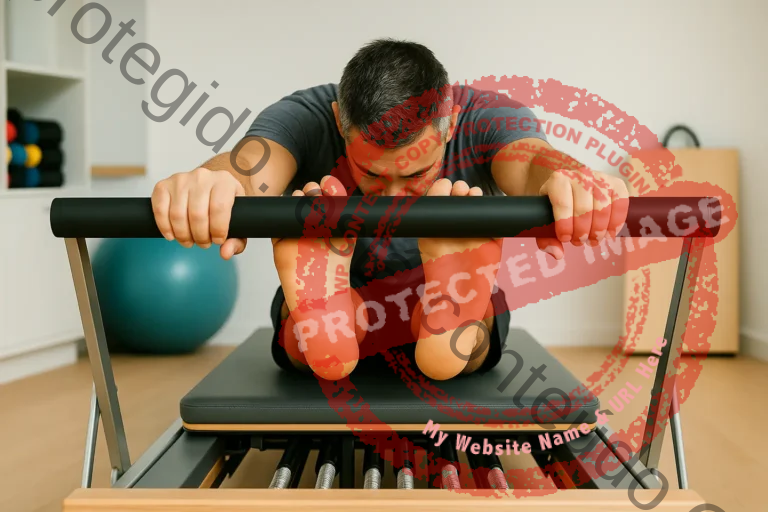


Back pain is one of the most common musculoskeletal complaints and can be associated with multiple factors, such as prolonged postures, sedentariness, mechanical overload, motor control alterations, or previous injury episodes. In many cases, back pain management benefits from approaches that integrate guided movement, postural control, and functional adaptation strategies.
Clinical Pilates, applied in a physiotherapy context, is a low-impact therapeutic exercise approach that can be integrated into the management of lower back pain, respecting the clinical stage, limitations, and individual goals of each person.
Clinical Pilates for the management of lower back pain
Clinical Pilates is based on the original Pilates method, adapted to a clinical context and guided by physiotherapists with specific training. The practice uses controlled and conscious movement, focusing on alignment, postural organisation, and motor control.
In lower back pain, Clinical Pilates can be used as a tool for:
- Improve deep core muscle control
- Promote lumbopelvic stability
- Promote mobility within safe ranges
- To support the coordination between breathing and movement
- Improve body and postural perception
This approach is particularly relevant for people who spend long periods sitting or who display inefficient movement patterns in their daily lives.
Adapted and individualised therapeutic exercise
Clinical Pilates exercises can be performed on a mat or using specific equipment, such as the Reformer, which allows for adjustments to load, resistance, and movement complexity. In a Physiotherapy context, exercises are selected and adapted according to the assessment, taking into account pain, function, exertion tolerance, and functional goals.
The lessons may include strengthening exercises for colour, spinal mobility, respiratory control and postural organisation, progressively and adjusted to clinical assessment.
Clinical Pilates as a complement to lumbar pain rehabilitation
Clinical Pilates can be integrated as a supplement to lumbar pain rehabilitation programmes, contributing to the improvement of function and movement tolerance. The focus is not only on pain reduction but also on how the person moves, organises themselves, and responds to the demands of daily life.
Practising with guidance can help develop more efficient movement strategies, with a potential impact on the prevention of recurring episodes.
What does the evidence say
The available scientific evidence suggests that Clinical Pilates, as a form of therapeutic exercise, may be associated with improvements in low back pain and physical function in people with chronic low back pain.
Systematic reviews of clinical trials indicate that Pilates programmes can contribute to the reduction of pain and disability, being described as comparable to other exercise approaches used in Physiotherapy. A systematic review published in 2022 in Brazilian Journal of Pain analysed studies that demonstrated favourable results in the reduction of lower back pain, especially when Clinical Pilates was integrated into rehabilitation programmes guided by physiotherapists.
It is important to highlight that the results vary depending on the clinical context, the duration of the intervention, and the individualisation of the programme.
Clinical Pilates from a functional perspective
Clinical Pilates should not be understood as an isolated solution, but as part of a functional and integrated approach to low back pain. In Physiotherapy, the method is used as a therapeutic tool, adjusted to the clinical evaluation and integrated into a broader intervention plan.
In the case of persistent or recurring lower back pain, a physiotherapy assessment can help to determine if Clinical Pilates is suitable for each individual and how it can be safely and effectively integrated.
David Brandão | Osteopath, Physiotherapist and Clinical Pilates Instructor
Physiotherapist Card: 3652 | Order of Physiotherapists // Osteopath Card: C-0031697 | ACSS
Reference articles
- Wajswelner, H, Metcalf, B and Bennell, K (2012) “Clinical pilates versus general exercise for chronic low back pain,” Medicine & Science in Sports & Exercise, 44(7), pp. 1197-1205. Available at: https://doi.org/10.1249/mss.0b013e318248f665.
- Kwok, B.C., Lim, J.X. and Kong, P.W. (2021) “The theoretical framework of the Clinical Pilates Exercise Method in managing non-specific chronic low back pain: A narrative review,” Biology, 10(11), p. 1096. Available at: https://doi.org/10.3390/biology10111096.
- Zorba A, Evangelopoulos D. (2022). The effects of Clinical Pilates exercises on patients with chronic low back pain: a systematic review. Acta Orthop Trauma Hell 73(3): 292-305.
- Cordeiro, A.L. et al. (2022) “Pilates Method For Pain In Patients With Low Back Pain: Systematic Review,” Brazilian Journal of Pain [Preprint]. Available at: https://doi.org/10.5935/2595-0118.20220038-pt.
Integrativa | Health and well-being as a lifestyle
This website and its content are for information purposes only and are not a substitute for medical or health professional advice. In all cases, treatments should be individualised and guided by health professionals. Do not make any changes to your treatment without contacting the doctor or health professional accompanying you.
Related articles