

Facial paralysis can manifest through pain, changes in muscle tone, asymmetry of facial movements, and functional deficits, such as incomplete eyelid closure. It is a complex neuromuscular condition that requires specialist monitoring, taking into account the specificity of facial musculature and the functional, communicative, and emotional impact often associated with it.
In Portugal, physiotherapy dedicated to facial paralysis is still in its early stages of development. The specific and highly complex physiology of the face demands a differentiated and technically sound approach. Some still common practices, such as applying ice, rapid movements, or undirected exercises, can negatively interfere with neuromuscular reorganisation, potentially leading to excessive tension, inadequate motor patterns, and worsening of synkinesias.
Physiotherapy specialising in facial paralysis has been evolving, progressively moving away from these strategies. Whenever these methods are being used and there is a sensation of increased facial tension, it is recommended to stop them and seek re-evaluation by a professional with specific training, in order to prevent complications.
At Integrativa, we are recognised as a leading centre in Portugal for physiotherapy specialising in facial paralysis, underpinned by a structured clinical practice organised around the following pillars:
- Recognition and specialist training The team includes physiotherapists with specific training in facial paralysis, with continuous updates based on international scientific evidence.
- Differentiated clinical approach Intervention focused on neuromuscular re-education of the face, with emphasis on symmetry, quality of movement and functionality, respecting the specific physiology of the facial muscles.
- Flexibility of follow-up potential for in-person or online sessions, allowing the follow-up to be adapted to individual needs, without compromising the clinical principles of the intervention.
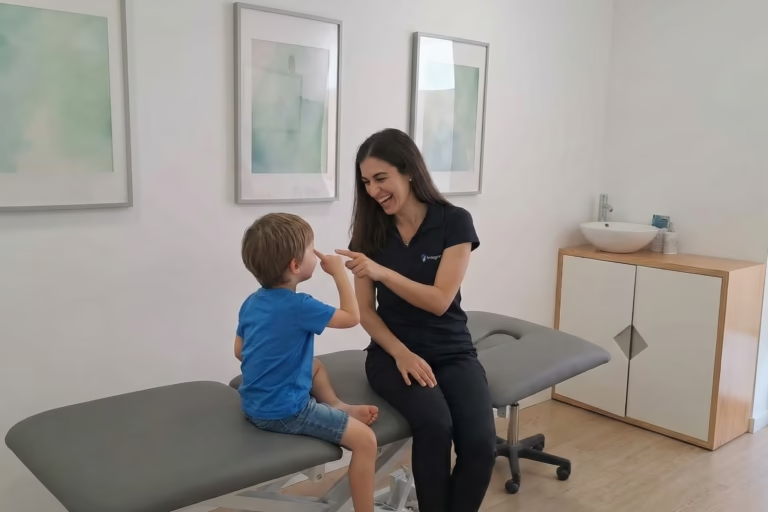
- One-to-one sessions Each session takes place in a private room, with exclusive supervision by a physiotherapist, ensuring continuous assessment, strategy adjustment, and personalised attention.
Methodology of Physiotherapy specialising in Facial Paralysis at Integrativa
The methodology in physiotherapy for facial palsy is usually structured in different stages:
Stage 1: Evaluation
A comprehensive clinical assessment of the face is performed, identifying the stage of paralysis, existing motor patterns, and specific needs. This assessment includes an analysis of facial mobility, symmetry, muscle tone, coordination, and functional impact, particularly concerning speech, chewing, swallowing, and emotional expression. Based on this detailed characterisation, intervention priorities are defined according to the stage of progression, and initial self-care guidance and strategies to support facial mobility are provided.
Stage 2: Intensive intervention
At this stage, the focus centres on improving resting facial asymmetry, mobilising soft tissues, selective muscle activation re-education, and reducing involuntary movements (synkinesias). Once these have been established, specific strategies are taught to minimise their functional expression, and a structured neuromuscular re-education process is initiated.Facial retraining), oriented towards the quality of movement and the normalisation of motor patterns.
Stage 3: Consolidation and preparation for discharge
This stage is dedicated to consolidating the gains made and promoting autonomy, with reinforcement of learned strategies and progressive adaptation of exercises to daily functional demands. The aim is to favour the stability of results achieved over time, respecting individual neuromuscular reorganisation rhythms.
At Integrativa physiotherapy specialising in facial paralysis It is integrated into a dedicated clinical practice, which combines neuromuscular re-education, self-care strategies, and continuous monitoring, respecting the biological timelines for the reorganisation of the facial nerve. The intervention is always adapted to each person's functional reality, with attention to symmetry, quality of movement, and the integration of facial expression into daily life.
This approach allows for progressive support of functional recovery, promoting greater body awareness, reducing compensatory patterns, and a more harmonious relationship between movement, communication, and emotional well-being.
Integrativa | Health and well-being as a lifestyle
This website and its content are for information purposes only and are not a substitute for medical or health professional advice. In all cases, treatments should be individualised and guided by health professionals. Do not make any changes to your treatment without contacting the doctor or health professional accompanying you.
Blog Articles