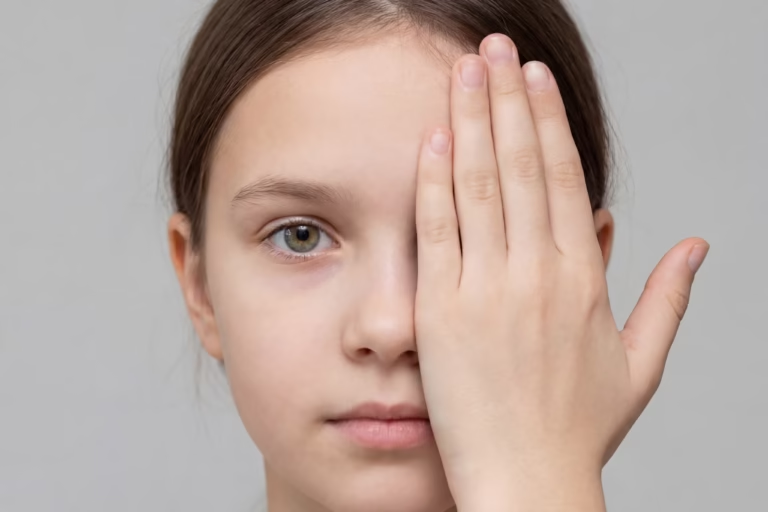



Peripheral facial paralysis, also known as Bell's palsy, is a condition that can cause anxiety and uncertainty. However, with adequate information and structured clinical follow-up, many people experience a favourable recovery. This article addresses the main issues related to this condition in a clear and accessible manner.
A paralisia de Bell é uma condição que causa fraqueza súbita e temporária num lado do rosto. Pode afetar a capacidade de uma pessoa de fazer expressões faciais, como sorrir, fechar os olhos ou franzir a testa.
Bell's palsy is a sudden paralysis of the muscles on one side of the face. It is associated with inflammation or compression of the facial nerve (the seventh cranial nerve), which is responsible for controlling facial expressions. This condition can make actions such as eating, closing the eye, or expressing emotions difficult.
Why does Bell's palsy occur?
The exact cause remains unknown, being considered an idiopathic condition. Nevertheless, there are factors frequently associated with its appearance:
- Viral infections, specifically herpes group viruses, which can trigger inflammation of the facial nerve
- Risk factors such as stress, pregnancy, diabetes or autoimmune diseases, which appear to increase susceptibility
How can Bell's palsy evolve?
Development depends on various individual factors, making it important to adopt appropriate support measures from an early stage.
- Medical assessmentIt is essential to see a doctor as soon as the first symptoms appear. Drugs such as corticosteroids and, in some cases, antivirals may be prescribed, with the aim of reducing the inflammatory process, ideally in the first few hours or days.
- Eye protectionWhen there is difficulty closing the eye, it is recommended to use preservative-free eye drops during the day and, at night, eye ointment combined with occlusion to protect the ocular surface.
- Specialised physiotherapyFollow-up by a physiotherapist with specific training in facial paralysis can guide motor recovery and reduce the risk of complications such as synkinesis.
- Avoid unguided exercises Facial movements performed without specialist supervision can negatively interfere with neuromuscular reorganisation.
The role of specialised physiotherapy.
Specialised physiotherapy for facial paralysis focuses on neuromuscular re-education of the face and the functional integration of movements. The physiotherapist uses specific strategies to:
- Promote the recovery of facial muscle control
- Reduce the risk of synkinesis
- Facilitate the reorganisation of the facial nerve through controlled exercises and manual techniques
- Promote greater facial symmetry and improve the functionality of expression
The intervention is always adapted to the stage of development and the individual characteristics of each person.
What is the prognosis?
In most cases, Bell's palsy is transient, and progressive recovery is observed over time. Many people experience significant improvements in the first few weeks. In some situations, recovery may take several months, and residual weakness or synkinesias may persist, the functional expression of which can be mitigated with specialist support.
Understanding Bell's palsy from an integrative perspective
Despite being initially impactful, Bell's palsy generally presents a favourable prognosis. The combination of medical assessment, adequate eye protection, and specialised physiotherapy helps to support the neuromuscular reorganisation of the face and promote greater everyday functionality.
At Integrativa physiotherapy specialising in facial paralysis It is based on a rigorous clinical evaluation of mobility, symmetry, muscle strength, coordination, compensatory patterns, and functional impact, including speech, chewing, swallowing, and emotional expression. This evaluation allows for an individualised understanding of each situation.
From this detailed analysis, a progressive physiotherapy approach is outlined, guided by clear clinical objectives and tailored to the needs of each individual and the different stages of progression, respecting the specific physiology of the face and the individual rhythms of neural reorganisation.
Alexandra Gomes | Physiotherapist specialising in the treatment and recovery of Facial Paralysis
member of the Facial Therapy Specialists International (FTSI)
Physiotherapist Card: 1459 | Order of Physiotherapists
Integrativa | Health and well-being as a lifestyle
This website and its content are for information purposes only and are not a substitute for medical or health professional advice. In all cases, treatments should be individualised and guided by health professionals. Do not make any changes to your treatment without contacting the doctor or health professional accompanying you.
Related articles