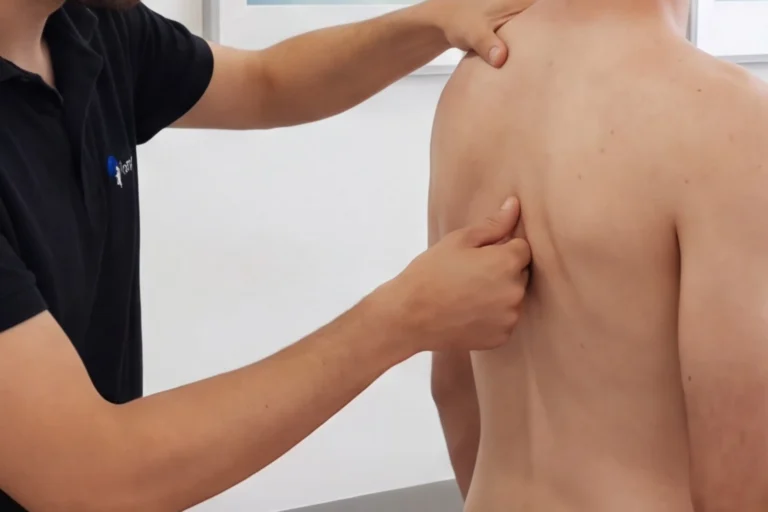



Osteopathy is an approach based on knowledge of the anatomy and physiology of the human body, integrating observation of mobility, tissue organisation and the functional relationship between the different systems. It starts from the understanding that bones, muscles, joints, fascia and other tissues act interdependently and that alterations in one of these components can influence the way the body moves, adapts and responds to the demands of everyday life.
In clinical practice, osteopathic assessment is not limited to the area where the pain or discomfort arises. It seeks to place complaints within the overall context of the person, analysing patterns of mobility, tension and coordination that may be associated with the general functioning of the organism.
How osteopathy structures clinical assessment
During the assessment, the osteopath considers different areas of the body in an articulated way, adjusted to each clinical situation. This analysis may include:
- The neuro-musculo-skeletal system, covering joints, muscles, fascia and the way the body moves and organises itself
- Internal organs, whenever their mobility or relationship with other structures can influence the functioning of the organism
- Cranial structures, integrated into the functional framework of the nervous system
These areas are not assessed in isolation, but in relation to each other, according to what is identified during the clinical assessment.
Structure, movement and function
One of the principles of osteopathy is the relationship between the structure of the body and its function. When the mobility of a tissue is reduced or when there are patterns of tension maintained over time, the way the body organises itself, moves and adapts can be influenced. Osteopathy starts from an understanding of the body as a functional unit, in which structure, movement and function are interconnected and influence each other.
Through a global assessment, the osteopath seeks to understand how changes in tissue mobility, tension patterns or physical and emotional demands can be related to the functioning of the body. The intervention uses manual techniques adjusted to the clinical assessment, with the aim of improving mobility, reducing excessive tension and supporting the body's natural adaptation and self-regulation mechanisms, as part of an informed, individualised and person-centred clinical practice.
Understanding osteopathy from an integrative perspective
At Integrativa, osteopathy is part of an individualised, person-centred clinical approach. The assessment takes into account the musculoskeletal system and, where indicated, other systems related to the complaints made, making it possible to understand the symptoms beyond their local manifestation. Manual intervention is tailored to each person and can involve muscles, fascia, joints, organs and nerve structures, with the aim of improving tissue mobility, promoting functional balance and supporting the body's natural self-regulation mechanisms.
Integrativa's Osteopaths have a degree in Physiotherapy and are trained in Osteopathy, which allows them to combine a structural approach with functional analysis. While Osteopathy focuses on assessing and intervening on structure, recognising its influence on function, Physiotherapy analyses this function and works to optimise it through exercise and movement.
This intervention is integrated with Clinical Psychoneuroimmunology, a field that studies the interaction between the nervous, immune and endocrine systems, as well as the influence of emotional, nutritional and environmental factors. In the Integrative Osteopathy consultation, this perspective translates into an assessment that takes into account the overall functioning of the body, lifestyle habits, sleep patterns, levels of stress and the role of the immune system in physiological adaptation processes.
This integrative approach allows for a more comprehensive understanding of health and guides intervention in an informed, coherent way that is adjusted to the complexity and uniqueness of each person.
Support the body's adaptation
The human body has natural mechanisms for adaptation and regulation. Osteopathy seeks to support these processes by identifying and addressing factors that may interfere with mobility, comfort and functional efficiency.
In certain contexts, small changes in the way the body organises itself and moves can be associated with significant changes in physical comfort and the ability to respond to the demands of everyday life.
Osteopathy thus fits in with a clinical approach centred on the person, respecting their individuality, their life context and the principles of evidence-based practice.
David Brandão | Osteopath and Physiotherapist
Specialised in Clinical Psychoneuroimmunology
Physiotherapist Card: 3652 | Order of Physiotherapists // Osteopath Card: C-0031697 | ACSS
Integrativa | Health and well-being as a lifestyle
This website and its content are for information purposes only and are not a substitute for medical or health professional advice. Each person's treatment should be individualised and guided by health professionals. Do not make any changes to your treatment without contacting the doctor or health professional accompanying you.
Related articles