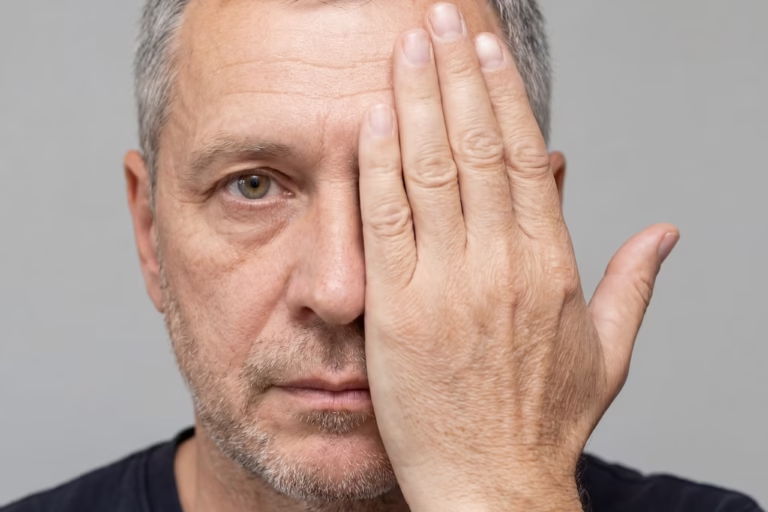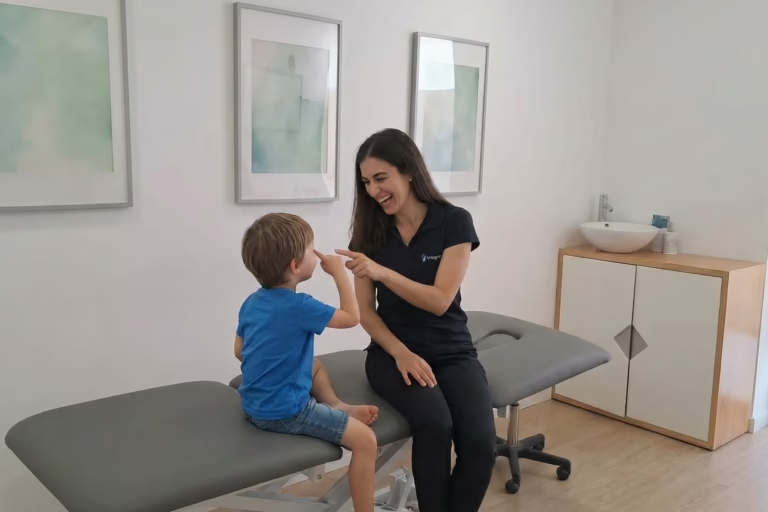



Bell's Palsy is a relatively common form of facial paralysis that causes weakness or sudden loss of movement in the muscles on one side of the face. This condition occurs due to inflammation or compression of the facial nerve, also known as the seventh cranial nerve. Although in most cases it is temporary, facial paralysis can have a significant impact on facial expression, speech, chewing and self-esteem, affecting the physical and emotional well-being of the sufferer.
An early approach is decisive for the prognosis. In addition to specialised physiotherapy, immediate medical assessment and starting medication within the first 48 hours play a crucial role in recovery.
What is Bell's Palsy?
Bell's Palsy is a peripheral facial paralysis that is usually idiopathic in origin. Sudden inflammation of the facial nerve compromises the transmission of nerve impulses responsible for controlling the muscles of the face, causing partial or total loss of movement.
Main symptoms
Symptoms come on quickly, often within a few hours, and can include:
- Facial asymmetry
- Difficulty or inability to close the eye on the affected side
- Loss of facial expression
- Changes in taste
- Excessive tearing or decreased tear production
- Pain behind the ear
- Hypersensitivity to sound
Identifying these signs early is essential for seeking medical help immediately.
Causes and risk factors
Although the exact cause is not fully known, factors such as viral infections, physical or emotional stress, autoimmune diseases and pregnancy, especially in the third trimester, are associated with an increased risk.
Diagnosis
Diagnosis is mostly clinical, based on an assessment of symptoms and the exclusion of other neurological pathologies. Complementary tests, such as electroneuromyography, can be used to assess the severity of the lesion and support the prognosis.
The importance of early medical treatment
After diagnosis, the immediate start of medical treatment, ideally within the first 48 hours, is one of the most important factors for a good prognosis. Scientific evidence shows that treatment started in this period significantly increases the likelihood of complete recovery and reduces the risk of sequelae.
Medical treatment usually includes corticosteroids to reduce inflammation of the facial nerve and, in some cases, antivirals, depending on the clinical assessment.
For this reason, if you suspect Bell's Palsy, it is essential to see a doctor quickly, ideally within the first few hours, to confirm the diagnosis and start appropriate treatment.
Recovery and prognosis
Most people show signs of recovery between two and six weeks, with full recovery between three and six months. Even so, around 15% of cases can develop sequelae, such as synkinesis, muscle contractures or facial spasms. The combination of early medical treatment and specialised physiotherapy is crucial to reducing these risks.
Physiotherapy specialising in Bell's Palsy
Physiotherapy is one of the fundamental pillars in the treatment of facial paralysis, promoting the recovery of mobility, strength and muscle coordination, always with a focus on symmetry and adequate motor control.
Education and initial care
In the first few days, it's essential to protect the eye that doesn't close properly, use eye drops as prescribed by the doctor and take specific care during sleep. The physiotherapist will also advise on strategies for everyday life and clarify behaviours to avoid.
Activities such as chewing gum, using electro-stimulation or performing repetitive facial mimicry exercises without specialised guidance can lead to compensations and the appearance of sequelae.
- Manual therapyGentle mobilisation and massage techniques help to improve circulation, tissue elasticity and prepare the muscles for motor training.
- Neuromuscular re-educationNeuromuscular re-education is central to the recovery process, enabling coordinated and functional movement patterns to be relearned.
- Control of synkinesisIn cases where synkinesis or altered motor patterns occur, specific motor control, relaxation and movement relearning techniques are applied.
Multidisciplinary approach
In more complex situations, liaison between doctors, physiotherapists, speech therapists and psychologists can be fundamental for a global recovery.
The Integrative Approach
At Integrativa Facial Paralysis Specialized Physiotherapy is unique in Portugal, combining highly qualified physiotherapists with techniques based on international scientific evidence. Each rehabilitation path is personalised, with a focus on functional recovery and confidence, providing concrete and sustained results for each person.
Alexandra Gomes | Physiotherapist specialising in the treatment and recovery of Facial Paralysis
member of the Facial Therapy Specialists International (FTSI)
Physiotherapist Card: 1459 | Order of Physiotherapists
Integrativa | Health and well-being as a lifestyle
This website and its content are for information purposes only and are not a substitute for medical or health professional advice. In all cases, treatments should be individualised and guided by health professionals. Do not make any changes to your treatment without contacting the doctor or health professional accompanying you.
Blog Articles