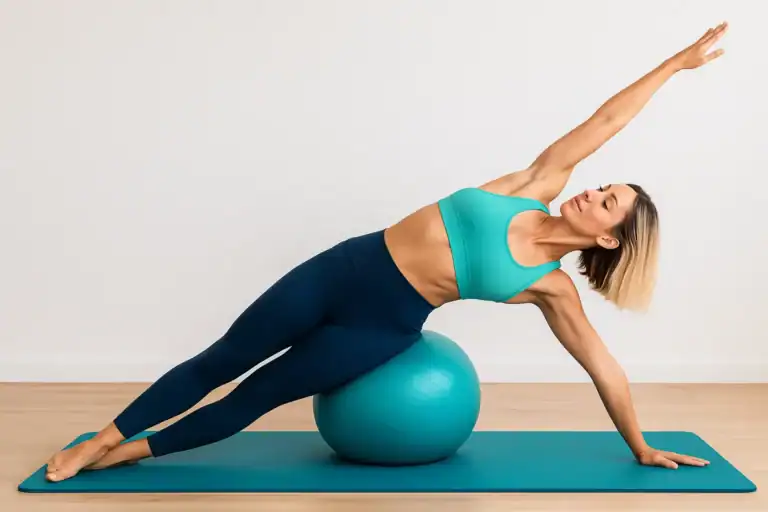


Posture influences a large part of the movements we perform throughout the day. Sitting, walking, lifting objects, working on a computer, or simply breathing are actions that depend on how the body organizes, coordinates, and controls movement.
For many years, the idea prevailed that there would be an ideal posture and that any deviation from that alignment could be directly related to the onset of pain. Currently, scientific evidence points to a more complex reality. There is no single correct posture that applies to all people, nor is there a simple and direct relationship between a particular body position and the presence of symptoms.
More important than maintaining a specific alignment is having the physical ability to adapt the posture to different tasks, vary positions, move the body efficiently, and adequately tolerate the demands of daily life.
It is in this context that Clinical Pilates can play an important role in Physiotherapy. Through individualized and guided exercise, it seeks to develop strength, mobility, motor control, balance, and body awareness, contributing to a more efficient physical function and, in some people, to better pain management.
What does it mean to have good posture?
The concept of posture has evolved significantly. Instead of seeking a body position considered universally perfect, the current approach values above all the ability of the body to adapt to the requirements of each activity.
A functional posture is one that allows you to perform everyday tasks comfortably and efficiently, with an adequate distribution of loads and the ability to change position whenever necessary.
Among the aspects associated with good postural control are:
- The ability to remain in different positions without significant pain or fatigue
- Proper coordination and muscle control
- Joint mobility compatible with the requirements of the activities performed
- Efficient distribution of loads throughout the body
- Stable enough to perform everyday tasks
- Ability to easily switch between different positions and movement patterns
In this sense, an idea often used in Physiotherapy is that the best posture can be the next one. Rather than trying to remain immobile in a position considered ideal, it is important to regularly vary the way the body organizes itself and moves.
What is Clinical Pilates?
Clinical Pilates is a therapeutic exercise modality based on the principles of the Pilates method and adapted to the context of Physiotherapy, according to the functional and clinical needs of each person.
Unlike a general Pilates class, this approach is usually preceded by an individual assessment. The physiotherapist analyzes factors such as mobility, strength, motor control, movement patterns, the presence of pain, functional limitations, and individual goals.
Based on this assessment, the exercises can be selected and progressively adapted to the person's condition and physical capabilities.
This individualization allows Clinical Pilates to be adapted to different ages, levels of physical condition, and functional contexts.
Clinical Pilates can be integrated in situations such as:
- Rehabilitation of musculoskeletal injuries
- Lumbar or cervical pain
- Changes in function and postural control
- Imbalances
- Functional recovery after surgery
- Injury prevention strategies
- Promoting physical capacity and quality of life
How can Clinical Pilates influence posture?
The goal of Clinical Pilates is not to correct a posture considered incorrect nor to force the body to maintain a certain position permanently.
The intervention primarily seeks to develop a stronger, more mobile body capable of controlling movement, increasing the ability to adapt to the different physical demands of everyday life.
It can contribute to better pain management
Posture alone rarely explains the presence of pain. The painful experience is complex and results from the interaction of multiple biological, psychological, and social factors.
This means that a certain body position should not be automatically interpreted as the cause of neck, lower back or other musculoskeletal complaints.
Nevertheless, improving strength, mobility, coordination, physical capacity, and confidence in movement can contribute to better tolerance of daily activities and a reduction in symptoms in some people.
Clinical Pilates can therefore be integrated into an individualized strategy when there is pain or functional limitations, always based on the evaluation performed by the physiotherapist.
Improves body awareness
Body awareness is one of the central principles of Clinical Pilates.
During the exercises, the physiotherapist guides the execution of the movements and provides information on positioning, breathing, control, and coordination. This process helps the person better recognize how they organize their body and identify different movement strategies.
Greater body awareness can facilitate the adaptation of posture to everyday tasks and allow for the recognition of less efficient movement patterns, modifying them when necessary.
The goal is not to constantly monitor the position of the body, but to develop greater ability to adjust movement according to the task, the context, and individual sensations.
Strengthens the muscles involved in stability
Postural control depends on the interaction between different muscle groups and the ability of the nervous system to coordinate them during movement.
Clinical Pilates works on several muscles involved in the stability and control of the trunk, spine, pelvis, and shoulder girdle. Among these are the transverse abdominus, the multifidus, the pelvic floor, the diaphragm, the glutes, and the stabilizing muscles of the shoulder blades.
Rather than strengthening a muscle in isolation, the goal is to improve the coordination between different muscle groups and their ability to respond to the demands of each task.
This work can favor greater dynamic stability and more efficient execution of movements.
Promotes mobility
Limited mobility in certain regions of the body can make some tasks difficult and lead to the use of compensatory strategies.
Clinical Pilates can include exercises aimed at promoting mobility of the thoracic spine, hips, shoulders, and chest, among other regions, according to the needs identified in the assessment.
When there is mobility that meets individual needs, it becomes easier to change positions, reach different ranges of motion, and perform daily activities with greater freedom.
However, mobility must be considered in conjunction with strength, control, and stability, since these components function in an integrated manner.
Develops motor control
Clinical Pilates is not limited to the development of muscle strength. One of its main components is the learning and improvement of movement control.
Motor control corresponds to the ability of the nervous system to organize and coordinate muscle activity in accordance with a specific task.
In practice, it involves using the available force in a coordinated manner, adjusting the muscle activation, the amplitude, the speed, and the direction of the movement to the needs of each situation.
This ability is relevant in everyday tasks such as walking, lifting objects, climbing stairs, carrying loads, or remaining seated for extended periods.
It can help improve balance
Balance results from the integration of information from different sensory systems with the ability to produce appropriate motor responses.
By challenging postural control and simultaneously working on strength, coordination, stability, and proprioception, Clinical Pilates can contribute to improving different components related to balance.
This work can take particular importance in older people or individuals with changes in motor control; the exercises should be adjusted to the functional capacity and the level of safety of each person.
Who can benefit from Clinical Pilates?
Because of the possibility of individualizing the exercises and their progression, Clinical Pilates can be suitable for people of different ages and levels of physical fitness.
It can be considered, among other contexts, for:
- People with lower or upper back pain
- People who remain seated for many hours during work
- People with difficulties related to mobility, strength, or postural control
- Older people who intend to work on balance and other factors related to the risk of falls
- Women in the postpartum period, when clinically indicated
- People recovering from injuries
- Athletes who intend to develop strength, mobility, motor control and physical fitness
The appropriateness of the exercises should depend on the individual assessment, the defined goals, and the functional evolution over the course of the follow-up.
How to maximize the benefits of Clinical Pilates?
Clinical Pilates should be framed within a globally active lifestyle. Its potential benefits can be complemented by behaviors that favor physical health and the body's ability to adapt.
Some relevant strategies include:
- Regularly vary your body position throughout the day
- Interrupt prolonged periods of sitting
- Practicing physical activity in a way that is regular and appropriate to individual ability
- Maintain consistent sleep habits and seek an adequate duration and quality of sleep
- Developing stress management strategies
- Complying with the exercise program set out in conjunction with the physiotherapist
Consistency is one of the factors relevant to adaptation to exercise. Progression should be gradual and adjusted to the individual response, avoiding both prolonged periods of inactivity and increases in load that are inappropriate for the person's capacity.
Understanding Clinical Pilates and posture from an integrative perspective
The available evidence supports the use of exercise as a relevant strategy to improve different components of physical function. In this context, Clinical Pilates can contribute to developing mobility, strength, motor control, stability, balance, and body awareness when the exercises are appropriately selected and individualized.
Regarding posture, the goal should not be to achieve a perfect body position or maintain rigid alignment permanently. A more modern approach focuses on the ability to vary positions, adapt movement to different tasks, and tolerate the loads inherent in daily activities.
Rather than merely modifying the appearance of the posture, it is important to develop a body capable of responding to the demands of everyday life with greater efficiency, comfort, and confidence in movement.
When guided by a physiotherapist and tailored to individual characteristics, Clinical Pilates can integrate an exercise-based approach aimed at promoting functional capacity, supporting pain management, improving movement quality, and fostering safer and more autonomous participation in daily activities.
Rita Xarepe | Physiotherapist and Clinical Pilates Instructor by APPI
Physiotherapist Card: 4209 | Order of Physiotherapists
Integrativa | Health and well-being as a lifestyle
This website and its content are for information purposes only and are not a substitute for medical or health professional advice. In all cases, treatments should be individualised and guided by health professionals. Do not make any changes to your treatment without contacting the doctor or health professional accompanying you.
Related articles