

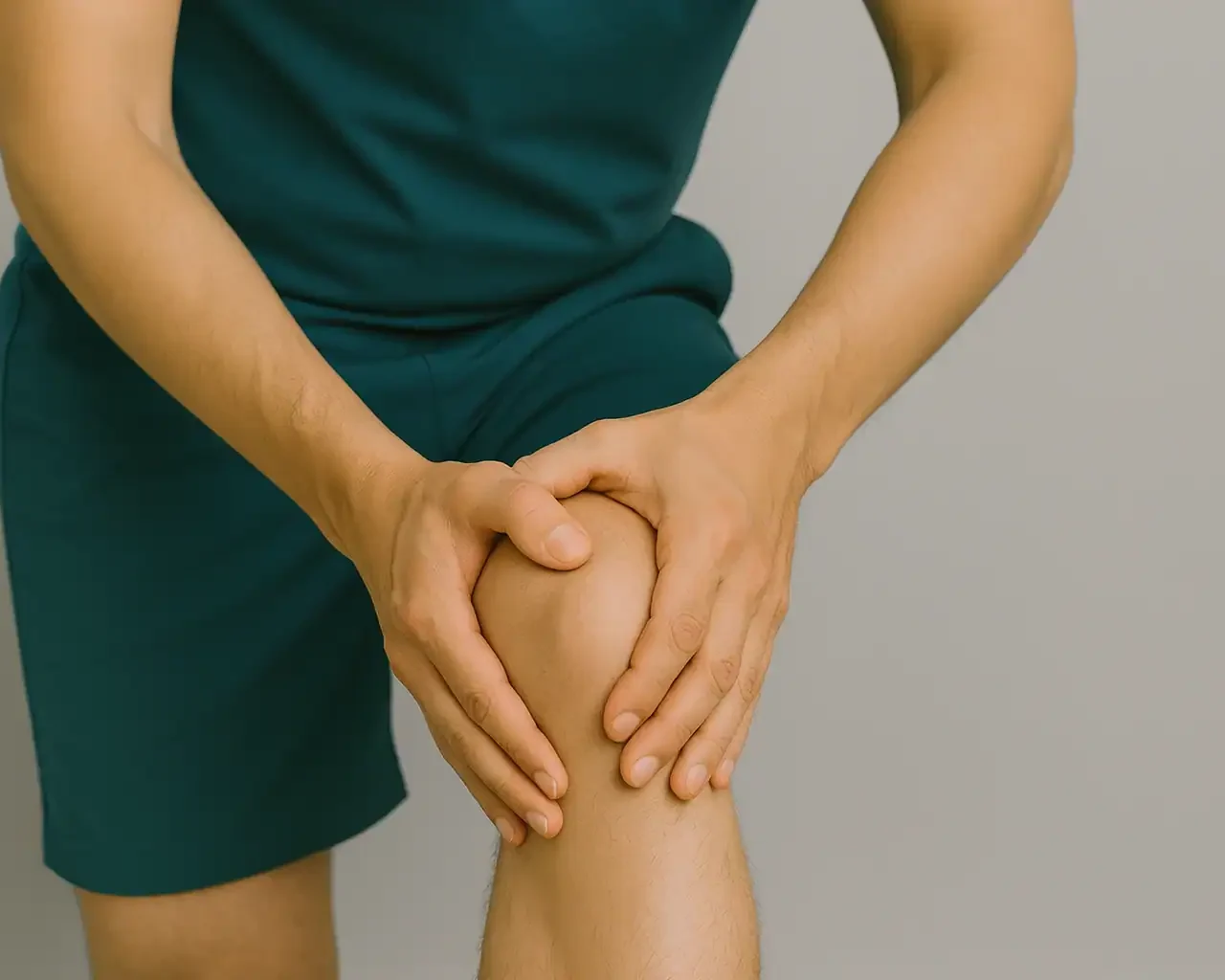
The anterior cruciate ligament (ACL) is one of the most important structures for knee stability. It controls the movement of the tibia in relation to the femur, preventing dislocations and excessive rotations.
ACL injuries are quite common, especially in athletes, and can occur to varying degrees, from a slight stretch to a complete rupture. Appropriate treatment and well-orientated rehabilitation are fundamental to ensuring an effective and safe recovery.
Why is physiotherapy essential?
Physiotherapy plays a decisive role both in cases of conservative treatment (without surgery) and in cases where there is surgical reconstruction of the ligament.
Thanks to advances in rehabilitation techniques, it is now possible to achieve a faster, functional and safer recovery, reducing the risk of relapses and promoting a gradual return to daily activities and sport.
A key point is the personalisation of treatment: each patient has different needs, objectives and physical conditions. Therefore, the physiotherapist must adapt the rehabilitation plan in a progressive and individualised way.
Causes and risk factors for ACL injuries
ACL injuries occur most frequently in sports that require rapid changes of direction, jumping and sudden decelerations - such as football, basketball, skiing or volleyball.
The main risk factors include:
- Muscular and postural imbalances;
- Incorrect movement patterns;
- Muscle weakness and lack of flexibility;
- Anatomical and hormonal differences (women have a higher incidence);
- Nutritional deficiencies that affect joint health;
- Muscle fatigue, which compromises movement control;
- Improper use of footwear or training on unstable surfaces.
Treatments and the importance of physiotherapy
Treatment can be conservative or surgical, depending on the severity of the injury, the instability of the knee and the demands of the sporting or recreational activity.
Regardless of the approach, physiotherapy is essential at all stages: it helps restore range of movement, muscle strengthening and proprioception (body awareness and balance).
A well-structured protocol improves functional stability, prevents complications and reduces the risk of new injuries.
In addition, the inclusion of functional and specific exercises for each patient speeds up recovery and facilitates a safe return to normal activities.
Stages of ACL rehabilitation
The rehabilitation process is divided into progressive phases, which respect the body's healing and adaptation time:
- Pre-operative phase: Reduces oedema and strengthens muscles before surgery.
- Phase 1 - Initial recovery: Pain and swelling control, with early mobilisation to maintain or gain full knee extension.
- Phase 2 - Muscle strengthening: Introduction of strength and endurance exercises and neuromuscular training.
- Phase 3 - Gradual return to activity: Light jogging, agility exercises and intensive strengthening.
- Phase 4 - Return to sport: Functional and sport-specific training.
- Phase 5 - Relapse prevention: Maintaining gains and strengthening joint stability.
Tips for efficient recovery
- Keep your knee fully stretched in the first few weeks after injury or surgery, and avoid putting cushions under your knee.
- Control pain and oedema before moving on to the next steps.
- Follow the rehabilitation protocol without skipping stages.
- Maintain the quality of your movements, avoiding compensations.
- Continue strengthening your muscles even after discharge.
- Take care with your diet, prioritising nutrients that favour tissue regeneration.
- Attend physiotherapy regularly to adjust the recovery plan according to progress.
Regaining confidence in the movement
ACL rehabilitation is a demanding process, but the results are highly positive when there is dedication, professional follow-up and respect for the stages of treatment.
Following a well-structured physiotherapy plan is the surest way to recover the stability and functionality of the knee, reducing the risk of further injuries.
At Integrativa, our approach combines science, personalisation and continuous follow-up so that each patient achieves a complete and sustainable recovery, with a focus on joint prevention and longevity.
If you've suffered an ACL injury or feel instability in your knee, our team of physiotherapists is ready to help you.
Book your assessment at Integrativa and take the first step towards your recovery.
Alexandra Gomes | Physiotherapist
Physiotherapist Card: 4209 | Order of Physiotherapists
Integrativa | Health and well-being as a lifestyle
This website and its content are for information purposes only and are not a substitute for medical or health professional advice. Each person's treatment should be individualised and guided by health professionals. Do not make any changes to your treatment without contacting the doctor or health professional accompanying you.
Related articles