

Lower back pain, also known as lumbago, refers to pain located in the lower part of the spine and is part of the broader category of back pain, which can also involve the thoracic, cervical, or sacral regions. It is one of the most common musculoskeletal complaints in the adult population, with a relevant impact on daily functionality, work participation, and physical activity.
According to widely referenced data, World Health Organisation, A significant proportion of the adult population will experience back pain during their lifetime. In many cases, the episodes are acute and resolve favourably over days or weeks. Nevertheless, the intensity of the symptoms and the associated limitation justify careful clinical evaluation and an approach tailored to the individual context.
Currently, low back pain is understood as a complex and multifactorial phenomenon, influenced by physical, neurological, emotional, social, and contextual components, a framework that underpins contemporary person-centred intervention models.
Dor lombar é a dor que se sente na parte inferior das costas, entre as costelas e o cóccix.
Lower back pain can arise suddenly or progressively and present with different characteristics, such as a feeling of heaviness, burning, or stabbing. It can be localised or radiate to the buttock or lower limb, manifest intermittently or persistently, and be associated with stiffness, particularly at certain times of the day.
From a clinical perspective, a significant proportion of lower back pain is classified as non-specific, meaning there is no single, clearly identifiable structural cause on imaging examinations. These cases often involve multiple simultaneous mechanisms, including changes in joint mobility, increased muscle tone, altered movement control, and nervous system sensitisation phenomena, where stimuli that are normally neutral are perceived as uncomfortable.
This understanding moves away from an exclusively mechanistic view of pain and reinforces the importance of approaches that integrate multiple dimensions of the clinical experience.
Factors such as elevated levels of stress, Irregular sleep patterns, fear of movement, or previous negative experiences associated with pain can influence the progression of lower back pain. These aspects are now recognised as an integral part of the clinical assessment, helping to guide the approach in a way that is more tailored to each person's reality.
Common types of lower back pain and associated mechanisms
Lower back pain can be related to different structures and systems, with the coexistence of multiple mechanisms being common.
Among the most frequent frames are:
- Lumbar disc changesIntervertebral discs, composed mainly of water and made up of a nucleus pulposus and a fibrous annulus, play a central role in shock absorption and facilitating spinal movement. In contexts of degeneration or disc herniation, local inflammatory phenomena and neovascularisation processes can occur, allowing small nerve fibres to penetrate areas that are usually sparsely innervated. This mechanical and chemical sensitisation can contribute to pain in some people, while remaining asymptomatic in others.
- Lumbar radicular painIt is characterised by pain radiating to the lower limb, usually below the knee, following the path of a nerve root. It can result from mechanical compression and chemical irritation associated with inflammatory mediators released by degenerated discs. A slipped disc is a frequent cause; in older age, lumbar stenosis becomes more significant. It is important to note that these are imaging diagnoses and not everyone with these findings experiences pain.
- Facet joint arthropathyThe facet joints connect adjacent vertebrae and contribute to spinal movement control. With disc degeneration, these joints become more susceptible to overload and degenerative changes, such as osteoarthritis. Pain can manifest locally in the lumbar region or be referred to the pelvis and lower limbs.
- Sacroiliac joint dysfunctionLocated between the sacrum and the iliac bone, this joint is highly stable and supported by an extensive ligamentous network. Although pain is often localised to the gluteal region, many people also present with associated lumbar complaints, and irradiation to the leg may occur.
- Myofascial painMuscles, fascia, and ligaments are significant sources of lower back pain. Structures such as the multifidus, quadratus lumborum, psoas-iliacus, paraspinals, latissimus dorsi, and diaphragm play a role in spinal stability and abdominal dynamics. Repetitive strain, stretching, or muscle spasms can cause pain. Beyond its biomechanical role, fascia contributes to proprioception and can also generate pain when sensitised.
- SpondylolisthesisThis corresponds to the slippage of one vertebra over another, which can cause compression of the nerve roots. It can be congenital or acquired, often associated with disc degeneration or trauma.
- Lumbar vertebral fractureIt can result from trauma or be associated with bone fragility, namely osteoporosis. In some contexts, systemic diseases can also be involved, making it essential to identify the underlying cause.
- The relationship between visceral dysfunctions and low back painInternal organs possess physiological mobility essential for function and postural adaptation. Restrictions in this mobility can influence the lumbar region via fascial connections and neurological pathways, while musculoskeletal alterations can also affect visceral structures. The viscero-somatic reflex describes how stimuli originating from an internal organ can cause increased muscle tone or pain in lumbar areas with the same segmental innervation. This interaction is considered in osteopathic assessment, particularly in persistent low back pain, and should be integrated into the patient's overall clinical context.
The evolution of lower back pain varies widely between people. Some episodes resolve spontaneously, while others tend to become recurrent, especially when mechanical, emotional, and contextual factors coexist.
The osteopathic view of lower back pain
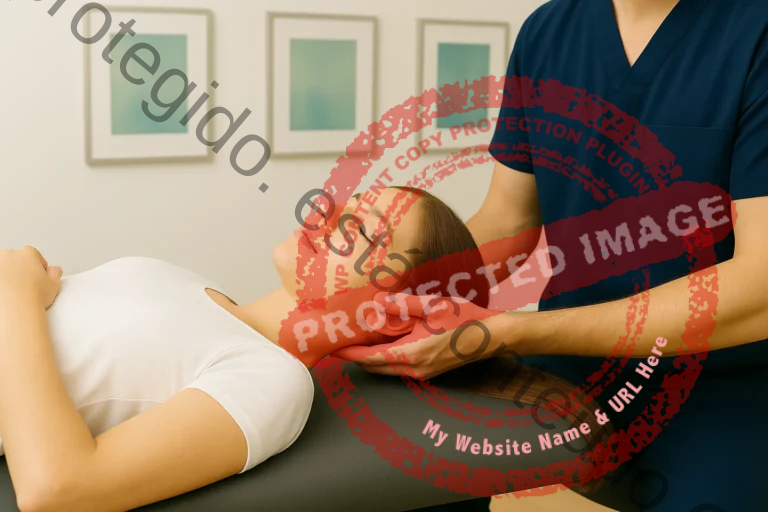
Osteopathy is a manual clinical practice based on the assessment of the relationships between the musculoskeletal system, fascial structures, the nervous system and internal organs, recognising the functional interdependence between these components.
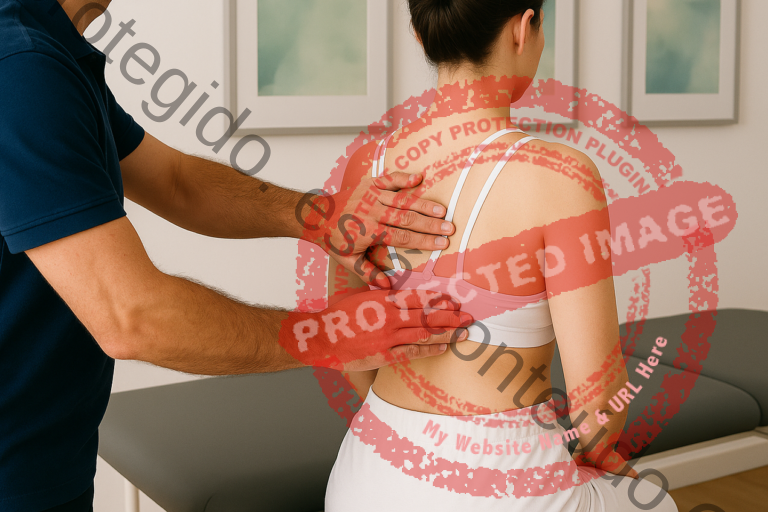
On the lower back, the Osteopath begins the process with a detailed assessment, which includes:
- Full medical history, exploring symptom onset, aggravating or relieving factors, and functional impact
- Postural observation and movement analysis
- Palpation of tissues, joints, and musculature to identify changes in mobility, tone, or sensitivity
- Tracking of alarm signs, such as progressive neurological deficits or suspected systemic pathology, with referral when indicated
From this assessment, clinical hypotheses are formulated, guiding the approach, always adapted to the specific needs of each person.
The lumbar region, due to its role in supporting body weight and its frequent exposure to mechanical overload, tends to accumulate tension associated with factors such as prolonged posture, repetitive movements, or physical exertion. Emotional factors and high levels of stress They can also contribute, with greater rigidity sometimes being observed in this area in contexts of maintained tension.
Osteopathy intervenes in lower back pain by using a variety of manual techniques to address the underlying causes of the pain. Osteopaths focus on the musculoskeletal system, including the spine, muscles, ligaments, and joints, to restore proper function and reduce pain. Here's how osteopathy can help with lower back pain: * **Diagnosis and Assessment:** An osteopath will begin by taking a detailed case history to understand your symptoms, lifestyle, and medical history. They will then perform a physical examination, assessing your posture, range of motion, and palpating (feeling) different areas of your back and pelvis to identify areas of tension, restriction, or dysfunction. * **Manual Therapy Techniques:** Osteopaths use a range of hands-on techniques tailored to your specific condition. These can include: * **Articulation:** Gentle, rhythmic movements of the joints to improve mobility and reduce stiffness. * **Stretching:** Applying sustained pressure or gentle stretches to tight muscles to release tension and improve flexibility. * **Soft Tissue Massage:** Working on muscles, tendons, and ligaments to reduce muscle spasms, improve circulation, and alleviate pain. * **High-Velocity Low-Amplitude (HVLA) Thrusts (Manipulation):** A controlled, quick movement applied to a joint to restore normal movement and reduce pain. This is often what people associate with osteopathy or chiropractic treatment. * **Myofascial Release:** Techniques to release tension in the fascia, the connective tissue that surrounds muscles and organs. * **Cranial Osteopathy (less common for acute lower back pain, but can be used in certain cases):** Gentle, subtle techniques applied to the head and sacrum (the triangular bone at the base of the spine). * **Addressing the Root Cause:** Osteopathy aims to identify and treat the **root cause** of your lower back pain, rather than just focusing on masking the symptoms. This might involve addressing: * **Muscle Imbalances:** Tight or weak muscles can put undue stress on the spine. * **Joint Restrictions:** Stiff joints in the spine or pelvis can lead to compensatory movements and pain elsewhere. * **Postural Issues:** Poor posture can strain the back muscles and ligaments. * **Nerve Irritation:** Restrictions in the surrounding tissues can sometimes press on nerves. * **Holistic Approach:** Osteopaths consider the body as a whole and how different parts are interconnected. They may assess and treat other areas that could be contributing to your lower back pain, such as the hips, knees, or even the neck. * **Pain Relief and Function Restoration:** By releasing muscle tension, improving joint mobility, and restoring balance to the musculoskeletal system, osteopathic treatment can effectively reduce pain, improve flexibility, and restore normal function, allowing individuals to return to their daily activities. * **Preventative Advice and Self-Management:** Osteopaths often provide advice on posture, ergonomics, exercise, and lifestyle modifications to help prevent future episodes of lower back pain. They may also teach you specific exercises to strengthen muscles and improve flexibility. In summary, osteopathy intervenes in lower back pain by using hands-on techniques to diagnose and treat the underlying mechanical problems within the musculoskeletal system, aiming to restore balance, reduce pain, and improve overall function.
The osteopathic approach makes use of manual techniques selected based on the findings of the clinical assessment, such as joint mobilisations, soft tissue techniques, and fascial realignment. These interventions are integrated into an individualised plan that considers not only the lumbar region but also the overall functioning of the person, including movement patterns, nervous system response, and relevant contextual factors.
Depending on the clinical setting, different strategies can be employed, including:
- Specific joint mobilisations, aimed at improving segmental mobility of the lumbar spine, pelvis and adjacent joints.;
- Soft tissue techniques, targeting deep and superficial musculature (erector spinae, multifidus, quadratus lumborum, psoas-iliacus, and diaphragm), with the aim of reducing hypertonia and improving movement quality.;
- Fascial normalization techniques, addressing restrictions in muscular and fascial chains that can contribute to sustained tension patterns.;
- Muscle energy techniques, promoting active mobility gains and neuromuscular reorganisation.;
- Gentle neurodynamic approaches, when there are signs of neural involvement;
- Low-amplitude joint techniques, adapted to individual tolerance, with the aim of optimising joint dynamics;
- Visceral integration, in specific contexts, when possible contributions from internal structures to lumbar mechanics are identified;
- Breathing exercises, allowing for enhanced diaphragm function and regulation of the autonomic nervous system.
These interventions are part of a broader plan that may include pain education, with accessible explanations of the mechanisms involved, guidance on progressive physical activity tailored to individual capacity and tolerance, simple mobility, stability, and motor control exercises, as well as respiratory and self-regulation strategies, integrated according to the needs identified in the clinical assessment.
The clinical objective is to support the improvement of mobility, modulate the nervous system's response, and promote more efficient movement patterns, while simultaneously encouraging the active participation of the individual in the support process.
In practice, Osteopathy integrates these different levels of intervention by recognising that lower back pain tends to result from the interaction between mechanical, neurological, and contextual factors, which reinforces the importance of careful assessment and an approach tailored to the reality of each individual.
Common myths about back pain
Despite advances in scientific knowledge, some frequent myths about lower back pain persist, which do not always reflect the current clinical framework. Among these, the idea that prolonged rest aids recovery stands out, when, in practice, it is observed that gradual mobilisation, adapted to individual tolerance, tends to be associated with a more favourable outcome.
Likewise, imaging scans, while relevant in specific situations, rarely explain non-specific low back pain on their own, with clinical assessment being a central element in understanding the presented picture.
The clarification of these aspects is part of the clinical evaluation and health education process, contributing to a more informed understanding of the condition and the establishment of more realistic expectations throughout the follow-up.
When to consider assessment in Osteopathy
Lower back pain doesn't always resolve spontaneously, especially when episodes recur or when functional limitation interferes with daily life.
Is it worth seeking an Osteopathy referral when there is:
- Persistent lower back pain for more than two weeks
- Recurring episodes that return frequently
- Limitation of movement, difficulty bending, rotating or lifting
- Pain radiating to the buttock, thigh or lower limb
- Morning stiffness that is slow to ease
- Pain that is aggravated by prolonged posture, stress, or fatigue
- Feeling of being blocked or “stuck back”
- Difficulty resuming daily activities or sports practice after an episode
Osteopathic assessment can integrate cases of acute, subacute or persistent low back pain, working in conjunction with Physiotherapy, Clinical Pilates or therapeutic exercise, always in a coordinated manner and tailored to individual progress.
Understanding Osteopathy in Low Back Pain from an Integrative Perspective
Osteopathy can play an important role in the treatment of lower back pain, combining clinical assessment, manual therapy, and guidance on movement and habits.
Integrated into an evidence-based approach, it allows for the identification of factors contributing to pain and the definition of a plan tailored to each person.
The goal is clear: to reduce pain, improve movement, and help regain function progressively and safely.
At the Integrative Osteopathy, We work on the connection between the body, the nervous system, and natural self-regulation mechanisms. More than an exclusively physical intervention, Osteopathy is a global approach that seeks to stimulate the body to recover its natural balance.
At Integrativa, low back pain is assessed clinically and integratively, considering the interactions between the musculoskeletal (Structural Osteopathy), visceral (Visceral OsteopathyAnd cranialCranial OsteopathyOften, lower back tensions are related to changes in pelvic mobility, visceral dysfunctions (such as the bowel or kidneys), inadequate breathing patterns, or prolonged states of stress.
This assessment is complemented by Clinical Psychoneuroimmunology, allowing intervention on fundamental factors that directly influence lower back pain, such as sleep quality, physical activity level, diet, regulation of stress and relaxation strategies. The aim is to modulate inflammatory processes, reduce the nervous system sensitisation associated with low back pain, and improve tissue recovery capacity, promoting greater physical and emotional balance, essential aspects for both pain relief and the prevention of relapses.
Through a complete and personalised clinical assessment, each situation is analysed in detail, allowing us to define strategies tailored to the individual needs of each patient.
David Brandão | Osteopath and Physiotherapist
Specialised in Clinical Psychoneuroimmunology
Physiotherapist Card: 3652 | Order of Physiotherapists // Osteopath Card: C-0031697 | ACSS
Integrativa | Health and well-being as a lifestyle
This website and its content are for information purposes only and are not a substitute for medical or health professional advice. In all cases, treatments should be individualised and guided by health professionals. Do not make any changes to your treatment without contacting the doctor or health professional accompanying you.
Related articles