

Running is one of the oldest forms of movement associated with human beings. From an evolutionary point of view, the ability to run is thought to have played an important role in adapting to the environment, particularly in obtaining food and responding to threatening situations. With the development of human societies, this motor skill became part of recreational, sporting and competitive contexts, and has remained a widespread practice to this day.
When practised regularly and adjusted to individual characteristics, running can be associated with benefits for cardiovascular, respiratory, muscular and bone health. However, the continuous repetition of running, especially when associated with high or poorly distributed training loads, can increase the likelihood of musculoskeletal injuries. This risk tends to be more evident when there are previous limitations in joint mobility, strength deficits or changes in movement control, which can influence the way the body absorbs and distributes loads during practice.
Most common injuries in runners
Among the clinical conditions most frequently observed in runners are:
- Achilles tendon tendinopathy
- Syndrome stress medial tibial tibial tibial tibia, commonly known as
- Patellofemoral syndrome
- Plantar fasciitis
- Ankle sprains
These situations can result from a combination of various factors, such as errors in the progression of the training load, insufficient recovery, individual characteristics of the biomechanics of running and limitations in mobility or strength in relevant structures, such as the hip, the ankle and the colour, a group of muscles involved in trunk stability.
The role of osteopathy in assessing runners
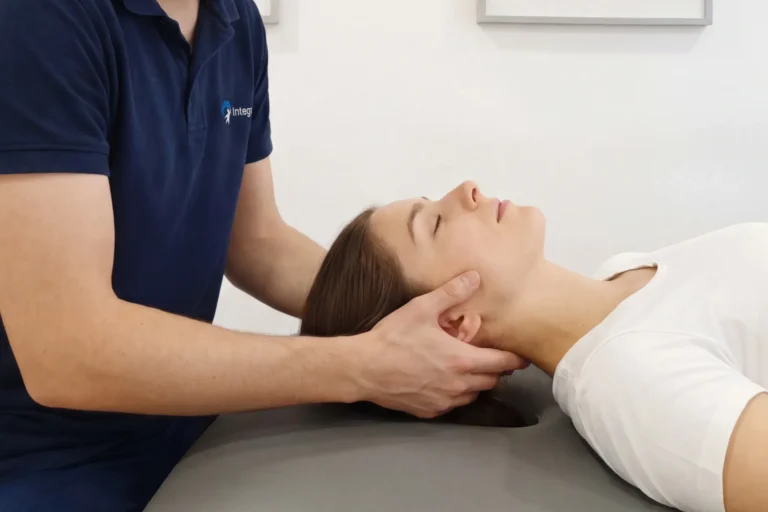
Osteopathy is a clinical approach that allows for a detailed assessment of the musculoskeletal system and its functional relationship with other systems in the body, particularly the cranial and visceral systems. In the context of running, osteopathic assessment seeks to identify joint alterations, mobility restrictions and muscle imbalances which, in some runners, may be associated with a less efficient distribution of loads during movement.
During this assessment, important joints for running are observed, such as the ankle, knee, hip and spine, as well as how these structures interact with each other. Aspects such as the mobility of the ankle, the function of the hip and the stability of the spine are analysed. core and activation of the gluteal muscles are often considered relevant to functional running mechanics, according to biomechanical principles described in the literature.
Osteopathic intervention, guided by the alterations identified in the clinical assessment and the biomechanics of running, can contribute to a better organisation of movement and a more appropriate adaptation to the demands of training, without presupposing the total elimination of the risk of injury.
Functional approach and adaptation to training by complementing Physiotherapy
In addition to manual intervention, osteopathy can be part of a broader clinical approach centred on the body's progressive adaptation to effort. At Integrativa, osteopaths are also physiotherapists, which allows them to articulate the work carried out in consultation with a functional orientation based on movement.
This can include guidance on stability and balance, proprioceptive training, quality of movement, running techniques adjusted to individual characteristics, as well as mobility and muscle strengthening programmes that complement running. While osteopathy focuses on assessing and intervening on structure, considering its relationship to function, physiotherapy intervenes directly on function through movement.
This articulation between approaches can support motor control and the efficiency of the sporting gesture, contributing to a more consistent and adapted practice over time, according to the training phase and the individual context of each runner.
Understanding osteopathy in running practice
Understanding running from an integrative perspective between Osteopathy and Physiotherapy implies recognising that performance and tolerance to effort result from the interaction between the structure of the body, the way it moves, recovery capacity and each person's life context. Osteopathy applied to running is a clinical intervention that seeks to support runners in preventing injuries and adapting to training, while respecting their biological and functional characteristics.
In this context, Osteopathy can play an important role in monitoring runners, liaising with Physiotherapy to offer a technically based approach in line with current clinical practice. Through careful assessment and appropriate intervention, this approach can contribute to a more efficient, consistent and sustainable practice, as part of individualised clinical care.
David Brandão | Osteopath and Physiotherapist
Specialised in Clinical Psychoneuroimmunology
Physiotherapist Card: 3652 | Order of Physiotherapists // Osteopath Card: C-0031697 | ACSS
Integrativa | Health and well-being as a lifestyle
This website and its content are for information purposes only and are not a substitute for medical or health professional advice. In all cases, treatments should be individualised and guided by health professionals. Do not make any changes to your treatment without contacting the doctor or health professional accompanying you.
Related articles