


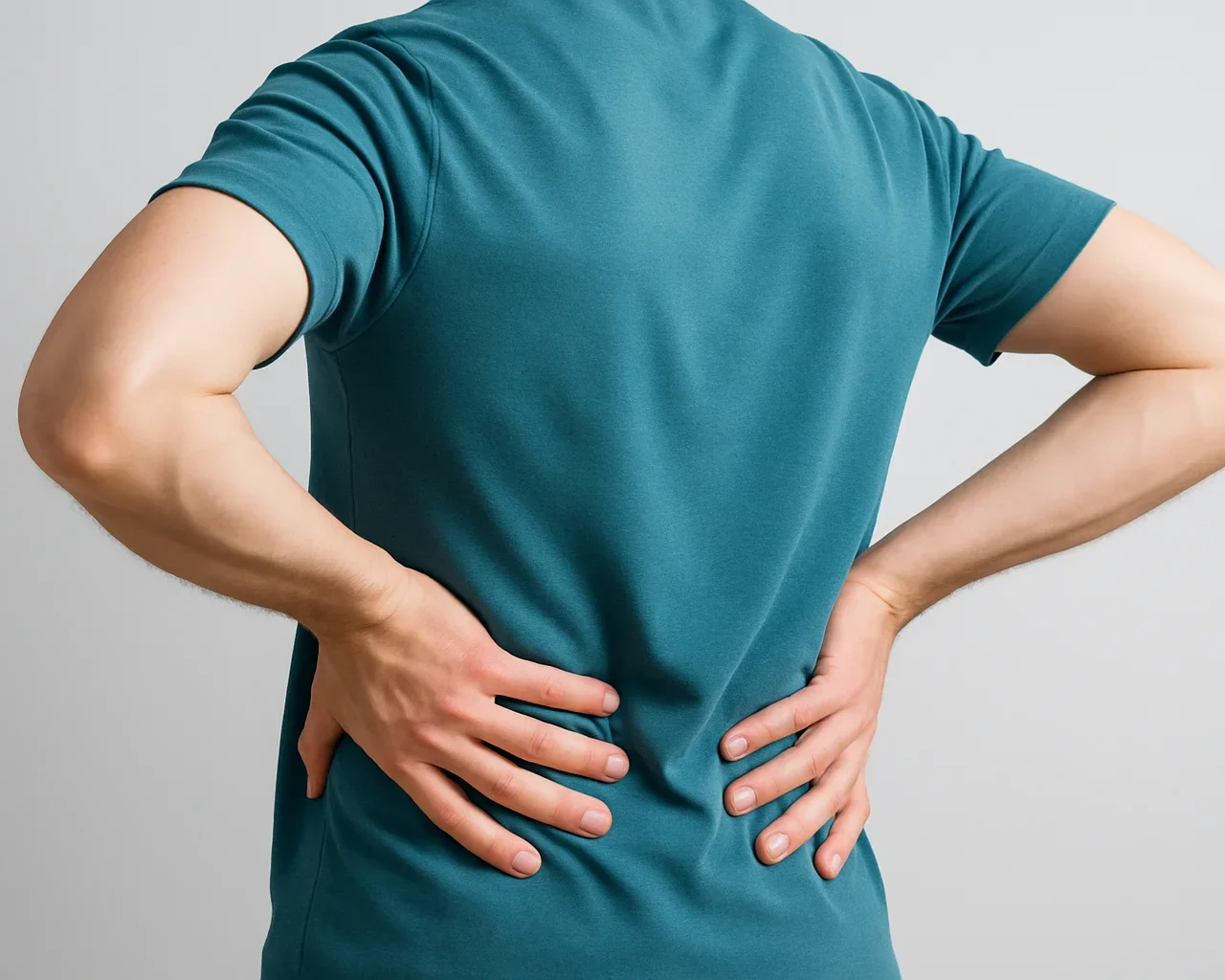
Back pain, particularly lower back pain, is a common complaint and, in many cases, is associated with structural changes in the spine, muscles, or joints. Nevertheless, there are situations where the source of the pain may not be limited to these structures, making it appropriate to consider other involved factors.
The organism functions in an integrated and interdependent manner. Changes in the balance of one system can have repercussions on others. The gut is a relevant example, as, in addition to its digestive function, it participates in the regulation of the immune system, the nervous system, and in mechanisms associated with pain perception.
The gut and low-grade inflammation
The intestine acts as a selective barrier, regulating the passage of substances into the systemic circulation. In certain circumstances, this barrier can become more permeable, allowing the passage of components that stimulate the immune system.
This process may be associated with a low-grade inflammatory state, characterised by a discreet but potentially persistent inflammatory response. In some individuals, this inflammatory context can influence pain modulation mechanisms, contributing to increased tissue sensitivity and a less efficient response to musculoskeletal problems.
When pain is felt away from its source
Pain is not always perceived at the site where it originates. The nerve pathways that transmit information from internal organs and those that carry signals from muscles and joints converge at similar levels of the central nervous system. For this reason, visceral changes can manifest as pain in distinct regions, such as the back, the lumbar area, the shoulders, or the pelvic region.
This phenomenon is called referred visceral pain and can help explain why certain pains persist, even when local interventions on the spine or muscles seem appropriate.
The communication between the gut and the nervous system
The gut maintains continuous communication with the brain through multiple pathways, notably the vagus nerve, which is involved in regulating the inflammatory response, of stress and pain perception. Changes in this communication, associated with factors such as stress Prolonged inflammation or tissue restrictions can interfere with the body's ability to modulate pain and respond effectively to adaptation and recovery processes.
The role of Visceral Osteopathy
Visceral Osteopathy is an area of osteopathic practice that uses manual techniques to assess the mobility of internal organs and their functional relationship with the spine, muscles, and nervous system. In cases of persistent back pain, this approach can be integrated into a care plan with the aim of:
- Assess the mobility of the bowel and associated tissues
- Identify tensions with potential influence on posture or movement
- To support the regulatory mechanisms of the nervous system
This intervention does not replace other therapeutic approaches and, in certain cases, may complement care when pain is considered to result from a more complex functional interaction.
Understanding back pain from an integrative perspective
Back pain does not always present an exclusively structural cause. In some contexts, it can be related to functional imbalances involving the interaction between the musculoskeletal system, visceral systems, and neuro-immune regulation mechanisms.
In these situations, the assessment of possible visceral dysfunctions can be relevant, especially when low back pain is persistent or recurrent. Integrating these dimensions into clinical reasoning allows for a broader understanding of musculoskeletal pain, respecting individual variability and the complexity of the processes involved.
An assessment with an integrative perspective contributes to framing these interactions more precisely and defining therapeutic strategies tailored to each individual. The focus is not limited to symptom management, but to understanding the factors that can influence the organism's functional balance.
At Integrativa, Visceral Osteopathy consultations are part of a global clinical approach, where we assess the body in an integrative way, considering the interactions between the musculoskeletal (Structural Osteopathy), visceral (Visceral Osteopathy), and cranial (Cranial Osteopathy) systems.
Book an assessment with an Osteopath specialising in Visceral Osteopathy and discover, in a careful and personalised way, how this integrative approach can help with your specific case.
David Brandão | Osteopath and Physiotherapist
Specialised in Visceral Osteopathy and Clinical Psychoneuroimmunology
Physiotherapist Card: 3652 | Order of Physiotherapists // Osteopath Card: C-0031697 | ACSS
Integrativa | Health and well-being as a lifestyle
This website and its content are for information purposes only and are not a substitute for medical or health professional advice. In all cases, treatments should be individualised and guided by health professionals. Do not make any changes to your treatment without contacting the doctor or health professional accompanying you.
Reference articles
- de Punder, K., & Pruimboom, L. (2015). Stress induces endotoxemia and low-grade inflammation by increasing barrier permeability. Frontiers in Immunology, 6, 223. https://doi.org/10.3389/fimmu.2015.00223
- Pavlov, V. A., & Tracey, K. J. (2012). The vagus nerve and the inflammatory reflex-linking immunity and metabolism. Nature Reviews Endocrinology, 8(12), 743-754. https://doi.org/10.1038/nrendo.2012.189
- Vermeulen, W., De Man, J. G., Pelckmans, P. A., & De Winter, B. Y. (2014). Neuroanatomy of lower gastrointestinal pain disorders. World Journal of Gastroenterology, 20(4), 1005-1020. https://doi.org/10.3748/wjg.v20.i4.1005
- Di Vincenzo, F., et al. (2023). Gut microbiota, intestinal permeability, and systemic inflammation: Current evidence and future therapeutic interventions. Frontiers in Immunology, 14, 10954893. https://doi.org/10.3389/fimmu.2023.10954893
- Liu, F. J., et al. (2024). Non-invasive vagus nerve stimulation in anti-inflammatory therapy: Mechanisms and clinical applications. Frontiers in Neuroscience, 18, 1490300. https://doi.org/10.3389/fnins.2024.1490300
- Dmytriv, T. R., et al. (2024). Intestinal barrier permeability: The influence of gut microbiota, diet and exercise. Frontiers in Physiology, 15, 1380713. https://doi.org/10.3389/fphys.2024.1380713
- Macura, B., et al. (2024). Intestinal permeability disturbances: Causes, diseases and therapeutic approaches. Clinical and Experimental Medicine. https://doi.org/10.1007/s10238-024-01496-9
- Siopi, E., et al. (2023). Gut microbiota changes require vagus nerve integrity to modulate inflammation and the vagal afferent pathway. Molecular Psychiatry, 28(12), 5501-5513. https://doi.org/10.1038/s41380-023-02071-6
Related articles