


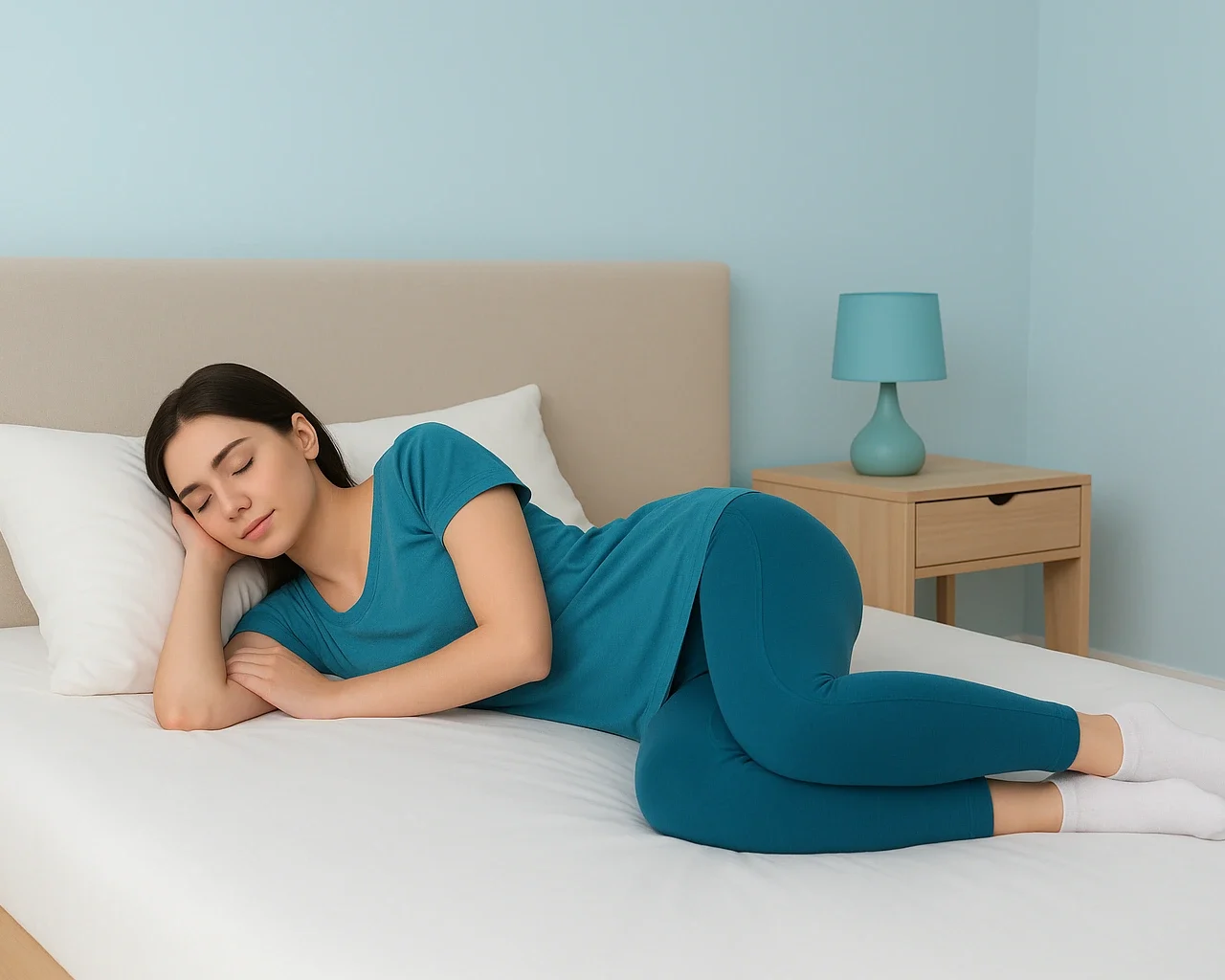
Many patients have doubts about the best sleeping posture or report discomfort associated with the mattress or pillow. Although these factors influence comfort during the night, it is important to understand that the most suitable sleeping position is one that respects the body's individual physiology and favours the alignment of structures, which can contribute to reducing cervical, lumbar or joint discomfort.
There is no single ideal sleeping position
Contrary to what is often publicised, there is no universally correct sleeping position. Each person has different anatomical characteristics, stress patterns and needs, so the most suitable posture will be the one that provides the greatest comfort and least strain on your body.
All sleeping positions have advantages and limitations. Sleeping on your back, side or stomach can be comfortable for some people and less suitable for others, depending on factors such as mobility, muscle tone, the presence of pain or daily habits. A relevant indicator is the feeling of rest on waking and the absence of persistent pain.
Mattress and pillow: individual comfort and support
The same principle applies to mattresses and pillows. There is no ideal model for everyone. As long as they retain their structural characteristics and provide adequate support, there is no need to replace them.
Although there are mattresses and pillows designed for specific sleeping positions, the most important factor remains individual comfort and adequate support for the natural curvatures of the spine. If you sleep well and wake up without significant discomfort, it's likely that the material you use is adjusted to your needs.
On the other hand, if the mattress or pillow no longer provides adequate support, is deformed or is associated with persistent pain on waking, it may be pertinent to re-evaluate its use.
When to see a physiotherapist or osteopath
If you regularly wake up with neck pain, stiffness, a feeling of fatigue or body discomfort, it may be useful to seek an assessment with an osteopath or physiotherapist. These professionals can analyse body alignment, mobility, muscle patterns and the way the body organises itself at rest, helping to identify factors that may be interfering with sleep quality.
Professional guidance can include simple adjustments to sleeping posture, pillow positioning or body organisation during rest, always on an individual basis and tailored to each person's needs.
Sleeping well as part of overall balance
Sleep plays an important role in physical recovery and in regulating the nervous system. A comfortable posture that respects body alignment and allows for adequate relaxation favours a more restful sleep and can help reduce discomfort throughout the day.
Taking care of the way you sleep is therefore part of a broader approach to well-being and musculoskeletal health over time.
David Brandão | Osteopath and Physiotherapist
Specialised in Clinical Psychoneuroimmunology
Physiotherapist Card: 3652 | Order of Physiotherapists // Osteopath Card: C-0031697 | ACSS
Integrativa | Health and well-being as a lifestyle
This website and its content are for information purposes only and are not a substitute for medical or health professional advice. Each person's treatment should be individualised and guided by health professionals. Do not make any changes to your treatment without contacting the doctor or health professional accompanying you.
Related articles