

Shoulder tendinitis, also known as rotator cuff tendinopathy, is one of the most common causes of pain in this joint. It is characterised by inflammation or degeneration of the tendons responsible for the stability and movement of the shoulder, namely those of the rotator cuff, with the supraspinatus being the most frequently affected.
This condition can cause pain, limited movement, and loss of function, impacting daily life, work, and sports participation.
In many cases, the problem is not just inflammatory, but rather a chronic overload of the tendon, which alters its structure and its capacity for recovery. For this reason, absolute rest or quick fixes are rarely sufficient to resolve the problem.
Causes and risk factors for shoulder injuries
Shoulder tendinitis is not just an inflammatory process. In many cases, it corresponds to tendinopathy, i.e., a process of chronic overuse of the tendon leading to changes in its structure and function.
The most frequent symptoms include pain when lifting the arm, a feeling of weakness, discomfort when sleeping on the affected shoulder, and functional limitation.
Among the main risk factors are:
- Repeated movements of the upper limbs, especially above the head;
- Postural and biomechanical changes, such as incorrect postures, muscle imbalances and shoulder instability;
- Muscle overload and lack of adequate rest periods;
- Ageing and natural wear and tear of the tendons;
- Trauma, falls or impacts;
- Incorrect exercise techniques and work or sports tasks.
The role of physiotherapy
Physiotherapy is one of the most effective approaches for treating shoulder tendinitis, not only to relieve pain but also to restore joint function and prevent relapses. It plays a fundamental role in rehabilitation, allowing for the restoration of movement and promoting a safe, progressive, and lasting recovery.
More than just treating the symptoms, the physiotherapist addresses the root cause of the problem through a structured plan tailored to each individual. The treatment's main objectives are to reduce pain and inflammation, improve shoulder range of motion, strengthen the rotator cuff and shoulder girdle muscles, correct postural and movement pattern abnormalities, prevent further injuries, and prepare the shoulder for a return to daily, professional, and sporting activities.
Depending on the severity of the injury, physiotherapy treatment may include:
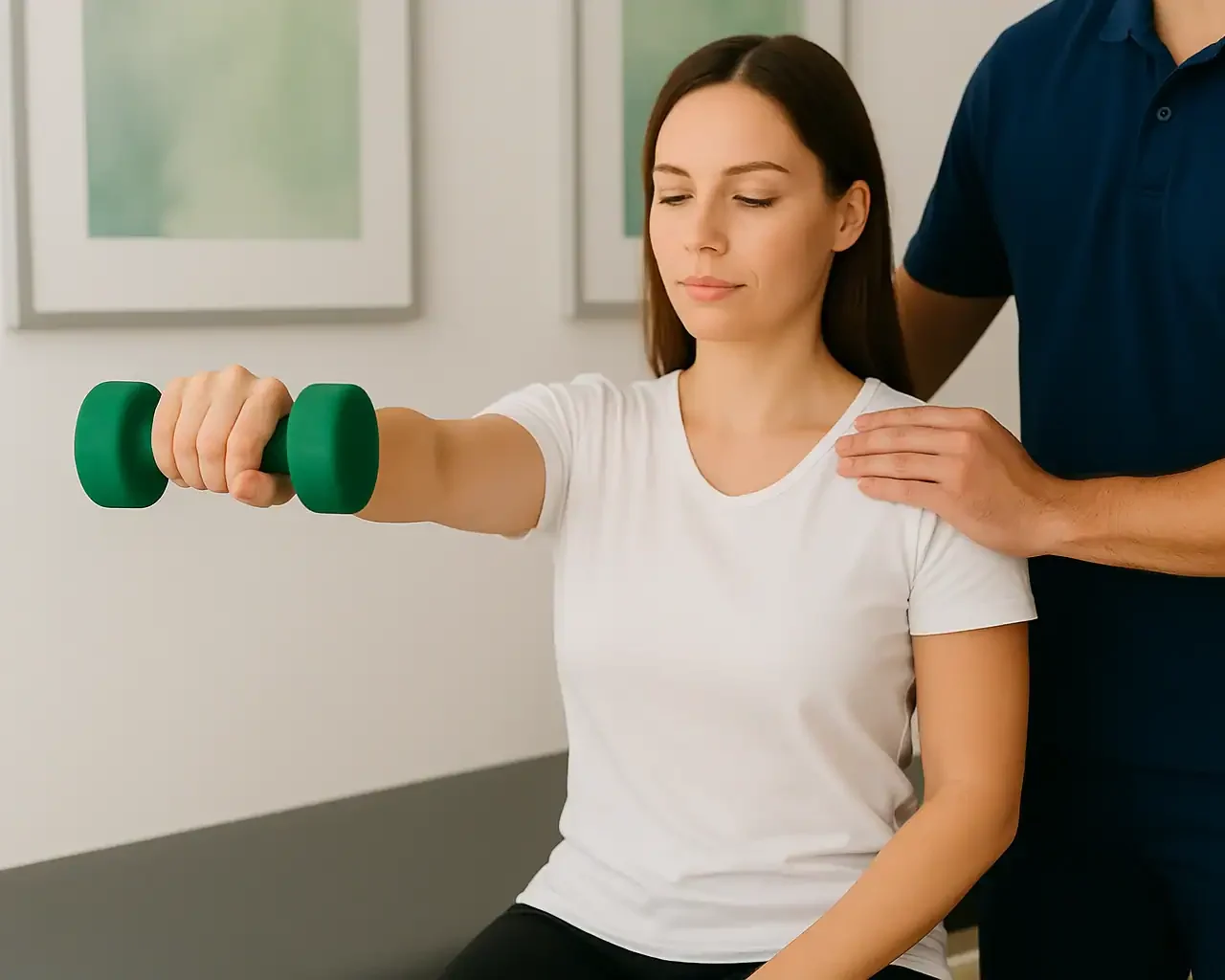
- Therapeutic exercise - Structured exercise should be the main focus of physiotherapy, as it reduces pain and improves function in people with shoulder tendinopathy.
- Education and counselling - The physiotherapist should advise the patient on the clinical condition, pain management strategies and adaptations to be made to the daily routine to avoid worsening symptoms.
- Manual therapy - Joint mobilisation which can offer short-term pain relief and improve mobility when used as a complement to the exercise plan.
- Electrotherapy – It can be used in specific phases of treatment as a supplement, with the aim of helping to control pain and facilitate active participation in the exercise program.
Rehabilitation phases
Recovery from shoulder tendonitis must be progressive and adapted to each person's evolution. The process can therefore be divided into different phases:
- Initial phase - Focus on pain control and protecting the tendon from excessive loads;
- Mobility phase - Recovery of range of movement in a smooth and controlled manner;
- Strengthening phase - Specific exercises to develop muscle strength and endurance;
- Functional phase - Progressive and safe return to daily, professional and sporting activities.
Tips for a good recovery
- Respect recovery times and avoid premature regression;
- Follow the exercise plan defined by your physiotherapist correctly;
- Avoid repetitive movements that aggravate pain without proper guidance;
- Maintain correct posture during daily tasks;
- Report any changes or atypical pains to your physiotherapist.
Recovering the shoulder
It is currently known that complete rest is not the most effective approach for shoulder tendinitis recovery. Guided and controlled movement, supervised by a physiotherapist, is essential to stimulate tendon repair and restore joint function.
Through careful assessment, appropriate education, progressive exercises and complementary techniques, it is possible to reduce pain, improve mobility and return to daily and sporting activities safely and effectively.
At Integrativa, the approach is based on a combination of science, personalisation, and continuous monitoring, enabling complete and sustainable recovery, with a focus on preventing relapses and promoting joint longevity.
Make your assessment and take the first step towards your recovery.
Rita Xarepe | Physiotherapist and Clinical Pilates Instructor by APPI
Physiotherapist Card: 4209 | Order of Physiotherapists
Integrativa | Health and well-being as a lifestyle
This website and its content are for information purposes only and are not a substitute for medical or health professional advice. In all cases, treatments should be individualised and guided by health professionals. Do not make any changes to your treatment without contacting the doctor or health professional accompanying you.
Related articles