

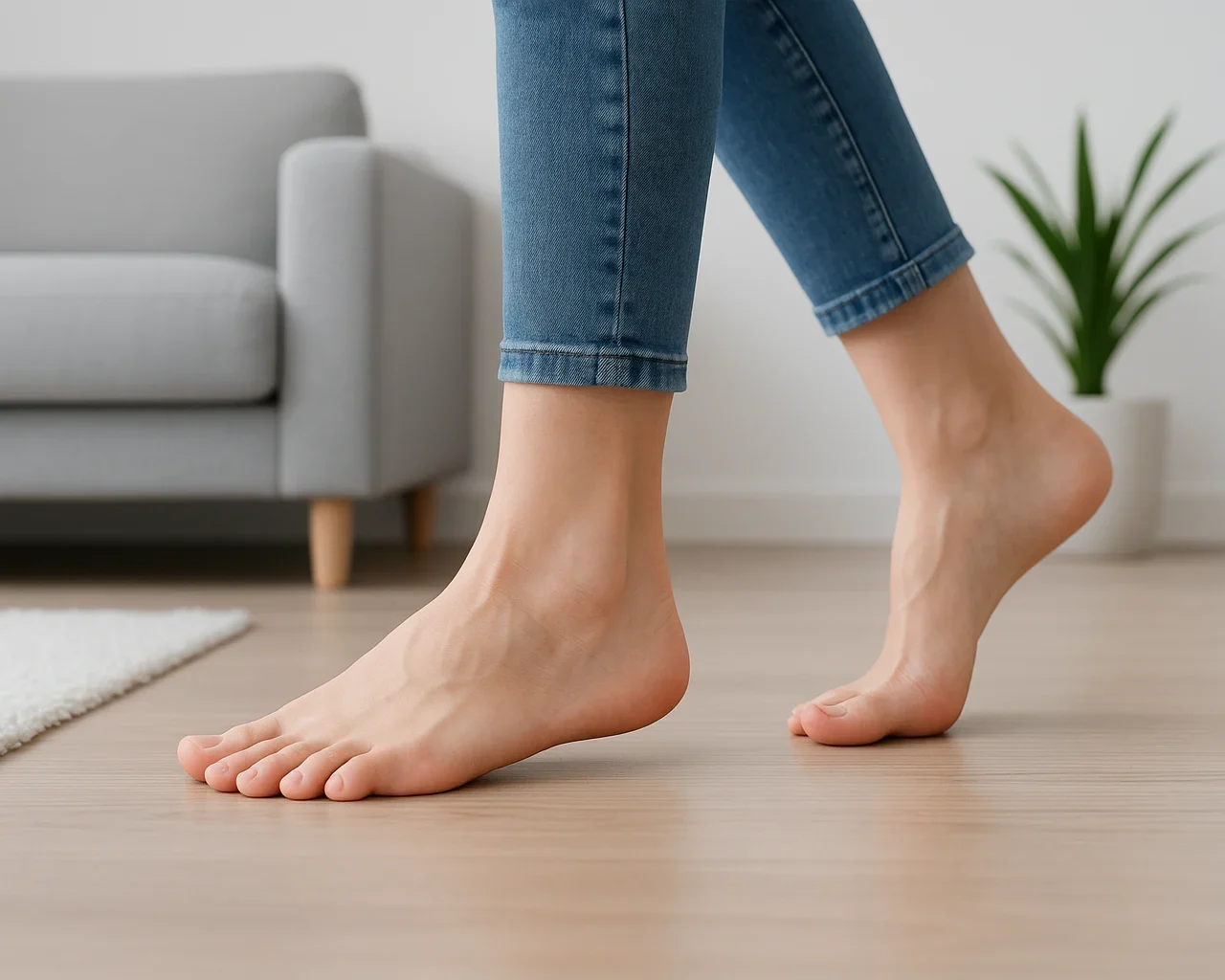
In recent years, the concept of barefoot, or barefoot walking, has become increasingly important in the field of musculoskeletal health and the study of human movement. This interest stems, in part, from the critical analysis of the impact of conventional footwear on foot function and, by extension, on posture and movement patterns throughout the day.
The approach barefoot is based on the premise of allowing the foot to function more closely to its physiology, with less external interference. This can include controlled periods of barefoot walking on safe surfaces or the use of footwear designed to respect the anatomy of the foot, offering adequate protection without excessively restricting movement.
The growing clinical interest in the concept barefoot
The growing attention paid to barefoot reflects an evolution in the understanding of the foot as an active structure in the regulation of load, balance and overall movement. The foot is no longer seen only as a passive element of support, but is now recognised as an integral part of neuromuscular adaptation and motor control.
What defines barefoot in the context of musculoskeletal health
O barefoot does not imply walking barefoot in all contexts. It is usually associated with a number of specific characteristics, including:
- Greater freedom of finger movement
- Thin, flexible soles, allowing greater perception of contact with the ground
- Absence or significant reduction in the gap between heel and forefoot
- Respect for the natural anatomical shape of the foot
The aim is to favour a more direct interaction between the foot and the ground, facilitating more active and responsive movement patterns, with greater participation from the structures of the foot itself.
Effects of barefoot in foot function and movement control
Scientific literature and clinical observation suggest that, in certain contexts, the reduction in passive support provided by footwear can be associated with functional adaptations of the foot. Among the most frequently described effects are:
- Activation of the intrinsic muscles of the foot: With less structural rigidity and less external support, the foot tends to take on a more active role in load absorption and balance control, which can favour the recruitment of the intrinsic musculature, small muscles responsible for the stability and adaptation of the plantar arch.
- Influence on posture and overall movement: The foot is the base of support for the body. Changes in the way it contacts the ground can alter the distribution of loads along the kinetic chain, i.e. the sequence of joints and body segments involved in the movement, with possible repercussions on posture and motor control.
- Sensory stimulation: Greater perception of the ground, mediated by the sensory receptors in the sole of the foot, can contribute to better adjusted motor responses. This increased sensory stimulation can have an impact on balance and coordination, particularly in tasks such as walking or unipodal support.
- Balance and stability: A more active base of support can be associated with improvements in postural control in some people. However, this effect depends on multiple factors, including age, muscle strength, joint mobility, injury history and daily functional context.
- Barefoot and managing foot discomfort: In some cases, the use of more permissive footwear can be part of a clinical strategy to manage complaints such as discomfort in the forefoot, stiffness in the toes or a feeling of compression. Even so, there is no universal approach. The response to barefoot varies from person to person, according to the individual characteristics of the foot and the tolerance of the tissues to the load.
Progressive adaptation plays a central role. Rapid changes in the type of footwear or exposure to more demanding surfaces can increase the mechanical load on muscles, tendons and bone structures, especially in people with less adaptability, tissue stiffness or pre-existing foot alterations.
When the barefoot may not be the most appropriate approach
Despite the growing interest, the barefoot is not suitable for all people or all contexts, particularly in urban environments. The decision must take into account the type of activity, the structure of the foot, the volume of daily load, the level of habitual activity and the history of injuries.
Experimenting gradually and monitoring the body's response allows you to assess whether this approach fits your individual needs.
Minimalist footwear as an intermediate strategy
For those who want to explore some of the principles of barefoot in a more controlled way, minimalist footwear can be an intermediate alternative. This type of footwear seeks to respect the anatomy of the foot while offering greater protection, which can facilitate progressive adaptation in certain clinical and functional contexts.
The choice of footwear benefits from an individualised assessment, adjusted to lifestyle, environment and functional requirements, taking into account comfort, progressive adaptation and daily load.
Understanding barefoot in an integrated perspective of the movement
Explore the barefoot does not imply giving up the use of footwear, but it can invite us to rethink the way our feet are used and protected on a daily basis. Footwear can be seen as a clinical and functional tool, the choice of which must respect the function of the foot, the context of use and the specific needs of each person.
When there is curiosity, persistent discomfort or doubts about the most suitable type of footwear, a clinical assessment can help clarify which approach makes the most sense, taking into account mobility, strength, movement patterns and daily functional demands.
Taking care of your feet is taking care of the basis of your movement. Walking more consciously can be an important step towards a more balanced relationship between body, ground and functional well-being.
David Brandão | Osteopath and Physiotherapist
Physiotherapist Card: 3652 | Order of Physiotherapists // Osteopath Card: C-0031697 | ACSS
Integrativa | Health and well-being as a lifestyle
This website and its content are for information purposes only and are not a substitute for medical or health professional advice. In all cases, treatments should be individualised and guided by health professionals. Do not make any changes to your treatment without contacting the doctor or health professional accompanying you.
Related articles