

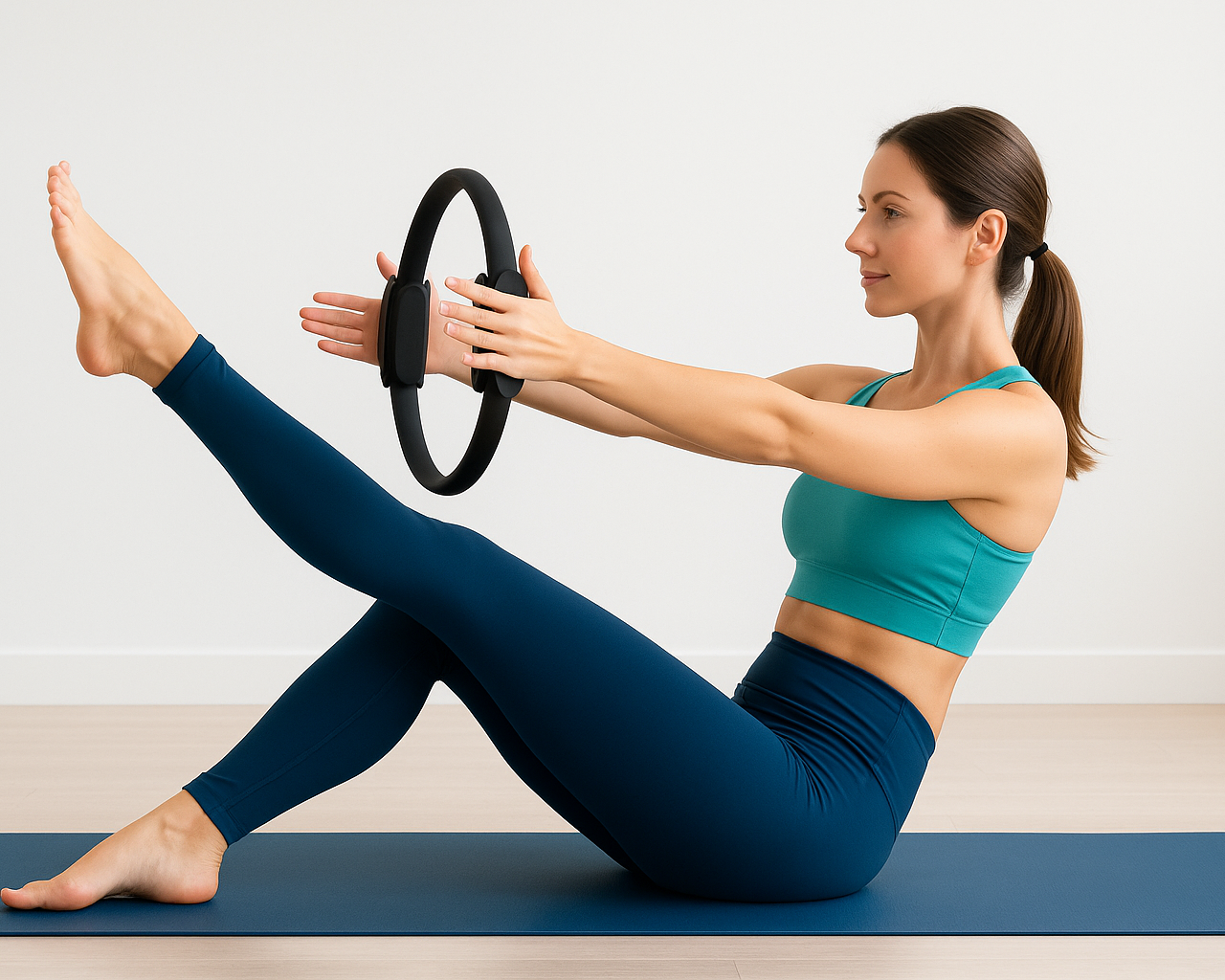
You've surely heard of Pilates. The Pilates method is on-trend and is becoming increasingly popular as a regular practice. But have you heard of Clinical Pilates and ReformerDo you know the differences between Pilates and Clinical Pilates?
Clinical Pilates: the evolution of the traditional Pilates method
Pilates is a method developed by Joseph Pilates, considered the “father” of Pilates, in the 1920s.
As a child, Joseph had poor health, suffering from rickets, asthma, and rheumatic fever. During his adolescence, being self-taught, he studied anatomy, physiology, and Eastern medicine, with the aim of developing a set of exercises and rustic apparatuses to help him strengthen his body and prevent future limitations.
With the encouragement of this practice, he dedicated his youth to gymnastics and diving. Throughout his life, he developed around five hundred floor exercises, which helped him, as well as his disciples, to lead long and healthy lives.
The original method developed by Joseph Pilates had as its main objective strength training, being especially aimed at dancers and athletes in high-level competition, with a focus on toning muscles and preparing the body for high-intensity exercises.
The emergence of Clinical Pilates
From traditional Pilates, the need arose to adapt the exercises so that anyone could practice the technique according to their physical capabilities and functional limitations. Thus, Clinical Pilates was born.
Clinical Pilates is a modification of Joseph Pilates' original method, developed by physiotherapists since the 1990s, based on current scientific evidence and internationally recognised.
The method continues to evolve rapidly and significantly worldwide.
A Australian Physiotherapy and Pilates Institute (APPI) redefined the method, based on three fundamental principles:
The inhibition of pain and associated muscular reflexes;
The evaluation of the impact of Pilates on pathology and dysfunction;
The full functionality of the individual after rehabilitation.
The APPI Clinical Pilates provides practical clinical tools that enhance core training and improve the quality of movement.
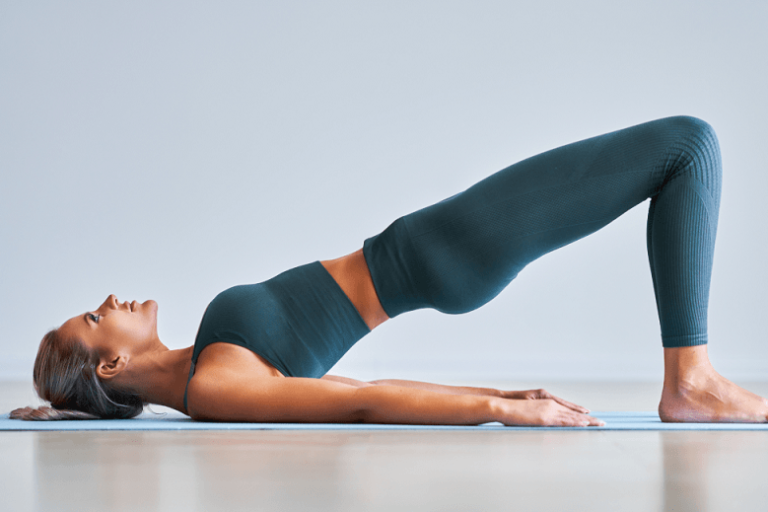
The method presents a set of progressive floor exercises, specifically designed for patients with some type of pathology or postural alteration, and can be practiced in individual or group sessions.
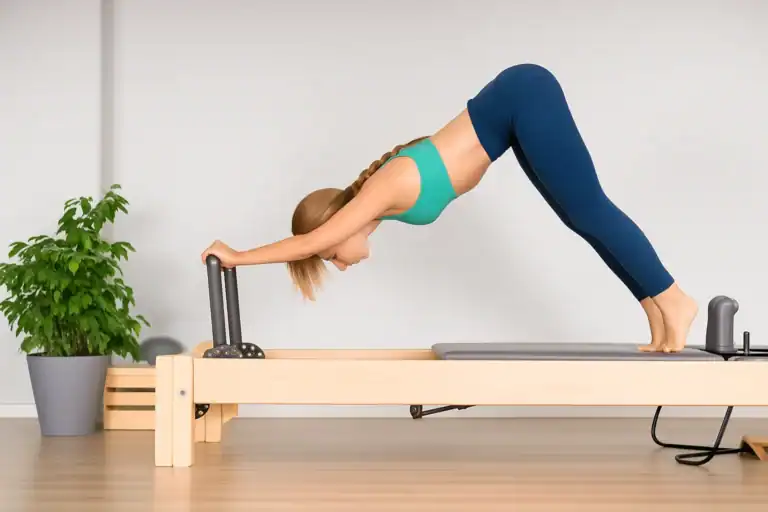
In this way, the Clinical Pilates and Reformer It delves deeper into the methodology of Classical Pilates, redefining it as more than just a method for toning the body, but rather as a system focused on improving health and quality of life.
Clinical Pilates: prevention and rehabilitation
Most musculoskeletal injuries are related to poor posture and the repetition of incorrect movements in daily life.
Clinical Pilates acts as a method for injury prevention, promoting correct postural alignment through physical activity.
This method consists of a set of exercises adapted from the originals developed by Joseph Pilates, divided into various difficulty levels, allowing them to be directed towards physical rehabilitation.
It can be practised individually or in a group, always respecting the individuality and specific needs of each person.
Benefits of Clinical Pilates
The main benefits of Clinical Pilates and Reformer include
Improvement of postural behaviour and body awareness.;
Reduction of joint and muscular pain.;
Increased muscle strength and endurance;
Improvement of breathing capacity and control;
Reduction of physical and emotional stress;
Motor coordination optimisation;
Increased flexibility;
Enhance recovery and injury prevention;
Well-being promotion;
Improving concentration on daily tasks.
Clinical Pilates and chronic diseases
A scientific study by the University of Aveiro gathered articles relating to the practice of Clinical Pilates in 491 individuals with chronic pathologies, including breast cancer, diabetes, COPD, cystic fibrosis, heart failure, and arterial hypertension, over a period of 8 to 12 weeks, with a frequency of one to three times per week.
The results showed significant improvements in quality of life, reduction in disease symptomatology, increased exercise tolerance, and greater muscle strength, particularly in people with cardiovascular disease, diabetes, and breast cancer.
The study concluded that the Clinical Pilates and Reformer it is a beneficial intervention to be adopted as an adjuvant strategy, and should be practised alongside other effective therapies such as respiratory, cardiac, or neurological rehabilitation.
The principles of Clinical Pilates
Clinical Pilates is based on six fundamental principles:
Concentration
Breathing
Control
Centralisation
Precision and fluidity of movement
Routine
No Clinical Pilates and Reformer, great importance is given to the way exercises are performed.
They should be performed within a comfortable range of motion of the lumbar spine, avoiding anterior and posterior pelvic tilt.
It is essential to maintain a smooth and constant contraction of the deep abdominal musculature, especially the transverse abdominis, multifidus, and pelvic floor muscles, providing support to the lombo-pelvic region during exercise and daily activities.
Coordination between breathing and muscle control is fundamental in Clinical Pilates.
As Joseph Pilates used to say:
“Breathing is the first action of life and the last... above all, learn to breathe correctly.”
Precision of movement is essential for achieving better results. Exercises should be executed effectively, introducing breathing and muscle contraction in a harmonious way.
It is important to be focused on the body and mind, allowing the body neuromuscular reorganisation and genuine commitment to the method.
Joseph Pilates stated:
“Few well-executed movements, performed correctly and in a balanced way, are worth many hours of gymnastics.”
A method to re-educate, re-balance, and strengthen
O Clinical Pilates and Reformer aims to prevent and treat neuro-musculoskeletal injuries, when used correctly and frequently.
Requires routine and continuity, allowing the body to re-educate posture and movement patterns.
As Joseph Pilates used to say:
“With 10 sessions you will notice the difference, with 20 sessions others will notice, and with 30 sessions you will have a new body.”
Clinical Pilates at Integrativa
Clinical Pilates is a method designed for everyone who wishes to practice physical activity in a controlled, personalised, and supervised manner, treating or preventing injuries, with a focus on re-educating, re-balancing, and strengthening the body's deep and superficial muscles.
This method improves posture, increases flexibility, promotes joint mobility, and works on the control of movement and breathing.
The fact that it adapts to each person, respecting their individual needs, limitations and goals, means that more and more people are choosing Clinical Pilates as a method of rehabilitation and well-being.
At Integrativa, we value the specificity and individuality of each person.
Therefore, our Clinical Pilates classes are exclusively one-to-one, always led by physiotherapists trained in the method.
This personalised approach ensures a detailed assessment, the correct and safe execution of each exercise, and progression adapted to each patient's pace and physical condition.
Each session is designed to meet the specific needs of the practitioner, whether for the treatment of a condition, injury prevention, or improving posture and quality of life.
Individualised support allows for real-time correction of technique, optimisation of results, and ensures the body moves in a balanced and functional way.
I end with the words of Joseph Pilates:
“Pilates develops a uniform body, corrects wrong posture, restores physical vitality, strengthens the mind, and elevates the spirit.”
Accept our challenge and try this training methodology! Come and get to know and practice this method with us. Clinical Pilates at Integrativa is health, balance and quality of life in every movement.
Alexandra Gomes Physiotherapist and Clinical Pilates Instructor by
Australian Physiotherapy and Pilates Institute
Integrativa | Health and well-being as a lifestyle
This website and its content are for information purposes only and are not a substitute for medical or health professional advice. In all cases, treatments should be individualised and guided by health professionals. Do not make any changes to your treatment without contacting the doctor or health professional accompanying you.
Related articles