


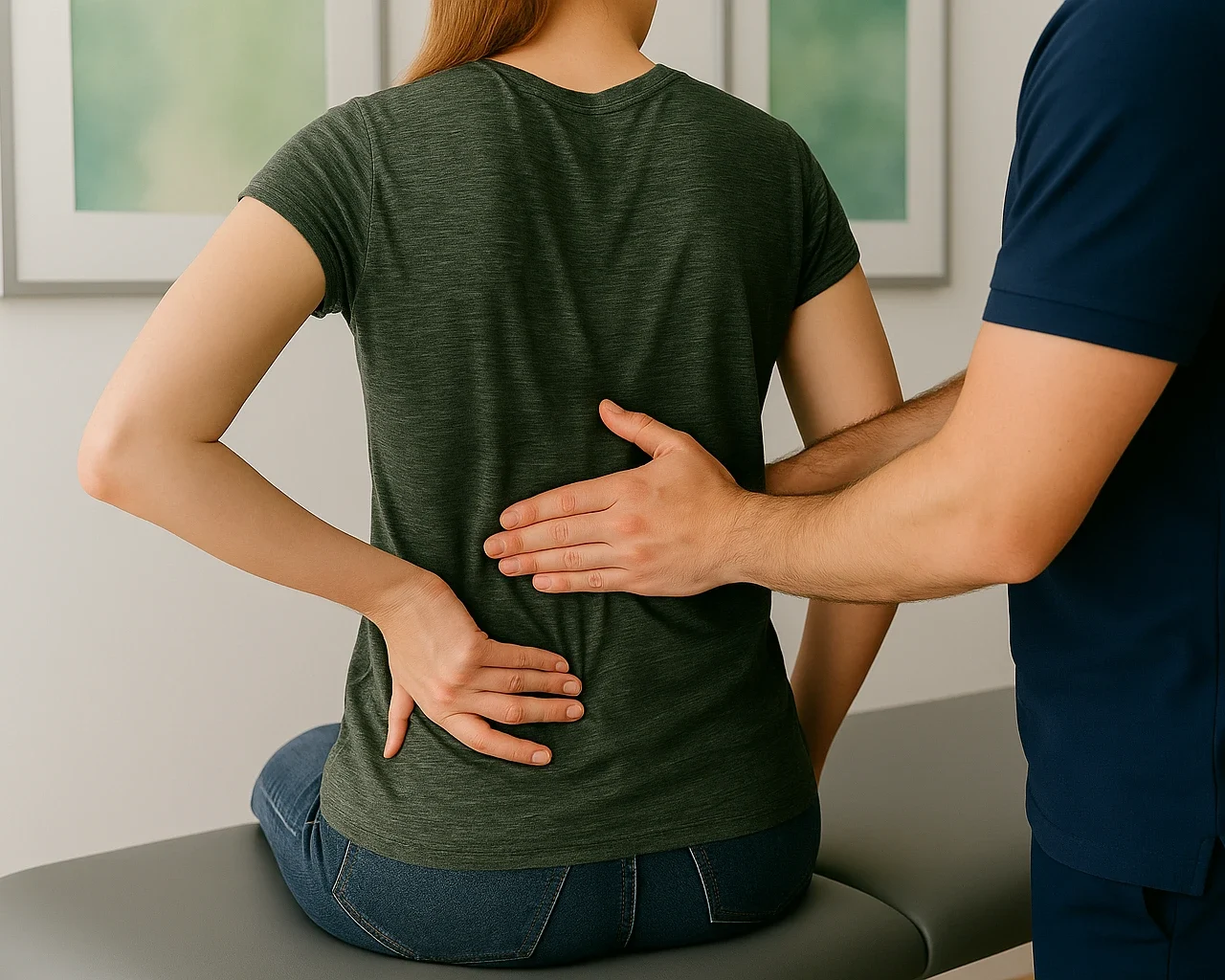
Musculoskeletal pain is often associated with injuries or dysfunctions to the muscles, joints, or bones. However, a more comprehensive approach recognises that pain can also originate from internal organs, even though it is felt in regions of the body that, at first glance, appear to have no connection to those organs. This phenomenon, known as referred pain, occurs due to complex neurophysiological mechanisms, such as the convergence of nerve afferents coming from the viscera and musculoskeletal structures. Visceral Osteopathy, by understanding this interaction, offers a therapeutic approach that considers the body as an integrated system.
Common examples of pain caused by visceral dysfunctions
- Liver or gallbladder dysfunctionThey can cause pain in the right shoulder and upper thoracic region, due to shared innervation between these organs and the muscles of the upper trunk. The liver and gallbladder are primarily innervated by the phrenic nerve (C3-C5) and the upper intercostal nerves, which also control the musculature of the cervical region and the muscles of the upper trunk. This overlap can lead to referred pain in the shoulder region, which is a classic example of referred pain.
- Gastric changes, such as reflux or gastritisThey can cause pain in the shoulders and trapezius muscles, due to the interconnection of nerve pathways between the digestive system and the cervical region. The stomach is mainly innervated by the vagus nerves and oesophageal nerves, which connect with the nerve fibres that innervate the muscles of the neck and shoulders. Thus, gastric dysfunctions can be perceived as pain in the upper back and trapezius muscles, where somatic and visceral nerve fibres converge.
- Intestinal disorders, such as irritable bowel syndrome or chronic constipationThese can cause pain in the lumbar region, as these conditions influence visceral mobility and increase tension in adjacent muscular structures. The large intestine is innervated by fibres from the mesenteric nerves, which connect with the nerve roots of the lumbar region, thus potentially causing referred pain in the lumbar area, particularly in cases of intestinal disorders that alter intestinal transit and generate hypersensitivity.
- Pelvic organ dysfunctions, such as endometriosis or prostatitisThis can result in pain in the lumbar and pelvic regions due to the neural interconnection between these organs and the musculature of the area. The visceral innervation of the pelvis is complex and involves the pelvic nerves and the sacral plexus, which also supply the nerve roots of the lumbar region. Therefore, pelvic conditions can manifest as pain in the lumbar or pelvic region, particularly due to the interaction between somatic and visceral fibres.
- Changes to the bladder or rectumThey can cause lower back pain and pain in other areas, as the nerves that supply those areas also affect the lumbar musculature. The pelvic plexus, which supplies the bladder and rectum, has connections with the lumbar nerves, and can therefore cause referred pain in the lower back and also in other areas of the pelvis and thighs. This phenomenon is particularly noticeable in conditions such as chronic urinary tract infections, bladder disorders or chronic constipation, which affect both visceral function and muscle tension.
The mechanism of referred pain
Referred pain occurs when a problem in an internal organ results in pain felt in a distant area, usually within the musculoskeletal system. The neurophysiological explanation for this phenomenon lies in the convergence of nerve signals in the spinal cord. According to studies by Cervero & Laird (1999), sensory afferents originating from visceral and musculoskeletal structures converge on the same neurons in the spinal cord, particularly at the dorsal horn level, which makes it difficult to distinguish the source of the pain.
For example, Giamberardino (2009) describes that malfunctions in the liver or gallbladder can cause pain in the right shoulder due to the convergence of nerve afferents that innervate these areas with the fibres that supply the musculature of the upper trunk. Similarly, gastric problems, such as reflux or gastritis, can cause pain in the neck and trapezius regions, as the nerve pathways of the digestive system share spinal segments with the muscles of the upper back.
The relationship between the musculoskeletal system and internal organs
It is fundamental to understand that the human body functions as a whole, in which the visceral and musculoskeletal systems are interconnected. The mobility of internal organs and their interaction with the surrounding musculature directly influence posture and movement. Visceral Osteopathy, which considers these factors, is a practice based on the assessment and treatment of visceral dysfunctions that impact the musculoskeletal system, using approaches that aim to improve the functionality of the body as a whole.
In studies on the relationship between viscera and musculature, Bogduk (2009) states that alterations in internal organs can lead to postural changes and muscle stiffness. One example of this occurs when a dysfunction in pelvic organs, such as endometriosis or prostatitis, results in referred pain in the lumbar region. The shared innervation between the pelvic organs and the muscles of the lumbar region can explain this painful manifestation.
The role of Visceral Osteopathy
Visceral Osteopathy offers an integrative approach to treating musculoskeletal pain of visceral origin. This practice is not limited to manipulating musculoskeletal structures but also considers dysfunctions in internal organs that can affect the body's biomechanics. Still (1899), the founder of Osteopathy, already proposed that the body's balance depended on the interaction between all its parts, and that problems in one system could reflect or cause disturbances in others. This approach has been corroborated by contemporary studies demonstrating the effectiveness of osteopathic techniques in improving visceral conditions associated with musculoskeletal pain (Moskowitz, 2010).
A study by Langevin et al. (2011) showed that osteopathic manipulations were effective in improving visceral mobility and relieving musculoskeletal pain, reinforcing the idea that the manipulation of internal organs can have a positive impact on reducing musculoskeletal symptoms. Visceral Osteopathy therefore offers a treatment that goes beyond simple symptom relief, focusing on resolving internal dysfunctions that may contribute to the painful condition.
Mechanisms of Convergence and Sensitisation
Musculoskeletal pain of visceral origin is closely related to the convergence of visceral and somatic afferents in the spinal cord. Jänig (2009) explains that signals originating from internal organs and musculoskeletal structures combine in the spinal cord, creating a scenario where the central nervous system has difficulty identifying the true origin of the pain. This phenomenon is essential for understanding referred pain and chronic pain patterns, frequently observed in patients with visceral dysfunctions.
Furthermore, when the viscera are continuously stimulated by pathological processes, a phenomenon of central sensitisation occurs. According to Woolf (2011), this process results in increased neuronal responsiveness, causing stimuli that are normally non-painful to be perceived as painful. This mechanism explains chronic pain, where pain patterns persist even after the resolution of the original visceral problem, often accompanied by changes in muscle tone and myofascial rigidity.
The relationship between visceral pain and musculoskeletal pain
Musculoskeletal pain of visceral origin should be understood as part of a segmental autonomic integration process. Increased visceral afferent activity can not only affect pain circuits but also influence viscerosomatic reflexes, which modulate muscle tone, postural control, and the reactivity of the autonomic nervous system. According to Cervero (2009), increased visceral afference can perpetuate chronic pain and patterns of musculoskeletal dysfunction, creating a vicious cycle involving both the autonomic and musculoskeletal systems.
Gebhart's (2000) studies highlight that changes in internal organs, such as inflammation or distension, can increase the excitability of visceral nerve fibres, primarily C fibres, which are responsible for diffuse and poorly localised pain. This continuous activation of visceral nerve fibres contributes to central sensitisation, leading to an amplification of pain perception and the development of persistent musculoskeletal pain conditions.
Visceral Mechanotransduction and Sensory Modulation
More recent neurophysiology models, such as those described by Mayer et al. (2009), integrate viscerosomatic convergence theory with visceral mechanotransduction, which is the process by which mechanical stimuli generated in the viscera, such as distension or movement, are converted into neuronal signals. These signals influence neural activity and can alter pain perception. The mobility of internal organs and tensions in fascial tissues are key elements that can reinforce viscerosomatic convergence mechanisms, generating muscle and lower back pain in response to internal dysfunctions, such as alterations in intestinal mobility or visceral blood flow.
The integration of these models shows how visceral dysfunctions can be an underlying factor in musculoskeletal pain conditions, even in the absence of obvious structural injuries, providing a coherent model for understanding musculoskeletal pain without structural correlation.
Understanding visceral-origin musculoskeletal pain from an integrative perspective
Understanding musculoskeletal pain of visceral origin implies recognising the importance of the convergence of visceral and somatic afferents in the spinal cord, the role of central sensitisation, and the influence of visceral mechanotransduction. This understanding provides a more comprehensive approach to pain management, enabling the identification and treatment of underlying visceral dysfunctions that may contribute to complex musculoskeletal pain patterns. By adopting an integrative approach, such as Visceral Osteopathy, it is possible to promote balance between the body's systems, providing relief and improving patients' quality of life.
At Integrativa, Visceral Osteopathy consultations are part of a global clinical approach, where we assess the body in an integrative way, considering the interactions between the musculoskeletal (Structural Osteopathy), visceral (Visceral Osteopathy), and cranial (Cranial Osteopathy) systems.
Book an assessment with an Osteopath specialising in Visceral Osteopathy and discover, in a careful and personalised way, how this integrative approach can help with your specific case.
David Brandão | Osteopath and Physiotherapist
Specialising in Visceral and Cranial
Physiotherapist Card: 3652 | Order of Physiotherapists // Osteopath Card: C-0031697 | ACSS
Reference articles
- Cervero, F., & Laird, J. M. A. (1999). Visceral pain: the neural basis of the phenomenon. Neuroscience & Biobehavioral Reviews, 23(6), 797-804. DOI: 10.1016/S0149-7634(99)00025-X
- Gebhart, G. F. (2000). Pain and visceral afferents: Mechanisms of pain transmission and modulation. The Journal of Clinical Investigation, 105(7), 817-822. DOI: 10.1172/JCI10651
- Jänig, W. (2009). The Integrative Action of the Autonomic Nervous System: Neurobiology of Homeostasis. Cambridge University Press. ISBN: 978-0-521-88940-1
- McPartland, J. M., et al. (2001). Osteopathic Manipulative Treatment for Digestive Disorders: A Review of the Literature. Journal of Bodywork and Movement Therapies, 5(2), 73-81. DOI: 10.1054/jbmt.2001.0173
- Migliorini, L., Pereira, S., & Maciel, A. (2012). Visceral manipulation in the treatment of chronic low back pain: A pilot study. Journal of Bodywork and Movement Therapies, 16(4), 468-476. DOI: 10.1016/j.jbmt.2012.02.004
- O’Conner, J., & Pridmore, S. (2011). The role of osteopathy in the management of visceral pain. International Journal of Osteopathic Medicine, 14(3), 157-162. DOI: 10.1016/j.ijosm.2011.05.003
- Pope, M., Clarke, E., & Weller, C. (2022). Visceral manipulation for chronic low back pain: A randomized controlled trial. Explore: The Journal of Science and Healing, 18(2), 123-130. DOI: 10.1016/j.explore.2021.12.001
- Schleip, R., et al. (2012). Fascial plasticity – a new neurobiological explanation: Part 1. *Journal of Bodywork and Movement Therapies*, 16(4), 456-464. DOI: 10.1016/j.jbmt.2012.02.003
- Tontodonati, M., et al. (2019). Neural Mobilization in the Treatment of Peripheral Nerve Entrapment Syndromes: A Review of the Literature. Journal of Bodywork and Movement Therapies, 23(2), 369-375. DOI: 10.1016/j.jbmt.2018.09.014
- Vitiello, S., et al. (2000). Osteopathic treatment of somatic dysfunction and its influence on the autonomic nervous system: A clinical and experimental perspective. International Journal of Osteopathic Medicine, 3(2), 48-53. DOI: 10.1016/S1746-0689(00)80006-0
- Woolf, C. J. (2011). Central sensitization: Implications for the diagnosis and treatment of pain. Pain, 152(3), S2-S15. DOI: 10.1016/j.pain.2010.09.030
Integrativa | Health and well-being as a lifestyle
This website and its content are for information purposes only and are not a substitute for medical or health professional advice. Each person's treatment should be individualised and guided by health professionals. Do not make any changes to your treatment without contacting the doctor or health professional accompanying you.
Related articles