

Temporomandibular joint (TMJ) disorders affect approximately 25%% of the world's population, making them the second most prevalent musculoskeletal clinical condition, after low back pain, according to the National Institute for Dental and Craniofacial Research (NIDCR). Despite the high prevalence, many people are unaware that there are effective conservative approaches to managing this condition.
A articulação temporomandibular (ATM) é a articulação que liga o maxilar inferior (mandíbula) ao osso temporal do crânio, localizado à frente de cada ouvido.
The temporomandibular joint is responsible for the movements of the mandible, connecting the jaw to the skull. This movement is essential for daily functions such as chewing, speaking, smiling and even yawning. The TMJ is moved, on average, around 2,000 times a day, but many people only become aware of it when symptoms such as pain, clicking or difficulty opening the mouth appear.
Structure and complexity of the temporomandibular joint
The TMJ is made up of several components that work together to guarantee the mobility and functionality of the mandible:
- Bone components: The mandibular condyle and the temporal fossa form the base of the joint.
- Ligaments: They stabilise the joint and control excessive movements.
- Fibrocartilaginous componentsThe articular disc, located between the mandibular condyle and the temporal fossa, acts as a shock absorber, allowing for smooth temporomandibular joint (TMJ) mobility. When the biomechanics of the articular disc are altered, it can compromise TMJ function, causing pain and limitations in jaw movement.
- Synovial components: The synovial membrane and synovial fluid ensure the lubrication of the joint and facilitate its efficient functioning.
- Muscular componentsThe muscles of mastication, such as the masseter, temporalis, and pterygoids, are essential for jaw movement and for stabilising the joint during functions like chewing and speaking.
The importance of TMJ muscles
The function of the Temporomandibular Joint (TMJ) relies heavily on the coordinated action of the masticatory muscles. When there are imbalances or excessive tension in these muscles, such as the masseter and the temporalis, the temporomandibular joint can be overloaded, resulting in pain and limitations in jaw movement. Furthermore, alterations in the biomechanics of the articular disc, often associated with these muscular tensions, further aggravate TMJ dysfunction.
Signs and symptoms of temporomandibular dysfunction
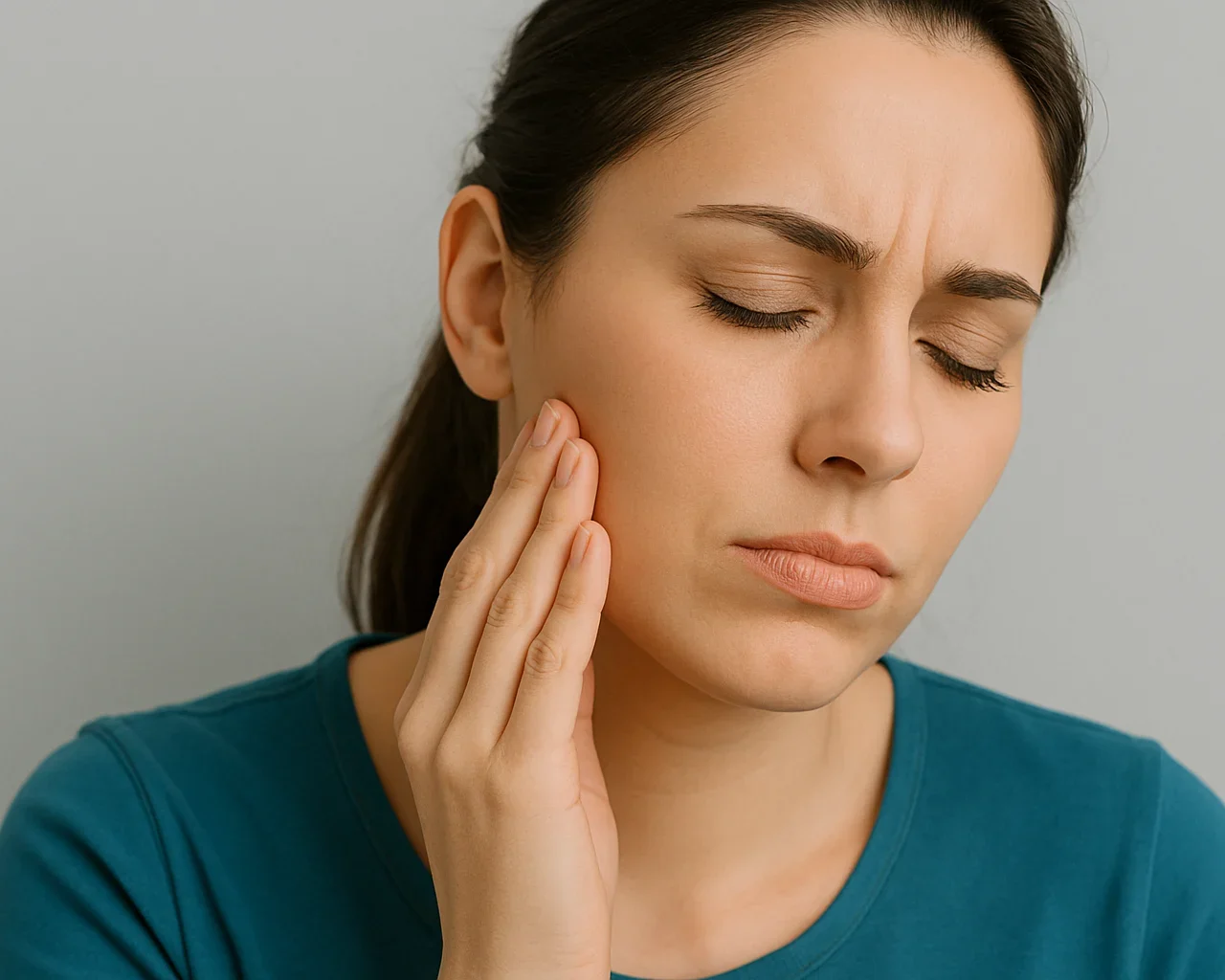
Temporomandibular joint (TMJ) disorders can manifest through several symptoms, such as:
- Joint pain: Can occur during jaw movements as well as at rest.
- Difficulty opening the mouth: Limitations in jaw movement make daily tasks like speaking and eating difficult.
- Clicking or popping: Popping sounds can occur during jaw movement, suggesting the temporomandibular joint disc is not gliding correctly.
- Temporary TMJ blockages: In severe cases, the joint can “lock up”, preventing normal jaw movements.
- Headaches: Pain in the head, particularly in the frontal and temporal regions, can be related to TMJ dysfunction.
- Neck and facial pain: Tension in the muscles of the face and neck can radiate pain to these areas.
- Stiffness and tiredness in the jaw: After chewing or performing repetitive movements, the muscles can become tense, resulting in fatigue or stiffness.
These symptoms can vary in intensity and can be aggravated by factors such as stress, bruxism (clenching or grinding of the teeth) and imbalances in the masticatory and cervical muscles.
Factors influencing TMJ disorders
Various factors can cause or aggravate TMJ dysfunction, including parafunctional habits, such as:
- Stress and anxiety: They contribute to muscle tension, especially in the cervical region and the muscles responsible for chewing.
- Trauma: Traumatic injuries to the joint or jaw can cause temporomandibular disorders.
- Harmful habits: Bruxism (grinding or clenching of the teeth), resting the hand on the face during rest or sleep, and excessive chewing of chewing gum are behaviours that can keep the chewing muscles in continuous tension, creating muscular imbalances and favouring episodes of temporomandibular dysfunction.
These factors can overload the TMJ, resulting in pain, inflammation, and other symptoms such as headaches and neck pain.
Conservative approaches to TMJ disorders
Conservative management of TMD aims to alleviate symptoms and improve joint function. Conservative approaches may include:
- PhysiotherapyRehabilitation techniques to improve mobility and relieve muscle tension.
- OsteopathyManual therapies to enhance the structural balance of the TMJ and adjacent structures.
- Relaxation techniquesExercises to reduce muscle tension and stress.
- Psychotherapy: Therapy to manage stress and the anxiety that contribute to muscle tension.
- Use of oral protectorsonly when indicated by the dentist
The aim of these approaches is to relieve pain and restore the functionality of the TMJ, while also treating underlying causes such as stress and bruxism. The selection of therapeutic strategies depends on the specific needs of each case.
Integration of Physiotherapy and Osteopathy in TMD
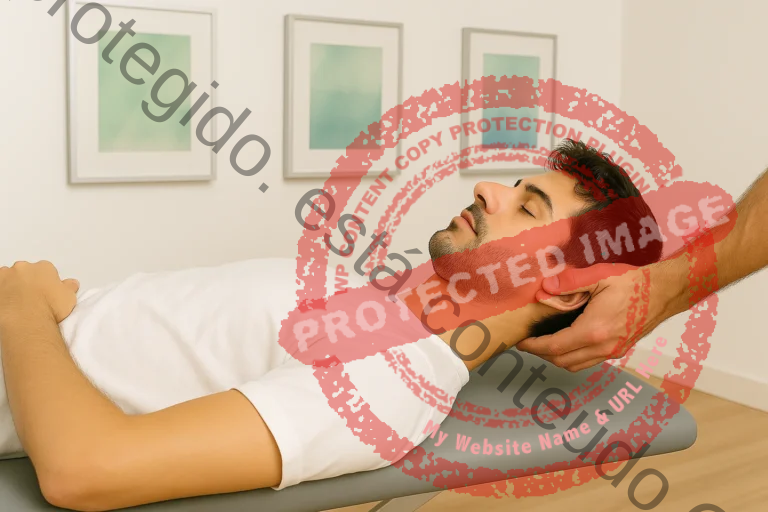
Based on clinical assessment, different therapeutic approaches can be integrated for temporomandibular dysfunction. These include exercises targeting the involved musculature, intended to improve coordination and reduce muscle tension, and myofascial release techniques, which help relieve soft tissue tension and promote flexibility. Specific temporomandibular joint mobilisations can also be used to improve mobility and alleviate joint pain. These approaches aim to enhance function, reduce mechanical overload, and promote functional adaptation over time, providing immediate relief and long-term benefits.
The fact that Integrativa's Physiotherapists also have training in Osteopathy allows for a more comprehensive therapeutic approach. When indicated, Cranial Osteopathy techniques and sacrocranial approaches can be incorporated, considering the global relationships between the skull, jaw, cervical spine, and the rest of the musculoskeletal system, which are fundamental for an effective assessment and treatment of TMD.
While Osteopathy focuses on the structural relationships that influence the function of the TMJ and the musculoskeletal system, Physiotherapy concentrates on assessing this function and optimising it through movement, motor control, and muscle rehabilitation. The integration of these two areas allows for a coherent therapeutic approach tailored to the complexity of craniomandibular dysfunctions and orofacial pain, promoting a personalised treatment adapted to your needs.
Understanding TMJ dysfunctions from an integrated perspective
TMJ is a multifactorial condition, frequently associated with pain and discomfort in the jaw, neck and cranial region. Factors such as muscle tension, changes in dental occlusion, trauma, poor posture and the stress can be directly related to your development and worsening.
Physiotherapy and Osteopathy can be an effective approach for relieving muscle tension, promoting TMJ mobility, and improving cranial dynamics. Furthermore, Osteopathy contributes to the balance of the nervous system, which is essential for pain management and improving temporomandibular joint function. By focusing on the interaction of musculoskeletal and neurological structures, Osteopathy offers a comprehensive treatment that can help restore function and reduce symptoms.
An individualised assessment is essential, considering not only the musculoskeletal structures but also the interaction between the skull, cervical spine, and nervous system. In this context, Cranial Osteopathy can be applied to comprehensively treat the various structures involved, providing a more complete and personalised approach to the treatment of TMJ dysfunction.
At Integrativa, the specialised consultations for the TMJ and orofacial pain They form part of a global clinical assessment, where the body is analysed in an integrative way, through Physiotherapy and Osteopathy, considering the interactions between the musculoskeletal (Structural Osteopathy), visceral (Visceral Osteopathy), and cranial (Cranial Osteopathy) systems. A complete and personalised clinical assessment allows each situation to be framed in detail and strategies tailored to individual needs to be defined.
The assessment consultation with a specialised Physiotherapist – Osteopath allows for a careful and individualized understanding of how this integrative approach can be beneficial for your case.
David Brandão | Osteopath and Physiotherapist
Specialising in Cranial Osteopathy for TMJ, Orofacial Pain and Headaches
Physiotherapist Card: 3652 | Order of Physiotherapists // Osteopath Card: C-0031697 | ACSS
Reference articles
- NIDCR. (2014). Facial Pain. Retrieved 29 November 2015, from National Institute of Dental and Craniofacial Research: http://www.nidcr.nih.gov/DataStatistics/FindDataByTopic/FacialPain/ (accessed 29/11/2015)).
- Rashid, A., Matthews, N., & Cowgill, H. (2013). Physiotherapy in the management of disorders of the temporomandibular joint—perceived effectiveness and access to services: a national United Kingdom survey. British Journal of Oral and Maxillofacial Surgery, 52-57.
- Packer, A., Pires, P., Dibai-Filho, A., & Rodrigues-Bigaton, D. (2014). Effects of Upper Thoracic Manipulation on Pressure Pain Sensitivity in Women with Temporomandibular Disorder. *American Journal of Physical Medicine & Rehabilitation*, 93, 160-168.
- McNeely, M., Armijo-Olivo, S., & Magee, D. (2006). A Systematic Review of the Effectiveness of Physical Therapy Interventions for Temporomandibular Disorders. Physical Therapy, 86, 710-725.
Integrativa | Health and well-being as a lifestyle
This website and its content are for information purposes only and are not a substitute for medical or health professional advice. In all cases, treatments should be individualised and guided by health professionals. Do not make any changes to your treatment without contacting the doctor or health professional accompanying you.
Related articles