

Tinnitus is a common symptom in clinical practice and can have a significant impact on quality of life, especially when it persists in the absence of identifiable structural hearing changes. In these cases, it may be relevant to consider systems beyond the auditory, such as the temporomandibular joint (TMJ), the cervical spine, and the musculoskeletal system, which can influence sound perception.
Scientific research has demonstrated an association between TMJ dysfunction and tinnitus, mediated by mechanisms of interaction between the somatosensory and auditory systems. This relationship is particularly relevant in individuals whose tinnitus is not accompanied by objective changes in hearing tests, suggesting a functional and multifactorial origin of the symptom.
Relationship between the temporomandibular joint (TMJ) and tinnitus
The temporomandibular joint (TMJ) plays a central role in functions such as chewing, swallowing, and speech, being closely related to cranial and cervical structures. The proximity to the middle ear and the neurophysiological relationships between these areas may help explain how TMJ dysfunctions can influence auditory perception.
Somatosensory afference, originating from the cervical and orofacial regions, modulates the activity of the cochlear nuclei and other brainstem structures, potentially affecting the central interpretation of auditory stimuli. This functional relationship between sensory systems is one of the mechanisms that may be involved in somatosensory tinnitus.
Furthermore, hyperactivity of the masticatory muscles, particularly the pterygoids, can interfere with muscles responsible for regulating pressure in the tympanic cavity, such as the tensor tympani, affecting the tympanic membrane and contributing to the perception of sounds like hisses or whistles.
Somatosensory tinnitus and body integration
Somatosensory tinnitus is triggered or modulated by stimuli from the musculoskeletal system, such as the face, jaw, and cervical spine. Somatosensory integration, resulting from the convergence of sensory and motor afferents with auditory systems in the brainstem, allows mechanical stimuli and postural changes to influence symptom perception.
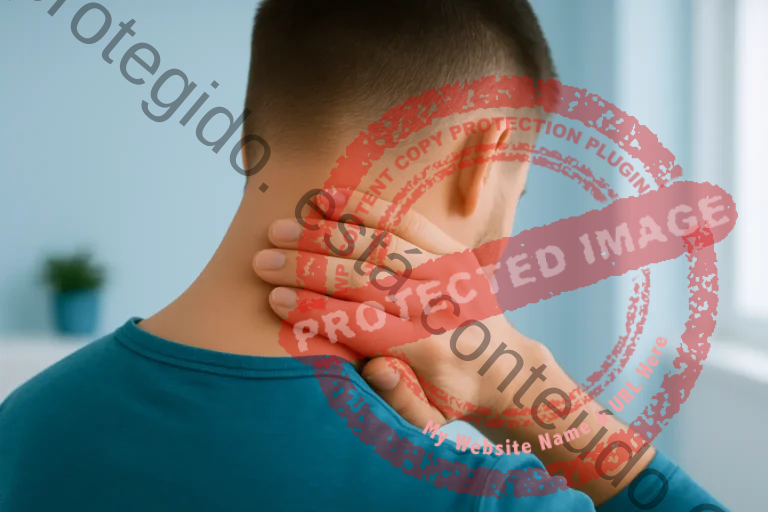
In this context, myofascial trigger points, taut bands in skeletal muscle, can directly interfere with the modulation of tinnitus. Some patients report variations in the symptom with neck or jaw movements or postural changes, suggesting somatosensory involvement in the clinical picture.
When to consider a somatosensory origin for tinnitus
The hypothesis of a somatosensory origin for tinnitus may be considered when the sound varies with neck or jaw movements, intensifies during moments of increased muscle tension or stress, or is associated with neck, facial, or TMJ pain. The symptom may also temporarily improve with simple strategies such as massage, heat application, or relaxation techniques.
However, it is essential to remember that tinnitus can have different origins and is not always related to the musculoskeletal system. Prior medical evaluation is important to rule out other causes before considering the somatosensory hypothesis.
Factors associated with TMD-related tinnitus
In cases involving the temporomandibular joint (TMJ) and the somatosensory system, tinnitus can be associated with bite changes, asymmetrical chewing, TMJ dysfunction of an inflammatory, traumatic, or degenerative nature, bruxism, parafunctional habits, poor cervical posture, bodily imbalances, chronic muscle tension in the face, neck, and shoulders, sleep disturbances, and elevated levels of stress and anxiety.
Tinnitus can have a multifactorial aetiology, involving both auditory and non-auditory factors, which reinforces the need for a multidisciplinary approach.
Common clinical signs of somatosensory tinnitus
In individuals without significant hearing or vestibular impairments, TMJ dysfunction can be a relevant factor. Frequently observed signs include a feeling of ear fullness, pain in the neck, shoulders, head or face, clicking or joint noises during mandibular movements, as well as limitations, locking, or deviations in mouth opening.
The influence of stress emotional aspects must be considered, as psychosocial stress can increase muscle tone and alter sensory perception.
Contributions of Physiotherapy in Temporomandibular Dysfunction in Tinnitus
Physiotherapy specialising in the Temporomandibular Joint (TMJ) plays an important role in addressing tinnitus of somatosensory origin, by intervening on muscular, postural, and neuromuscular factors. Intervention begins with a detailed and individualised clinical assessment, considering the functional relationship between the TMJ, the cervical spine, and global posture.
The assessment allows for the identification of dysfunctions which, when appropriately treated, can influence the perception of tinnitus. The physiotherapeutic approach includes postural analysis, assessment of cervical mobility, orofacial and masticatory muscle tone, TMJ function, and chewing, swallowing, and cervical movement patterns.
Based on the integrated assessment, the physiotherapy intervention encompasses manual techniques, joint mobilisation, pain management strategies, therapeutic exercises, and functional re-education, according to each patient's needs.
Therapeutic exercise is part of the intervention plan, including postural exercises, strengthening of the deep cervical musculature, and re-education of the masticatory musculature, as well as mandibular repositioning strategies, when necessary. This approach aims to promote functional autonomy and reduce symptom recurrence.
Cranial Osteopathy Integration
Cranial Osteopathy complements Physiotherapy by addressing cranial tensions, meningeal membranes, and the functional relationship between the skull, the temporomandibular joint (TMJ), and the cervical spine. The intervention aims to influence neuromuscular and somatosensory regulation mechanisms, which are essential in cases associated with tinnitus.
By acting on restrictions of mobility in the cranial and cervical tissues, Cranial Osteopathy can help to normalise tension patterns and functionally adapt the involved structures. Its integration into a comprehensive and multidisciplinary treatment offers a broader understanding of the relationships between the musculoskeletal, neurological and sensory systems, always based on a rigorous and personalised clinical assessment.
Understanding somatosensory tinnitus from an integrated perspective
The tinnitus associated with TMD and the somatosensory system requires an integrated clinical evaluation. Analysis of the relationships between the TMD, cervical spine, posture, and musculature is fundamental for identifying the origin of the symptom, considering its multifactorial nature and the individual characteristics of each patient.
In this context, Physiotherapy and Osteopathy can offer a global clinical approach, based on an individualised assessment of the functional relationships between the skull, spine, and musculoskeletal system, respecting the clinical variability and functional context of each person.
Individualised assessment is essential, taking into account the specificities of each patient, such as the intensity and frequency of tinnitus, triggering factors, and general state of health. Cranial Osteopathy can be considered to holistically balance the various structures involved, promoting a more complete and personalised approach.
At Integrativa, specialised consultations for the TMJ and orofacial pain are part of a global clinical evaluation, where the body is analysed in an integrated way through Physiotherapy and Osteopathy, considering the interactions between the musculoskeletal (Structural Osteopathy), visceral (Visceral Osteopathy), and cranial (Cranial Osteopathy) systems. A complete and personalised clinical evaluation allows each situation to be framed in detail and strategies tailored to individual needs to be defined, respecting the complexity of somatosensory tinnitus.
The assessment consultation with a specialised Physiotherapist – Osteopath allows for a careful and individualized understanding of how this integrative approach can be beneficial for your case.
David Brandão | Osteopath and Physiotherapist
Specialising in Cranial Osteopathy for TMJ, Orofacial Pain and Headaches
Physiotherapist Card: 3652 | Order of Physiotherapists // Osteopath Card: C-0031697 | ACSS
Integrativa | Health and well-being as a lifestyle
This website and its content are for information purposes only and are not a substitute for medical or health professional advice. Each person's treatment should be individualised and guided by health professionals. Do not make any changes to your treatment without contacting the doctor or health professional accompanying you.
Related articles