

Knee replacement surgery is one of the most frequently performed orthopaedic procedures worldwide. It is primarily indicated in cases of advanced osteoarthritis, severe joint injuries, or other conditions that significantly impair knee function and participation in daily activities.
The primary objective of the surgery is pain reduction, improvement of joint mobility, and an increase in quality of life. However, the functional outcome does not depend exclusively on the surgical procedure. Physiotherapy plays a central role throughout the entire process, contributing decisively to functional recovery and the progressive return to daily activities.
Clinical factors and warning signs
The decision to fit a knee prosthesis usually results from a progressive clinical process, which incorporates the evolution of symptoms, the functional impact on daily life, and the response to previously undertaken conservative approaches, such as physiotherapy and medical follow-up.
The situations most frequently associated with knee replacement indication are advanced-stage osteoarthritis, rheumatoid arthritis, severe joint injuries, fractures compromising the joint, and structural knee deformities.
- Some signs that might warrant a specialist medical assessment include:
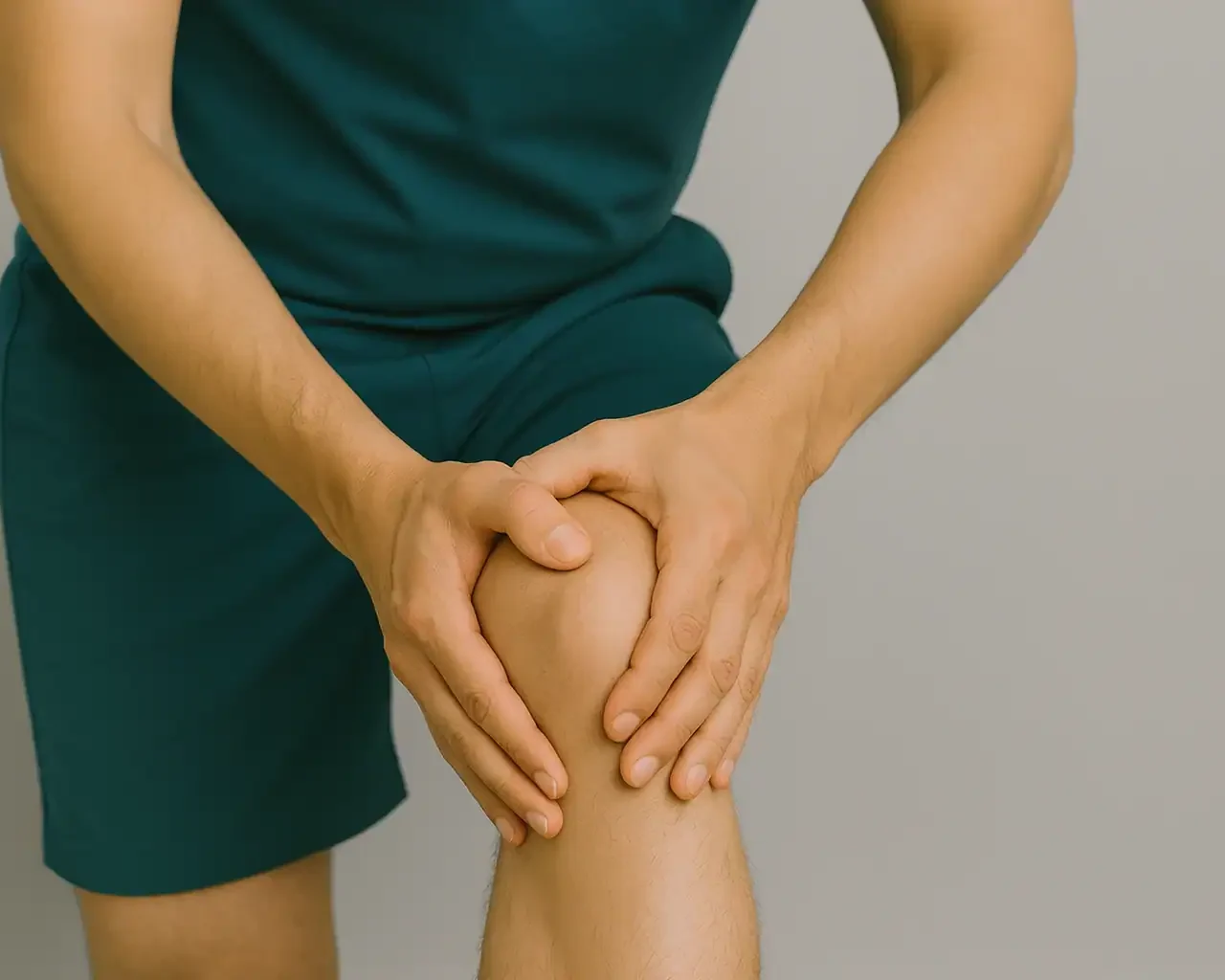
- Intense and persistent pain, even at rest
- Difficulty walking, going up or down stairs, and standing up
- Joint stiffness with limited mobility
- Frequent episodes of knee swelling
The role of physiotherapy in knee replacement surgery
Physiotherapy plays a fundamental role before and after knee replacement surgery. Its intervention aims to support mobility recovery, reduce pain, improve joint function, and facilitate a progressive return to daily activities.
The approach should be individualised and tailored to the needs, objectives, and functional context of each person. The recovery pace can vary significantly, being influenced by factors such as previous physical condition, the type of prosthesis, age, and functional context. Continuous monitoring by a physiotherapist allows the intervention to be adapted to each phase of the process, promoting safety and clinical coherence.
Physiotherapy Intervention Throughout Recovery
Recovery after surgery involves physiotherapy from the very first days. Among the main objectives are pain and swelling control, restoration of knee mobility, strengthening of the lower limb muscles, and gait re-education.
Beyond mobility and strength, physiotherapeutic intervention integrates neuromuscular control training, essential for knee stability, movement efficiency, and the safe execution of daily activities.
Physiotherapy can be present from the pre-operative phase right up to the point where the individual achieves a functional level that allows them to resume their activities with safety and confidence.
In the pre-operative phase, the intervention contributes to physical and functional preparation, focusing on muscle strengthening, maintaining range of motion, and guidance on the use of walking aids. In this phase, teaching the exercises to be performed in the immediate post-operative period is also relevant.
In the post-operative period, Physiotherapy is crucial for adaptation to the prosthesis and for functional recovery. The objectives include reducing pain and swelling, progressive recovery of mobility and muscle strength, balance and gait training, as well as preventing complications associated with the surgical period.
Stages of knee replacement surgery rehabilitation
Rehabilitation after knee replacement surgery should be progressive and individualised, taking into account the type of prosthesis, pain levels, and tissue healing times. The duration and pace of recovery can vary between individuals. The process is usually organised into different phases:
- Pre-operative phase Maintenance of joint mobility, strengthening of leg muscles, and functional preparation for surgery.
- Phase 1 – Initial recovery: Pain and swelling control, prevention of joint stiffness, gradual recovery of range of motion, gait training with aids.
- Stage 2 – Muscle StrengtheningProgressive introduction of strength, endurance and neuromuscular control exercises, as well as balance and unassisted gait training.
- Phase 3 – Gradual return to activity: Promotion of functional recovery, re-establishment of stability, postural control, and confidence in carrying out daily activities.
Long-term care and monitoring
After the structured rehabilitation phase, it is important to maintain habits that promote knee health, such as regular adapted physical exercise, body weight management, and periodic monitoring by healthcare professionals, namely a doctor and a physiotherapist.
Follow-up over time allows for monitoring knee function, adjusting exercise strategies and early identification of changes that may interfere with functionality.
Understanding knee prosthetics from an integrative perspective
In situations of significant pain and functional limitation, knee replacement surgery can represent a relevant improvement in mobility and functionality. However, the recovery journey benefits from an integrated approach, underpinned by collaboration between the individual, the physiotherapist, and the medical team.
Active participation in the process, regular practice of guided exercises, and adherence to clinical recommendations are important factors for functional recovery, autonomy, and quality of life.
At Integrativa, recovery after knee replacement surgery is framed within a global clinical approach, focused on functionality, movement and individualised support. Physiotherapy is integrated into a model that considers not only the knee joint but also its relationship with overall mobility, neuromuscular control, posture and everyday movement patterns. This integrated perspective contributes to maintaining functionality over time and to safer, more confident participation in daily life activities.
If you have had or are going to have knee replacement surgery, physiotherapy can play a significant role in structuring and monitoring the recovery process.
At Integrativa, it's possible to have an assessment session with a physiotherapist, allowing for an individualised approach, tailored to the needs, functional goals, and rehabilitation stage of each person.
Rita Xarepe | Physiotherapist and Clinical Pilates Instructor by APPI
Physiotherapist Card: 4209 | Order of Physiotherapists
Integrativa | Health and well-being as a lifestyle
This website and its content are for information purposes only and are not a substitute for medical or health professional advice. In all cases, treatments should be individualised and guided by health professionals. Do not make any changes to your treatment without contacting the doctor or health professional accompanying you.
Related articles