

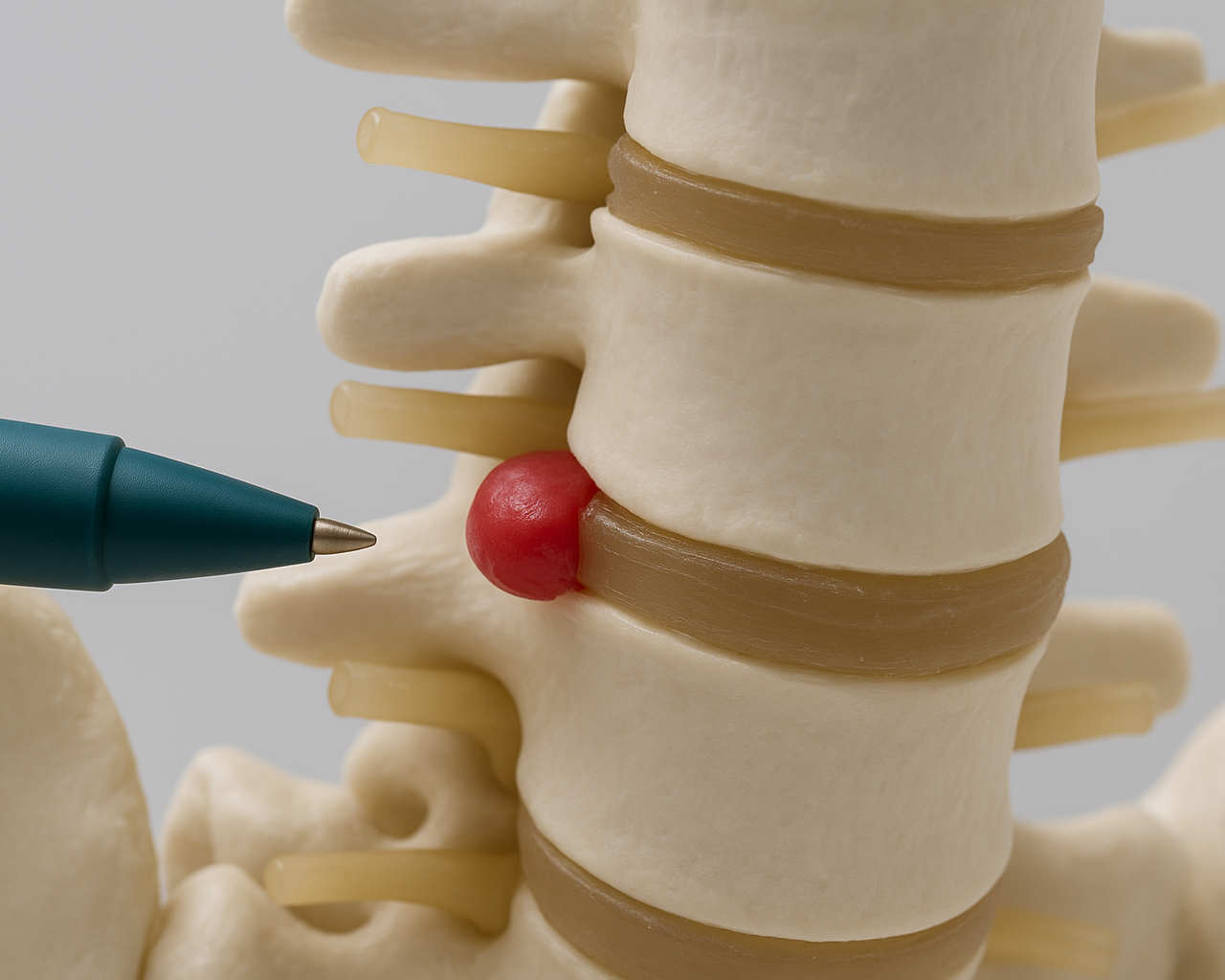
Lumbar disc herniations are a common condition that causes back pain and, in some cases, symptoms such as tingling or pain radiating down the legs. When diagnosed, surgery is often considered a solution, but recent studies suggest that spontaneous reabsorption of the herniated disc can occur without the need for surgical intervention, through non-invasive treatments such as osteopathy, physiotherapy and clinical Pilates.
A relevant study on this topic was conducted in 2015 and published in Clinical Rehabilitation, entitled The probability of spontaneous regression of lumbar herniated disc: a systematic review. The aim of this study was to analyse the probability of spontaneous regression of lumbar disc herniations based on a systematic review.
Summary of the study cited
- Objective: To determine the probability of spontaneous regression of lumbar disc herniations, distinguishing between the different types of herniations.
- Methods Articles were included that addressed (1) patients with lumbar disc herniation treated conservatively, (2) with at least two imaging evaluations of the lumbar spine, and (3) excluding patients with previous lumbar surgery, spinal infections, tumours, spondylolisthesis or spinal stenosis.
- Results O estudo revelou que a taxa de regressão espontânea variou conforme o tipo de hérnia: Hérnia sequestrada: 96% de probabilidade de regressão. Hérnia extrusada: 70% de regressão.Hérnia protrusa: 41% de probabilidadde regressão. Protusão discal: 13% de regressão. Adicionalmente, a taxa de resolução completa foi de 43% para discos sequestrados e 15% para discos extrusados.
- Conclusions Spontaneous regression of disc herniations can occur without the need for surgical intervention. Patients with sequestered or extruded herniations have a significantly higher probability of spontaneous regression compared to those with protruded herniations. Disc sequestration has a higher rate of complete regression than disc extrusion.
The Osteopathic Approach
Osteopathy has proven effective as a non-invasive treatment for lumbar disc herniations. Through manual techniques, Osteopathy works to improve spinal mobility, reduce pressure on the intervertebral discs, and enhance blood and lymphatic circulation. These factors can help promote the reabsorption of herniated disc material and reduce the pain associated with the condition.
It is important to highlight that osteopathy should be part of an integrative model. Thus, osteopathy can be combined with other complementary approaches, such as physiotherapy or clinical Pilates, with the aim of optimising results and supporting the recovery process.
Integrated Approach
Based on the results obtained in the 2015 study, resorption of lumbar disc herniations is a possibility.
Therefore, non-invasive treatments, such as Osteopathy, Physiotherapy, and Clinical Pilates, can contribute to the recovery process. These approaches can help improve spinal mobility, reduce pressure on the intervertebral discs, and thus assist you throughout the recovery process.
David Brandão | Osteopath and Physiotherapist
Physiotherapist Card: 3652 | Order of Physiotherapists // Osteopath Card: C-0031697 | ACSS
Reference articles
Joo, I. B., Park, S. H., & Lee, D. Y. (2015). The probability of spontaneous regression of lumbar herniated disc: A systematic review. Clinical Rehabilitation, 29(8), 789-797. https://doi.org/10.1177/0269215514540919
Masi, A. T., & Lanza, J. A. (2014). Hernia Disc – Pathophysiology and Treatment with Osteopathic Manipulative Treatment. The Journal of the American Osteopathic Association, 114(4), 239-248. https://doi.org/10.7556/jaoa.2014.047
Cummings, T. M., & White, A. R. (2009). Osteopathic Manipulative Treatment for Chronic Low Back Pain: A Randomised Controlled Trial. Journal of the American Medical Association, 302(7), 736-742. https://doi.org/10.1001/jama.2009.1181
Integrativa | Health and well-being as a lifestyle
This website and its content are for information purposes only and are not a substitute for medical or health professional advice. In all cases, treatments should be individualised and guided by health professionals. Do not make any changes to your treatment without contacting the doctor or health professional accompanying you.
Related articles