Osteopathy

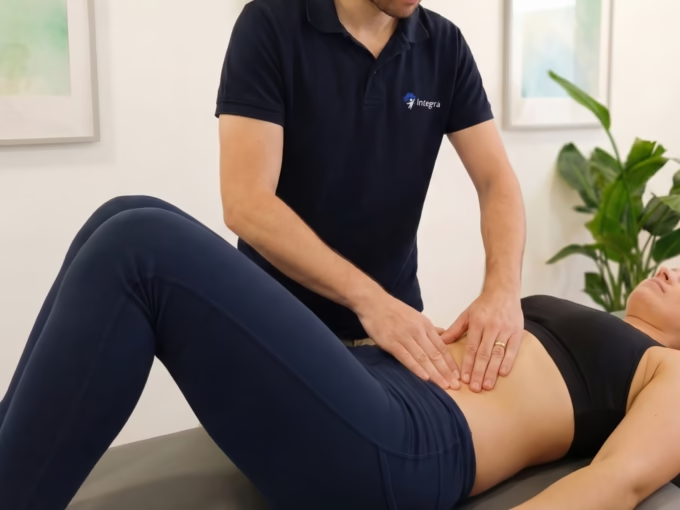
Visceral Manual Therapy: a fundamental approach to Osteopathy

Visceral Manual Therapy is a specialised technique within Visceral Osteopathy that focuses on assessing and intervening in dysfunctions of the internal organs and their supporting structures, using gentle and precise manual techniques. Visceral Osteopathy recognises the interdependence between the body's systems, considering that dysfunctions in the internal organs can...

Integrating physical activity into everyday life: simple strategies for consistent practice

Incorporating more physical activity into everyday life doesn't require radical changes or complex routines. Small adjustments to everyday life can have a significant impact on physical health, emotional balance and the body's ability to adapt. Regular movement contributes not only to physical fitness, but also to regulating the nervous system,...

The impact of blue light from electronic devices on sleep

The use of electronic devices is part of most people's daily lives. Computers, smartphones and tablets are often used until very close to bedtime, which raises clinically relevant questions about the impact of the blue light emitted by these screens on sleep organisation. Understanding these effects is essential to...

Lifestyle habits and health: impact on individual and family well-being

Health and quality of life result from the interaction between genetic, physiological, environmental and behavioural factors. Although not all of these factors can be modified, a significant part of health status is related to everyday choices and habits. Focusing on aspects that can be adjusted is an important step towards promoting...

Musculoskeletal pain of visceral origin: the Osteopathic view

Musculoskeletal pain is often associated with injuries or dysfunctions in the muscles, joints or bones. However, a more comprehensive approach recognises that pain can also originate in internal organs, although it is felt in areas of the body that, at first glance, seem unrelated to these organs. This phenomenon, known as pain...

Sleep and cellular repair of the immune system

In an increasingly fast-paced lifestyle, sleep is often undervalued, despite its central role in regulating the immune system. The relationship between sleep, cell repair and immune response is now well documented and is recognised as one of the most important elements in maintaining health over time. The importance of...

Physiotherapy in orofacial pain and the relationship with the temporomandibular joint

Orofacial pain associated with temporomandibular joint (TMJ) dysfunctions has become increasingly common in the population. These conditions can have a significant impact on quality of life, interfering with essential functions such as chewing, speech, sleep and the ability to concentrate. In this context, physiotherapy specialising in orofacial pain and TMJ dysfunctions...

Homeostasis: the internal balance that sustains health

Homeostasis is a central concept in human biology and physiology. It refers to the body's ability to maintain relatively stable internal conditions, allowing cells, tissues and systems to function in a coordinated manner despite constant variations in the external environment. This dynamic balance is essential for the survival, adaptation and proper functioning of the organism throughout...

Cortisol, melatonin and circadian rhythm: understanding sleep regulation

The circadian cycle is an approximately 24-hour biological regulation system responsible for organising multiple physiological processes, including sleep, wakefulness, metabolism and the response to stress. Among its main modulators are cortisol and melatonin, two hormones with complementary functions in the body's adaptation to different...