Cranial osteopathy and the vagus nerve: an approach to physiological balance

Cranial Osteopathy is a gentle therapeutic approach that focuses on the manipulation of cranial structures and the sacro-cranial system, with the aim of improving the functioning of the central nervous system. This technique can influence the function of the vagus nerve, the largest nerve in the autonomic nervous system, which plays a fundamental role in regulating...

Epigenetics: the influence of the environment on health regulation, the view from Psychoneuroimmunology

Scientific research has shown that genetic information does not act in isolation, nor does it determine health trajectories throughout life in a linear fashion. Epigenetics, a field that studies the biochemical mechanisms that regulate gene expression without altering the DNA sequence, contributes to a more dynamic understanding of...

Osteopathic approach to craniomandibular disorders and headaches

Craniomandibular disorders encompass conditions that affect the temporomandibular joint (TMJ), the muscles responsible for chewing and related structures. These can be classified into three main groups: joint dysfunctions, such as articular disc displacement and arthritis; muscle dysfunctions, which include muscle spasms and fatigue; and mixed dysfunctions, which combine joint and muscle symptoms,...

How stimulating the vagus nerve can help with anxiety and depression

Anxiety and depression are prevalent mental health conditions, affecting millions of people globally. Although conventional treatments, such as cognitive-behavioural therapy and medication, are key to managing these conditions, complementary self-care practices can play an important role in reducing symptoms. The vagus nerve, a key structure of the autonomic nervous system, plays an important role in...

Trigeminal-cervical complex and neck pain: the relationship with the temporomandibular joint (TMJ) from an osteopathic perspective

Neck pain is a common complaint in the adult population. Although it is often associated with alterations in the cervical spine, its origin is not always exclusively in this region. In certain clinical conditions, neck pain may be related to alterations in the trigeminal nerve, often associated with dysfunction of the temporomandibular joint (TMJ), and may influence...

The role of the vagus nerve in digestion and intestinal health

The vagus nerve is one of the main components of the autonomic nervous system, playing a fundamental role in regulating many bodily processes, including digestion and intestinal health. As one of the main communication routes between the brain and the gastrointestinal system, the vagus nerve has a direct impact on the functioning of the digestive system,...

Beyond the symptom: how Clinical Psychoneuroimmunology helps to understand the symptom

When we experience pain, anxiety, fatigue or other symptoms, it's common to focus only on what's most obvious. However, in order to better understand what is happening in the body and mind, it can be useful to go beyond the manifestation of the symptom and explore the factors that may be contributing to its appearance and...

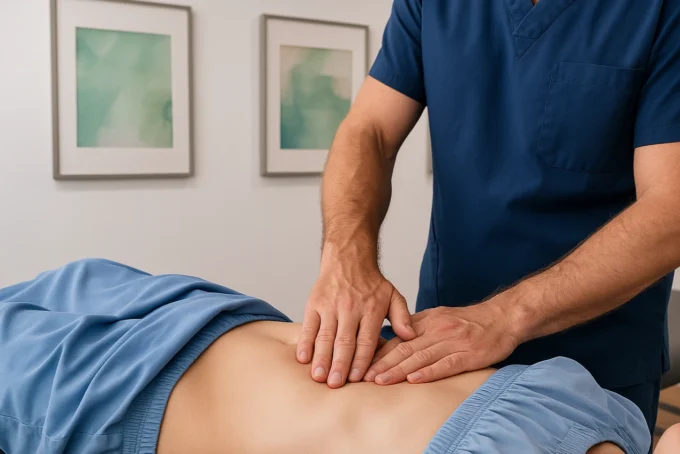
Visceral osteopathy and the vagus nerve: activating the parasympathetic nervous system

The vagus nerve, the largest nerve in the autonomic nervous system, plays a fundamental role in regulating various vital functions in the body, such as heart rate, breathing and digestion. It is one of the main communication routes between the brain and the internal organs, and is essential for the functioning of the gastrointestinal system, heart...